

July CPI Slows Further—Rate-Hike Odds Dim
Wednesday, August 19, 2026
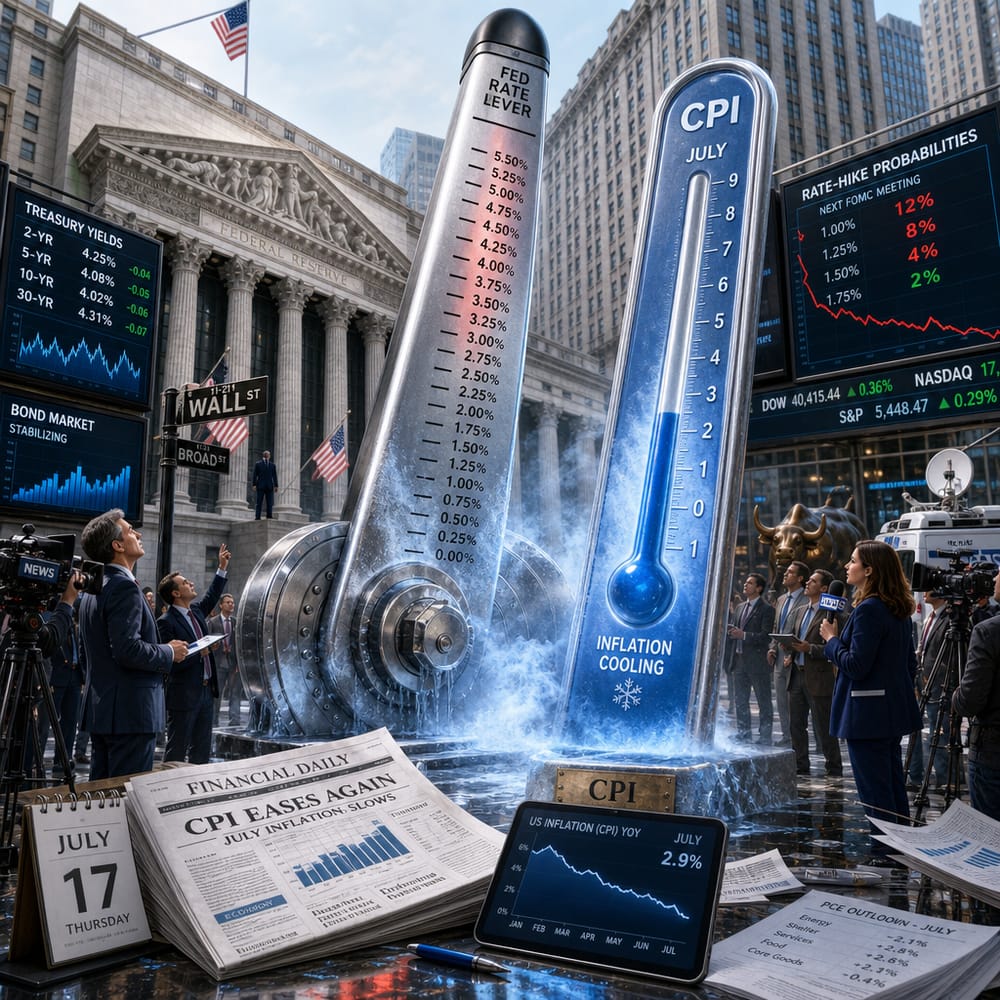
IS THE FED ABOUT TO TAKE ITS FOOT OFF THE BRAKE? JULY'S CPI DATA SAYS MAYBE
Hold onto your hats, folks—your wallet might just catch a break. The July Consumer Price Index (CPI) numbers are out and they're whispering sweet nothings about a potential pause in Federal Reserve rate hikes. Have the gods of inflation finally decided to give us mere mortals a break? Let's dive headlong into the molten lava of economic data to uncover just what’s cooking in that financial cauldron.
First up, the July CPI numbers didn't just meander in lower than expected—they strolled in like they knew the party was in their honor. The slower increase than anticipated means one thing: the Fed may dial back on its aggressive rate-hiking strategy. So, what wizardry conjured this slowdown in inflation?
A couple of suspects here: First, the epic saga of global supply chains seems to have found a happy ending—at least for now. With improved supply routes and fewer disruptions, prices for goods aren't climbing the Everest they once were. Add to that the decline in oil prices, which after a dizzying ride, finally decided to take a nap. Energy costs are a major driver of inflation because they affect everything from the cost of manufacturing to transportation. With oil prices slipping, pressure on the price tags of goods has eased. This cocktail of factors was enough to pour some ice-cold water over the fire of rising prices.
But let's not get carried away here. Before you start planning a ticker-tape parade for the Fed, remember that the central bank is the disciplined sort—they never dance based on one good month. They’re likely eyeing other indicators, keeping an anxious finger hovering over the rate hike button, just in case.
Now, what does this mean for the Federal Reserve's rate hike strategy moving forward? Well, if inflation continues to behave itself, the Fed could hold off on further interest rate hikes, which have been coming in hot and heavy. A pause would be like removing a weight from the chest of borrowers everywhere. Lower rates often mean cheaper loans for homes, cars, or that too-good-to-resist small business you’ve always wanted to start. Encouraging borrowing could, in turn, spur consumer spending, and hey, who doesn’t love a retail therapy session?
For businesses, this could translate to more affordable credit, potentially sparking investment in growth opportunities or expansions. In short, a pause in rate hikes might just be the Red Bull shot the economy needs.
But let’s not make the mistake of thinking the Fed is about to throw caution to the wind and embrace a zero-rate utopia. Jerome Powell and company are more likely to adopt a “wait and see” approach—eager to see if this is a one-month wonder or a sustainable trend. They dodged a rate hike this time, but remember, the Fed’s ultimate goal is to keep inflation in check while not strangling economic growth.
What’s more, even if the Fed does pause, remember that inflation isn't a dragon slain easily. The central bank will want to see a sustained downtrend before declaring victory. And while the latest CPI figures are promising, they are one piece of a complex puzzle. The Fed is still dealing with an economy that’s about as predictable as a cat on a hot tin roof.
In the meantime, Wall Street seems to be doing a little happy dance. Lower inflation means the stock market can relax a bit, relishing in the probability of fewer rate hikes. That’s not just good news for your 401(k) but also for the broader investment landscape.
So, where does that leave us? Are we witnessing the start of a new chapter in the epic of rate hikes? It's too early to tell, but the July CPI numbers are an encouraging sign that the dragons of inflation might finally be losing a little steam. As always with the market, nothing is guaranteed, but one thing's for sure: we're in for an interesting ride. Keep your eyes peeled and your wallets ready—just in case.
This article is for informational purposes only and is not investment advice. Always do your own research or consult a licensed financial professional before making investment decisions.
© Copyright 2024. All Rights Reserved.
© Copyright 2024. All Rights Reserved.