

July CPI Shows Slight Cooling, Inflation Remains Elevated
Wednesday, August 19, 2026
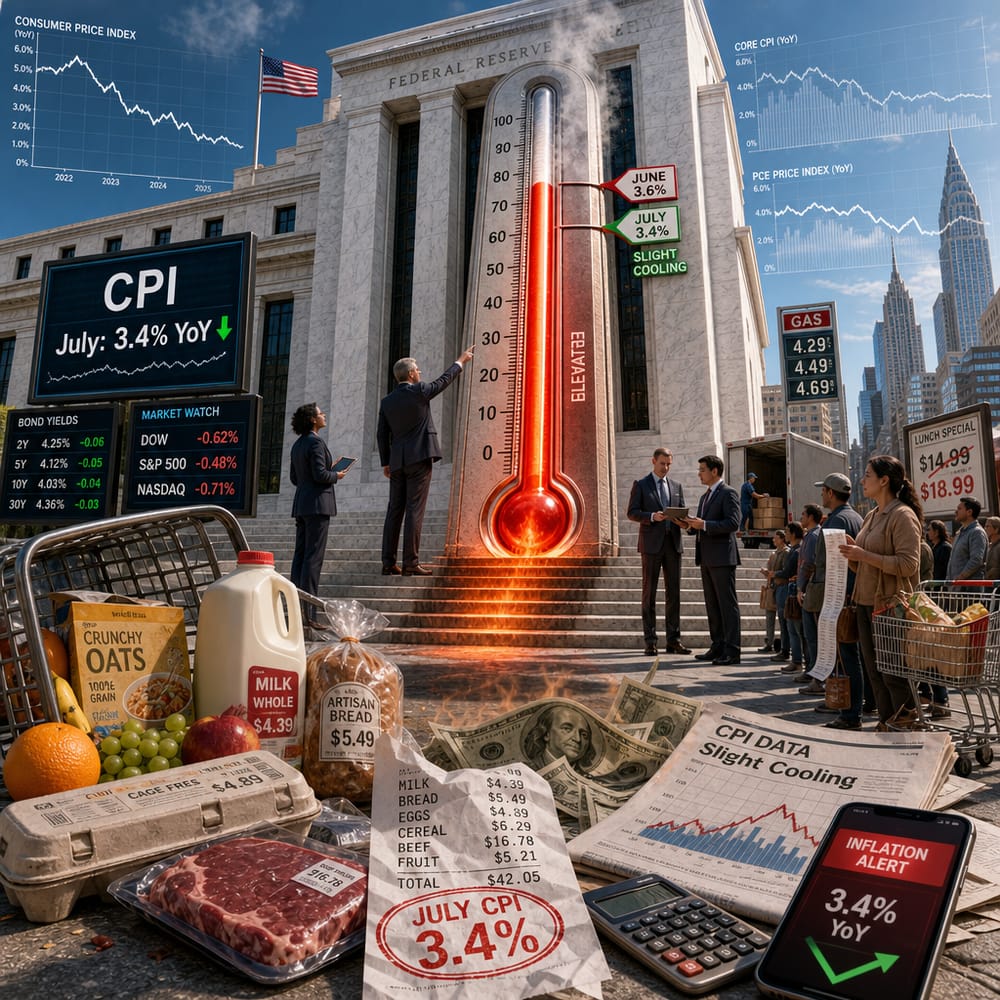
THE HEAT IS ON: JULY INFLATION COOLS SLIGHTLY, BUT NOT ENOUGH TO CHILL OUT THE FED
If you've been living under a rock (or maybe just ignoring your news feeds), you might have missed it: inflation is the guest that just won't leave the party. The latest data shows that while July's Consumer Price Index (CPI) was trying its best to play it cool, rising 3.4% year-over-year, it still isn't the chill pill the Federal Reserve is hoping for.
Before you shrug it off, let's talk about why this matters. Picture the Federal Reserve as the strict party host who wanted everyone to go home by midnight (the target 2% inflation rate). But guests are lingering, drinks keep flowing, and it seems like this shindig might never end. That’s the Fed’s current predicament: inflation isn’t dropping quickly enough, and that calls for some potentially stern—and unpopular—measures, like maintaining high interest rates.
WHAT’S COOKING UP THE NUMBERS?
So, who’s keeping this inflation party alive? A close look reveals culprits like housing, which continues to burn a hole in renters' wallets and buyers' budgets. The housing market's stubborn resistance to cooling is largely due to tight supply and relentless demand. And let's not forget our good old friend, consumer goods. Despite cooling in some areas, higher costs in sectors like transportation and services are doing their part to keep inflation simmering.
But it’s not just one sector stirring the pot. High energy prices, courtesy of global geopolitics, have a knack for pushing up everything else, from your morning toast to your evening Netflix marathon. And who could ignore the mounting labor costs as employers pay up to keep the workforce engaged in a tight labor market?
FEDERAL RESERVE: TO HIKE OR NOT TO HIKE?
This brings us back to the Federal Reserve. Jerome Powell and his posse have been trying to read the room, but the data is like a stubborn DJ who won’t stop playing the hits. With inflation dancing above their comfort zone, the Fed has little choice but to consider keeping interest rates higher for longer.
Higher interest rates are designed to slow things down—make borrowing pricier, saving juicier, and ideally, cool the economy's jets. But the dilemma is real: Squeeze too hard, and you risk snuffing out economic growth; relax too soon, and inflation could surge back with a vengeance.
MARKET RIPPLES
For retail investors, this inflation saga and the Fed's moves can feel like watching a suspense thriller with no clear protagonist. Stock markets have shown resilience, even rallying on days when the economic news is mixed. Yet, the specter of prolonged high rates can weigh on growth stocks, particularly those in tech, where the next big thing often requires hefty upfront investment.
On the flip side, financials—think banks and insurers—might be cheering on the sidelines, as they typically benefit from the higher rates. Bonds, the oft-forgotten sibling in the investment family, are seeing a resurgence of interest, with yields more attractive after years in the doldrums.
WHAT’S NEXT?
So, where do we go from here? Investors should keep their eyes peeled on the Fed’s next moves. Are more rate hikes coming down the pike, or will they hold steady and hope for inflation to self-correct? And what about the sectors you’re invested in? Staying informed and flexible has never been more critical.
As inflation continues to cool its heels ever so slowly, the Fed’s balancing act feels akin to walking a tightrope, with the markets as a restless audience below. Will they play it conservative and maintain the current rates, or will new data call for a fresh swing of the monetary policy pendulum?
One thing’s for sure: this economy is unpredictable, and as an investor, you’ve got to be ready to adapt. Keep your strategies agile, your portfolios diversified, and your ears open—that way, whether inflation decides to simmer down or flare up again, you’ll be ready for the next twist in this economic tale.
This article is for informational purposes only and is not investment advice. Always do your own research or consult a licensed financial professional before making investment decisions.
© Copyright 2024. All Rights Reserved.
© Copyright 2024. All Rights Reserved.