

July CPI Shows Inflation Easing Slightly — Implications for Fed’s September Outlook
Thursday, August 13, 2026
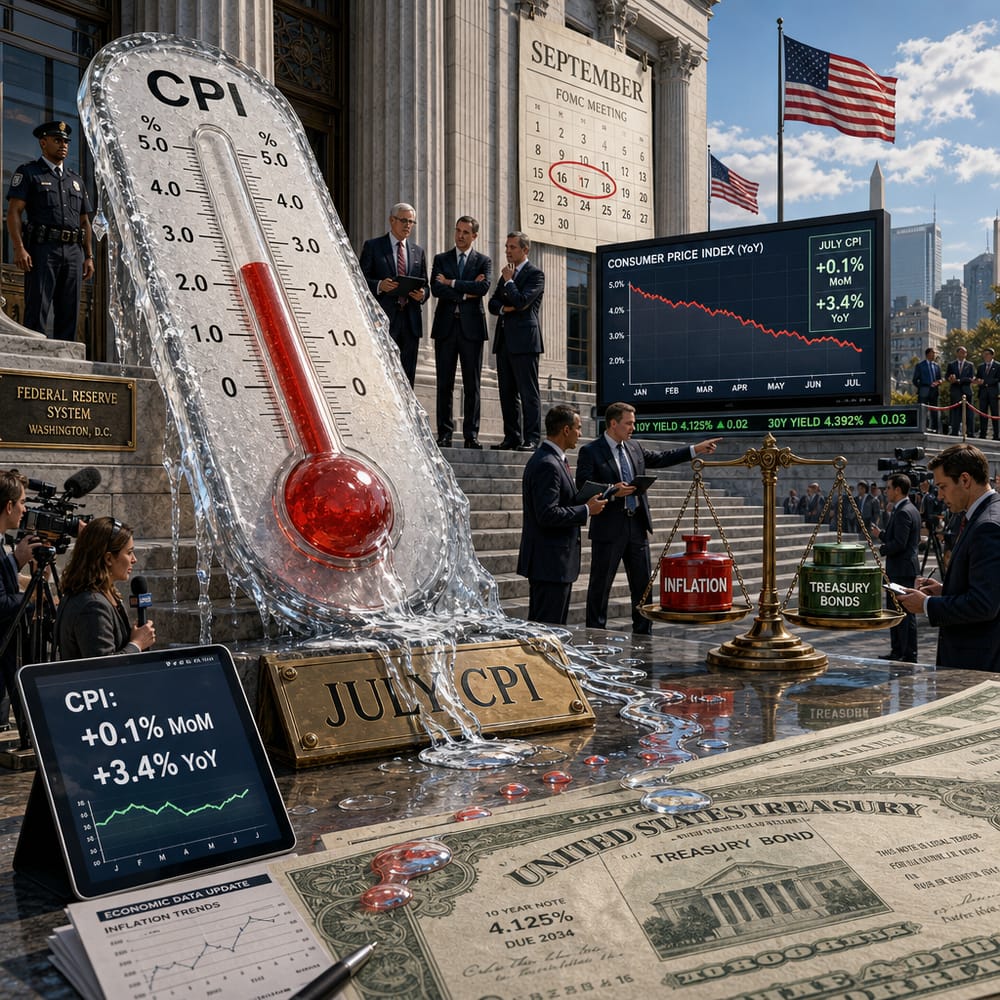
The Consumer Price Index (CPI) for July came out of the economic oven just a touch cooler than expected, rising a mere 0.1% from the previous month. As if that wasn't enough to make your wallet sigh in relief, the annual rate edged down to 3.4%, a smidgen better than what analysts had braced for. Even if it’s not exactly a full-on ice bath for inflation, it’s the closest thing to a cold front we’ve seen in months. Now, the burning question is: what does this mean for the Federal Reserve’s next move? And how will the markets take the news?
INFLATION TEMPERATURE CHECK
Let’s break it down for those not glued to every decimal point in economic reports. The CPI measures the average change in prices over time that consumers pay for a basket of goods and services, from a loaf of bread to haircuts. This month’s slight rise is a tick down from June’s 0.2% increase—nothing to call home about, but it’s heading in the right direction. And when you zoom out a bit, the 3.4% year-over-year rise looks almost tame compared to the four-alarm fires we witnessed last year.
Ticking a little lower means consumers can catch their breath, albeit briefly. More importantly, it gives the Fed a bit of a breather as well, potentially altering those rate hike plans everyone’s been stressed about since, oh, forever.
FEDERAL RESERVE: COFFEE BREAK OR PRESS ON?
So, what’s Jerome Powell and his pals at the Federal Reserve thinking right now? Previously, the Fed’s been wielding interest rates like a bouncer with a velvet rope, trying to keep inflation from dancing out of control. However, with this latest CPI report suggesting things are cooling off a bit, the betting pools are tilting towards a pause in rate hikes come September. The Fed’s been hoping inflation would chill out without the need for another rate rise, and this report is like giving them a just-baked cookie instead of the whole bakery.
But let’s not get ahead of ourselves. While some analysts are celebrating, others are playing the cautious card, reminding us that inflation is still outpacing wage growth. Translation? People might still be looking at the price of eggs like they’re actually made of gold. So, while a pause might seem like the likely scenario, no one's ruling out a small hike just to keep the economy honest.
MARKET REACTION: HOT OR NOT?
Now, if you’re wondering how Wall Street's taking all this, picture a cat with a feather toy. The markets are skittish, to say the least. U.S. Treasury bonds, usually the safe haven in times of uncertainty, took a bit of a rollercoaster ride post-CPI announcement. Bond yields, which move inversely to prices, dipped a bit as investors started reassessing how aggressive the Fed might get with rate hikes. In layman’s terms: less fear of rate hikes means less demand for bonds.
Meanwhile, across the broader market, stocks nudged higher, as traders speculated that a less hawkish Fed could be a boon for growth. Keep an eye on sectors like tech and consumer goods, which tend to do well when interest rates stabilize or drop. However, don’t be surprised if volatility becomes a staple in your financial news diet in the coming weeks.
THE BIGGER PICTURE
Inflation trends are about as predictable as a cat meme going viral, and this CPI report is just one piece of a much larger puzzle. While it offers a glimmer of hope that the Fed might ease up on the aggressive rate hikes, it doesn’t wave a magic wand over all economic concerns. Prices are still high, and if wages don’t catch up soon, consumer spending could putter out like a car in need of an oil change.
For retail investors, the watchword here is balance. Keep a diversified portfolio and don’t get too caught up in the daily fluctuations. Yes, the Fed’s next move will impact interest rates and economic growth, but a measured approach will help you navigate the ups and downs.
So while we wait to see whether the Fed will step on the brake or merely ease off the gas, one thing’s for sure: the road ahead is anything but boring. And who doesn’t love a little drama to spice up their investment strategy?
This article is for informational purposes only and is not investment advice. Always do your own research or consult a licensed financial professional before making investment decisions.
© Copyright 2024. All Rights Reserved.
© Copyright 2024. All Rights Reserved.