

July CPI Shows Energy Drag, Shelter Stability
Sunday, August 30, 2026
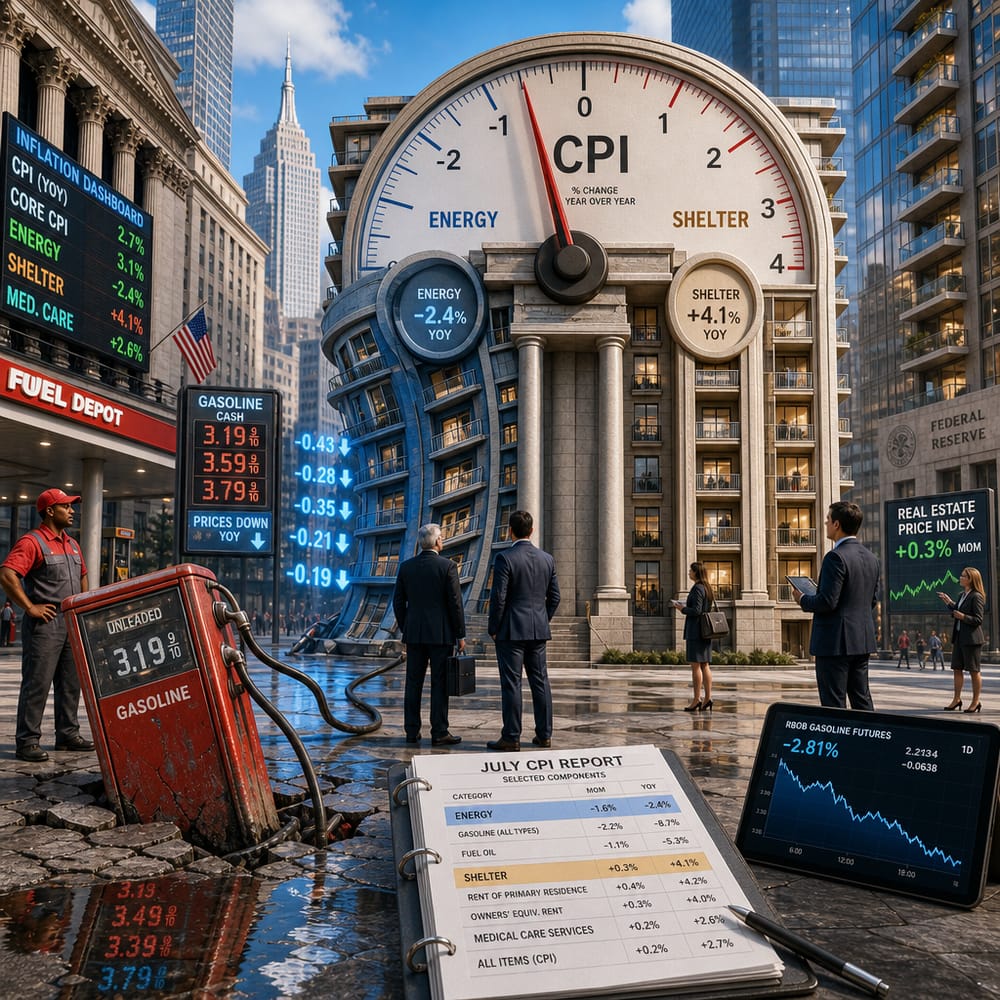
JULY CPI SHOWS ENERGY DRAG, SHELTER STABILITY
When you fill up your gas tank these days, you might find yourself doing a little happy dance—or at least breathing a sigh of relief. The July Consumer Price Index (CPI) delivered some good news for drivers: energy prices, particularly gasoline, are on the decline. But before you pop the champagne, let's dive into what the numbers really say about inflation and the broader economic picture.
First, the juicy details. The CPI, an index that tracks the average change in prices over time for goods and services, has been doing the economic equivalent of a high-wire act. Its July report showed a decrease in energy prices, much to the delight of road warriors everywhere. But don't get too comfortable, because the core components—those essentials like shelter and medical care—are quietly creeping up.
So, what does it mean when energy prices take a tumble? Think of energy as the linchpin holding the whole inflation engine together. When it dips, it tends to pull the overall inflation rate down with it, giving the economy a much-needed breather. Lower energy costs can leave consumers with a little extra cash. After all, every dollar not pumped into your gas tank could go towards that Amazon cart that's been begging for attention.
But hold up—it's not all sunshine and gas pumps. While we're tossing confetti over lower energy costs, shelter costs have settled into a steady rhythm. The housing market, that wild, unpredictable beast, isn't seeing the dramatic fluctuations we often associate with the price tag of knick-knacks and doodads. A steady rise in shelter costs could mean a couple of things. For one, there might be a little more stability in the housing market, which is good news for homeowners (and perhaps a reality check for those hoping for another housing boom).
Stable shelter and medical care prices have implications beyond just personal budgets. They're a microscope into the economy's soul. When you see these core costs holding their ground, it provides some insight into consumer confidence and, by extension, how much risk people are willing to take on.
Which brings us to our favorite group of economic wizards—the Federal Reserve. These folks are constantly trying to strike a delicate balance: keep inflation low without throwing growth into a freezer. With energy prices dropping and core costs inching up, they may now find themselves in a bit of a tight spot. The declining energy costs could give them a little room to back off aggressive interest rate hikes, but those core increases keep their fingers hovering over the rate increase button, just in case.
For energy companies, the decline in oil and gas prices means they’re feeling the pinch. The energy sector might take a hit on the stock market while real estate firms could find themselves in a more stable, predictable environment, possibly attracting investors looking for a safer bet.
Investors and the Fed aren't the only ones paying attention. Retail investors, like you scrolling through this article, need to keep your eyes peeled too. If energy prices stay low, it could push overall market sentiment to a more bullish tone—think investors ready to make moves, seeing opportunities in their sectors of choice. But don't get lost in the optimism; savvy investors will also keep one eye on those core costs.
In all this number-crunching and economic crystal ball gazing, remember one thing: the market loves a good drama, complete with plot twists and cliffhangers. While the July CPI report gave us a glimpse into the contrasting trends of declining energy costs and stable core inflation, the real story is always unfolding. Who knows, maybe next month’s report will bring another twist in the tale.
So, keep your investment strategy nimble and your forecasts realistic. Stay informed, but don't get swamped by the noise. In the world of economics and markets, it’s like driving with a GPS—always expect a few recalculations along the way.
This article is for informational purposes only and is not investment advice. Always do your own research or consult a licensed financial professional before making investment decisions.
© Copyright 2024. All Rights Reserved.
© Copyright 2024. All Rights Reserved.