

July CPI Report Shows Slowing Inflation, Driven by Energy Price Declines
Thursday, August 13, 2026
WHEN ENERGY PRICES COOL, SO DOES INFLATION: WHAT JULY'S CPI MEANS FOR YOU
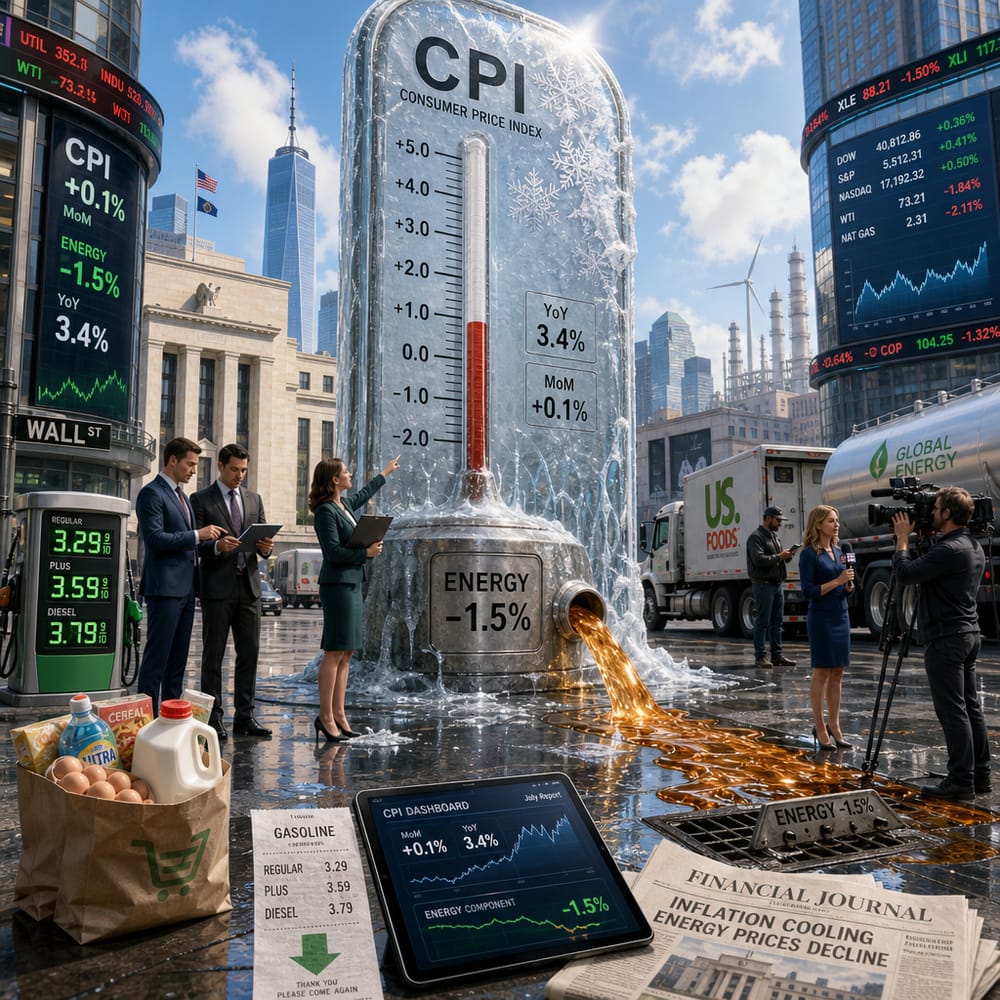
For all the talk about inflation in recent months, July's Consumer Price Index (CPI) figures just threw a bucket of ice water on the fire. Inflation? It barely showed up, creeping up a measly 0.1% from June. And the year-over-year increase settled at 3.4%, significantly cooler than the sizzling numbers we’ve seen earlier this year. What hero helped douse this inflationary blaze, you ask? Look no further than the energy sector, which saw prices dip by 1.5%. You can thank crude oil for that, as global tensions and supply fluctuations played their part like a Shakespearean drama on the world's economic stage.
Now, before you shrug it off as just another number, let’s talk about why this matters to you, your wallet, and the grande scheme of things—pun intended for those Starbucks lovers out there. The story here is about more than just falling energy prices; it’s about what this trend could mean for your money in the months to come and how those folks over at the Federal Reserve might respond.
ENERGY PRICES: THE GOOD, THE BAD, AND THE UNPREDICTABLE
Energy prices can be as unpredictable as your favorite reality TV star, one minute up, the next minute down. Recently, oil prices have been on a rollercoaster, with U.S. crude oil dropping nearly $10 per barrel before clawing back some of its losses. It’s a circus out there, folks. But this dip has a silver lining for consumers: lower energy prices often mean lower transportation and heating costs.
The long-term effects? If energy prices continue to drop or remain stable, it could lead to sustained lower inflation rates. This would be a welcome relief for consumers who have been grappling with higher costs for everything from bread to rent. Cheaper energy translates to lower costs for businesses, which might stop passing on those extra expenses to you, dear consumer.
Of course, the Middle East tensions remain a wildcard, with potential disruptions reminiscent of a suspense thriller. The International Energy Agency has hinted at potential supply issues, but for now, those lower prices are keeping inflation in check.
FEDERAL RESERVE: TO HIKE OR NOT TO HIKE?
The Federal Reserve has been on a quest to tame inflation, raising interest rates like it’s going out of style. But with inflation showing signs of cooling, the Fed might just put its hiking boots back in the closet. Historically, lower interest rates encourage borrowing and spending, which might inject some zest into an economy that’s been dealing with inflation-fueled jitters.
If the Fed decides to ease up on the rate hikes, it could be good news for those with home mortgages, student loans, or anyone looking to finance a big purchase. Lower rates mean you could pay less in interest over time. It might also give the stock market a little pep, as lower rates typically make equities more attractive compared to bonds.
However, don’t count on celebrating just yet. The Fed is notoriously cautious, and they’ll likely want to see more data before making any big moves. They’re playing a waiting game, balancing the need to control inflation while not putting the brakes on economic growth.
WHAT SHOULD YOU DO?
So, you might be wondering how to navigate this economic ocean with energy prices and interest rates rocking the boat. First, keep an eye on your budget. If energy prices continue to drop, that’s an opportunity to save or allocate funds to other needs. Maybe it’s the right time to plan that road trip or reconsider your heating costs for the winter.
Investors, pay attention to what the Fed does next. If interest rates remain stable or even drop, sectors like real estate and tech might get a boost. However, as always, do your homework before making any investment decisions. The market remains as unpredictable as ever, with variables like geopolitical tensions and economic policies constantly at play.
In sum, July's CPI report is more than just a number; it's a snapshot of an economy in flux. With energy prices cooling off and the Fed pondering its next move, the scene is set for a potentially more stable financial landscape in the months ahead. So, keep your eyes and ears open, and as always, stay sharp when it comes to your finances.
This article is for informational purposes only and is not investment advice. Always do your own research or consult a licensed financial professional before making investment decisions.
© Copyright 2024. All Rights Reserved.
© Copyright 2024. All Rights Reserved.