

July CPI Report Lands at Expectations—Market Holds Its Breath Before PPI
Wednesday, August 12, 2026
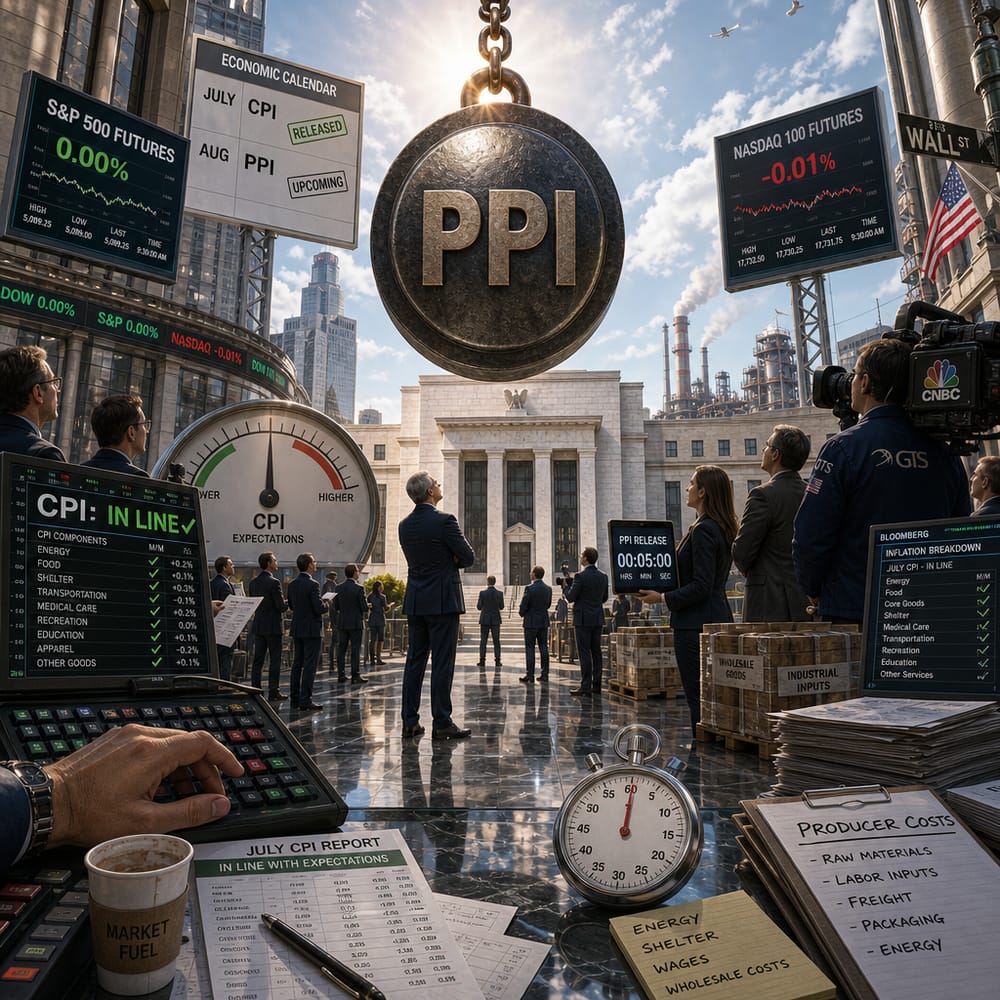
THE CALM BEFORE THE ECONOMIC STORM: JULY CPI MEETS EXPECTATIONS AND NOW WE WAIT FOR THE PPI
Well, the July Consumer Price Index waltzed in without so much as a surprise, like a punctual guest who brought exactly what you asked for. Inflationists everywhere will be relieved to know that the headline CPI rose at an undramatic 0.1% month-on-month, putting the annual rate at 3.4%. Nice and neat, right? But just as a magician might keep you waiting for the real trick, investors now turn their eyes to this Thursday’s Producer Price Index (PPI) for answers on what’s next in the inflation saga—and by extension, what mystic maneuvers the Federal Reserve might pull out of its hat next.
SQUASHING THE CPI BUGS
Let’s face it, nobody likes surprises—especially not when it involves prices inching up on your daily latte or your favorite streaming subscription. So, the fact that July’s CPI came in exactly as expected is a little like a warm hug for the market. The broader market index climbed a modest 0.2%, and the tech-happy Nasdaq added another 0.4%, likely driven by the latest AI buzzwords swirling around companies like CoreWeave.
Yet, while the CPI data might have soothed some battered nerves, it doesn’t pack the whole story. The Fed has been playing the inflation whack-a-mole game, and though some detractors wanted a rate hike last meeting, the majority stuck to the sidelines. But let’s not sip that celebratory espresso just yet. The price of oil is still playing hard to get with a flirtatious $83 a barrel. So inflation, much like your overly-talkative uncle at Thanksgiving, isn't going away anytime soon.
WHAT ABOUT THAT PPI?
Enter stage left: the Producer Price Index. This forthcoming piece of economic theater tells us how much producers are charging for goods and services. Basically, it’s like checking the temperature in the kitchen before your delicious, overpriced meal hits your table. If producers are raising prices, that sneaky inflation goblin might be lurking under the tablecloth, ready to jump into consumers’ laps next.
The PPI can be quite the policy influencer. If it surges unexpectedly, the Fed might just feel the need to slap another interest rate hike onto the table to keep things from boiling over. Conversely, if the PPI plays it cool, the Fed might just sit back in their ergonomic chairs with a sigh of relief.
FED UP OR FED DOWN?
As it stands, the question of whether the Fed will raise interest rates is like trying to predict whether your cat will let you sleep through the night. If the PPI figures show that producers aren’t chomping at the bit to raise prices, we might see the Fed adopt a "wait and see" approach. After all, they’re already juggling enough with geopolitical tensions and an increasingly unpredictable energy market.
But if the PPI surprises on the upside, it could prompt the Fed to tighten the screws further. This isn’t just an academic exercise, folks. With every tick up in interest rates, the cost of borrowing money for everything from mortgages to car loans climbs higher. We could be looking at a domino effect that touches everything from Wall Street investments to whether Linda down the street decides now’s the time to renovate her kitchen.
THE WAITING GAME
For now, it’s all about waiting and seeing—watching whether this Thursday’s PPI serves up a spicy dish or something milder. Until then, investors across the spectrum will keep their ears to the ground and their trading apps at the ready. It's a time for reflection, analysis, and perhaps a little bit of nail-biting.
So, buckle up, and keep that refresh button handy. The economic pendulum may swing, and the outcome could define the next chapter of our inflationary thriller. Whether you’re a seasoned investor or just trying to understand where your paycheck went, the coming days promise to be nothing short of dramatic. Stay tuned.
This article is for informational purposes only and is not investment advice. Always do your own research or consult a licensed financial professional before making investment decisions.
© Copyright 2024. All Rights Reserved.
© Copyright 2024. All Rights Reserved.