

July CPI Report: Inflation Eases Slightly, Core Still Sticky
Thursday, August 13, 2026
JULY CPI REPORT: INFLATION EASES SLIGHTLY, CORE STILL STICKY
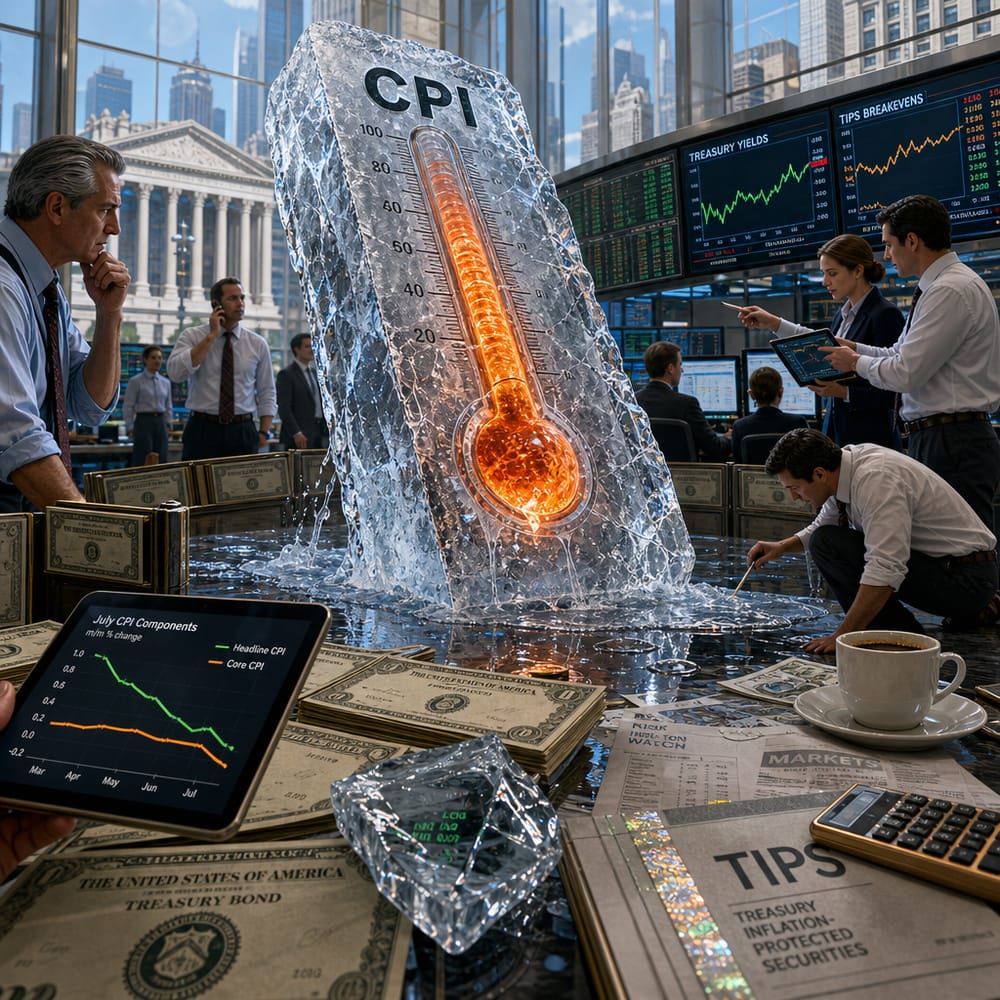
It's a tale as old as time, or at least as old as last month: inflation's up, inflation's down, but somehow, inflation's always sticking around. The July Consumer Price Index (CPI) just dropped the latest plot twist in this ongoing saga. Sure, inflation eased to a simmer with a 3.4% year-over-year increase, but the core inflation—minus the pesky unpredictables like food and energy—remains as stubborn as a mule at 2.5% YoY. What does this mean for us, the everyday investor? Grab your popcorn; this drama's got a few more acts.
Let's kick off with the Federal Reserve, our monetary maestro. When it comes to controlling inflation, the Fed's got its eyes locked on core CPI. Why? Because food and energy prices act like that unpredictable friend who cancels plans last minute—volatile and hard to manage. The sticky core inflation means the Fed's not ready to put its feet up and sip piña coladas just yet. They're more likely to keep their foot on the interest rate pedal to ensure inflation doesn't turn into a wild party no one can control. So, if you're waiting for those interest rates to drop, you might want to get comfortable.
The bond market, meanwhile, is having its own telenovela moment. Sticky core inflation signals to bond vigilantes that interest rate hikes might just stick around longer than hoped. U.S. Treasury yields are the ones to watch here. A sticky core could mean yields stay high, which isn’t music to the ears of existing bondholders whose fixed payments lose value when inflation is high. But for newcomers, higher yields? That's a tempting prospect. If you're eyeing inflation-protected securities, those might start looking like a snug blanket against the chill of prolonged inflation.
Speaking of bonds, let’s not forget about the broader market that seems to be playing a never-ending game of seesaw. Stock futures edged higher recently as traders soaked up the latest CPI report. The information that inflation isn't spiraling out of control gave a much-needed boost to investor confidence, even if just for a moment. But don't be fooled by this momentary calm. The market is like the ocean—calm one minute, stormy the next, especially with falling oil prices and global tensions stirring the waters.
Meanwhile, oil prices are on a bit of a roller coaster due to falling demand and that little ongoing skirmish called the U.S.-Iran war. Brent crude slid down to $87.17 per barrel, a 2% decline, while West Texas Intermediate futures dropped to $81.41 per barrel, a 2.2% fall. Oil price fluctuations can have a ripple effect on inflation. Lower prices might ease some of the pressure on consumer prices, offering a bit of relief at the gas pump. But, as always in the world of oil, what goes down can just as quickly go up.
So, how does one navigate this financial funhouse? For starters, keep an eye on Fed policy like it's the latest episode of your favorite binge-worthy series. Their moves will dictate everything from your mortgage rates to how bonds and stocks perform. If you're in the bond market, look at inflation-protected securities—those might be your best bet against the inflation tide. And keep an eye on oil prices, as they're doing their own dance that can influence everything from the cost of goods to how deep your wallet goes at the pump.
In this era of economic unpredictability, staying informed is your best defense. Keep your strategies flexible, your portfolios diversified, and don't be afraid to make a move when the market's giving you the side-eye. Because in this economic soap opera, the only thing certain is that there will be another twist in the tale tomorrow. So, hang tight, dear investor—this show's far from over.
This article is for informational purposes only and is not investment advice. Always do your own research or consult a licensed financial professional before making investment decisions.
© Copyright 2024. All Rights Reserved.
© Copyright 2024. All Rights Reserved.