

July CPI Inflation Inches Higher—Still Remains Moderate
Saturday, August 15, 2026
JULY CPI INFLATION INCHES HIGHER—STILL REMAINS MODERATE
Alright, folks, it’s time to put down the avocado toast and take a quick peek at something that might actually impact your wallet more than overpriced brunch. Inflation, anyone? The July Consumer Price Index (CPI) has been released, and it’s about as exciting as watching paint dry unless you’re a Fed-watcher or an aspiring economist. But hang tight, because this slow-moving beast is more important than it seems.
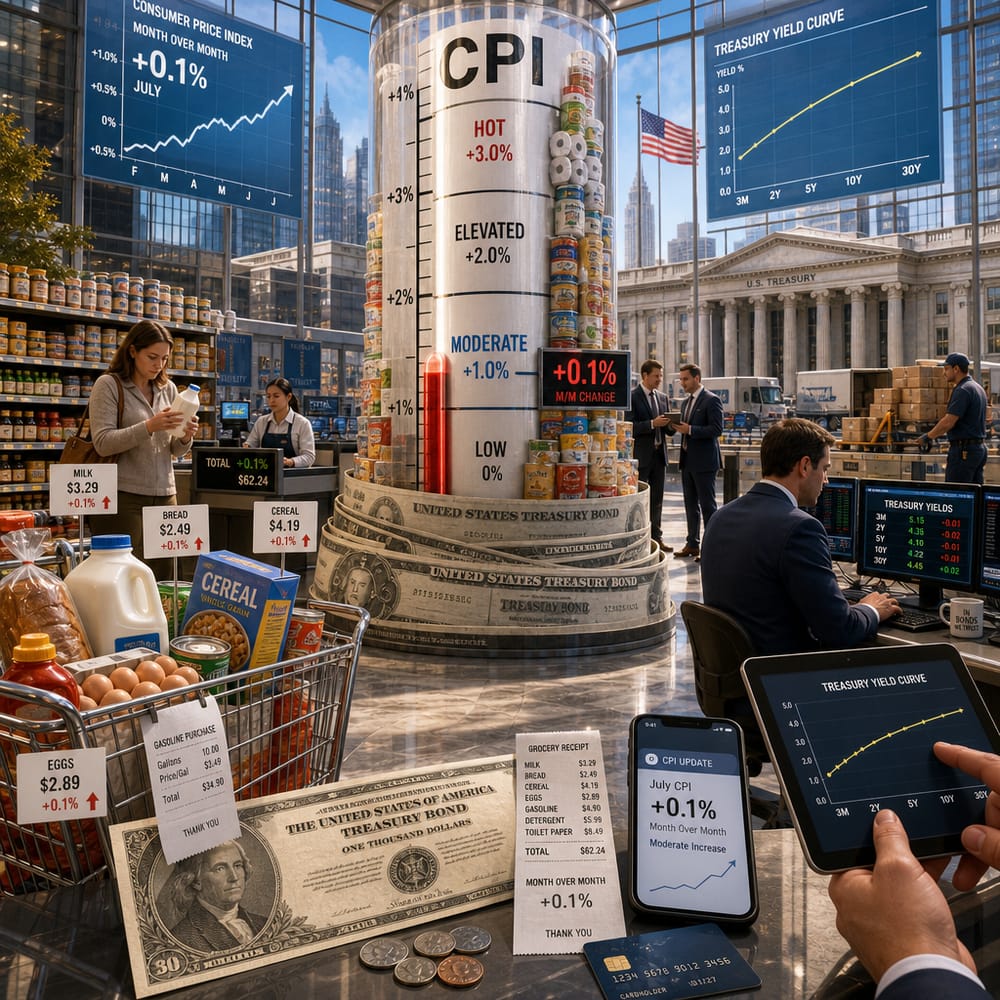
Last month, the CPI crept up by a mere 0.1% compared to June, and over the stretch of the year, it’s up 3.4%. These numbers scream one thing: moderate inflation. You know, the kind that doesn't make you choke on your morning coffee. But why should you care? Because these digits hold the keys to the kingdom—your purchasing power and the Fed's next move on interest rates.
Let’s decode this: inflation measures how much more expensive a set of goods and services has become over a certain period. If it rises too quickly, our beloved Federal Reserve might jack up interest rates to slow it down. But when inflation’s playing nice, like now, the Fed might keep rates steady or even cut them. And that’s a big deal. So, with July's CPI report showing restrained inflation, the pressure is off—for the moment.
In recent months, inflation’s been on a bit of a rollercoaster. Back in June, the numbers were slightly higher, raising a few eyebrows and heart rates among economists. But July’s tepid rise has calmed some jitters, suggesting the heat may have been a summer fling rather than a lasting trend.
So what’s the Fed thinking? With this moderate inflation data, a rate hike seems less likely in the near term. After all, if inflation isn’t roaring, there's less need to pump the brakes on the economy. Investors, rejoice! Or at least breathe a little easier knowing your stock portfolios might not face the wrath of sudden rate changes.
Now, let's talk sectors. Consumer goods are in the hot seat. With moderate inflation, companies that produce everyday items—think groceries and household staples—aren’t feeling as much pressure to pass on costs to you, the consumer. So, your trip to the supermarket might not break the bank. And U.S. Treasury bonds? They're worth watching too. With interest rates held steady, these bonds become a more attractive, safer bet for cautious investors, potentially leading to increased demand and slightly higher prices.
But what does this mean for you, dear reader? Moderate inflation is like a Goldilocks scenario—it’s just right. It neither scorches your purchasing power nor freezes economic growth. You can spend without feeling like your cash is shrinking faster than a wool sweater in hot water.
The real winners here are wallets across the nation. With stable inflation, you get more bang for your buck—and that’s what everyone wants, right? For those eyeing real estate or considering a big purchase, stable rates keep loan interest low, meaning less pain in your pocketbook.
In conclusion, the July CPI report might not grab headlines, but its implications are significant. It’s a signal that for now, at least, the economy is enjoying a period of relative tranquility. Moderate inflation tells a story of stability and opportunity, a chance for strategic planning without the anxiety of unpredictable economic swings. As you sip your next latte, remember: a little inflation is like the foam on your cappuccino—it’s all about getting just the right amount.
This article is for informational purposes only and is not investment advice. Always do your own research or consult a licensed financial professional before making investment decisions.
© Copyright 2024. All Rights Reserved.
© Copyright 2024. All Rights Reserved.