

July CPI Inflation Eases to 3.4% YoY, Marks Cooling Despite Middle East Tensions
Monday, August 17, 2026
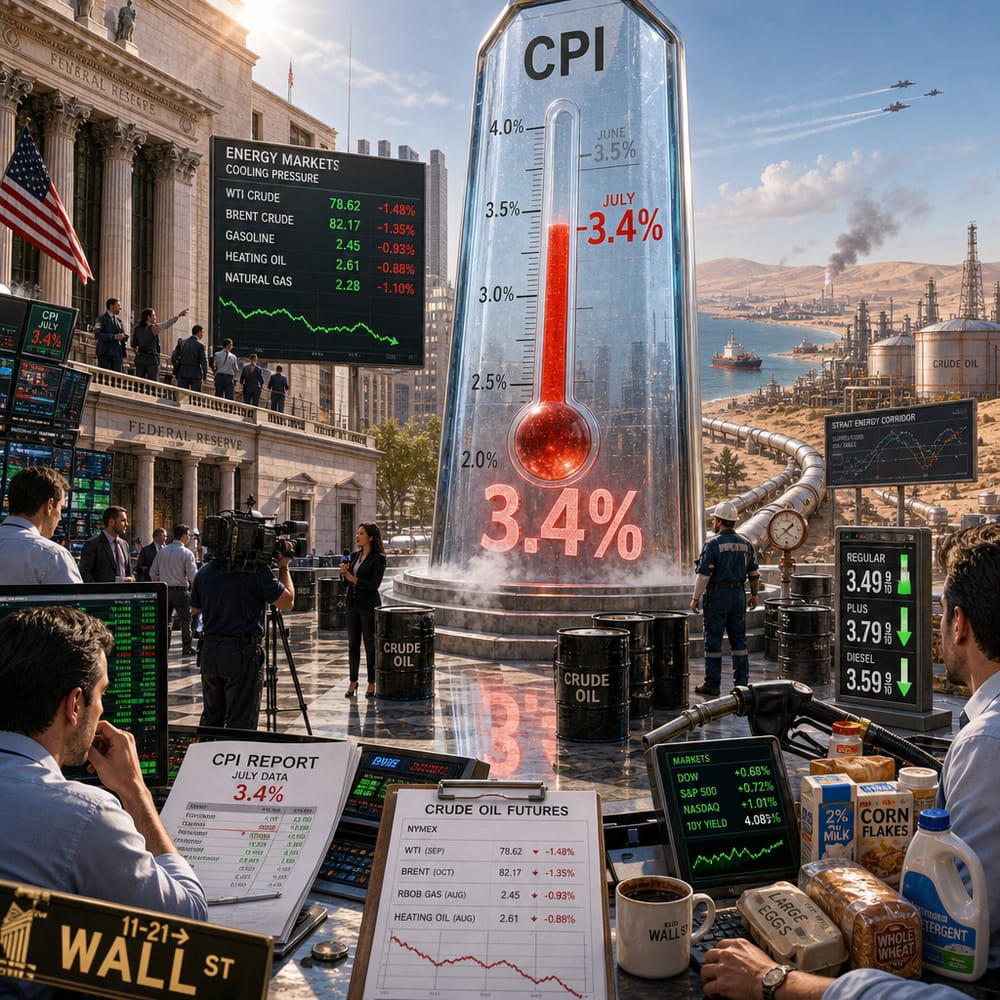
Inflation Might Be Dropping, but the Fed's Not Dancing Yet
Inflation’s cooling off, but don’t expect the Fed to crack open the champagne just yet. In July, the Consumer Price Index (CPI) took a slight dip, clocking in at a 3.4% year-over-year increase, just a notch down from June's 3.5%. Now, if only geopolitical tensions in the Middle East were as easy to deflate.
The easing—albeit slight—might seem like the financial equivalent of a cold splash of water in the face. But before you start dreaming about lower mortgage rates and cheaper loans, let’s dive into the details and what they mean for your investments and your wallet.
WILL THE FED FINALLY CHILL?
The million-dollar question hovering over this new inflation data is how the Federal Reserve will react. The Fed's been on an interest rate hike spree, trying to pump the brakes on rising prices, like a driver trying to avoid skidding on a wet road. Their goal? Keep inflation in check without sending the economy into a tailspin.
With inflation showing signs of easing, you might think the Fed would ease off the gas and let rates take a breather. But remember, the Fed is like that cautious friend who insists on driving the speed limit, even when the highway is wide open. They're not going to declare victory until they’re sure inflation is well and truly under control.
There's also the looming specter of Middle Eastern tensions. If oil prices spike due to geopolitical drama—like the ongoing U.S.-Iran issues—they could reignite inflation faster than you can say “interest rate hike.” And let’s not forget the lingering effects of the odd timing of the U.S. Treasury yields soaring, which is putting additional pressure on borrowing costs.
THE GLOBAL STAGE DRAMA
The geopolitical soap opera playing out in the Middle East has a starring role in this economic drama. Oil prices have been bouncing around like a rubber ball, thanks to the U.S. and Iran failing to extend their ceasefire agreement.
This instability keeps energy markets—and by extension, inflation—on its toes. If crude prices keep climbing, that could push inflation back up, putting the Fed in a tough spot. For now, it’s a waiting game, but investors are understandably jittery about how this will play out in both the short and long term.
WHAT’S IN YOUR WALLET?
So, what does this all mean for you, the retail investor? Well, if inflation truly starts to cool, we could see consumer spending habits shifting. People might loosen the purse strings a bit if they feel more confident about not getting squeezed at both ends by rising costs and high interest rates. This could translate to more activity in sectors such as retail and tech.
On the flip side, if geopolitical tensions push energy prices up, you might want to brace for higher costs of living. The volatility in oil prices can be like that surprise extra bill at dinner, and nobody likes that.
If you’re looking for investment opportunities, keep an eye on industries that tend to benefit from lower inflation, such as bond markets or consumer staples. But remember, geopolitical tensions could play the villain here, so diversification remains your trusty sidekick.
THE BIGGER ECONOMIC PICTURE
This teetering between cooling inflation and geopolitical uncertainty paints a complex picture. Lower inflation could ease some of the economic pressure and make life a bit easier for consumers and businesses. But any sign of rising energy prices could put market expectations in a blender.
Ultimately, how this unfolds depends on whether the Fed decides to pause or continue its rate hikes and what happens next in the Middle East. For now, keep your eyes peeled on these developments, because they’re likely to set the course for the months ahead.
In the meantime, stay informed, stay diversified, and maybe stash away a few extra bucks in case that gas bill decides to surprise you. As always, investing is part art, part science, and a whole lot of patience. Keep your strategy as dynamic as these ever-changing headlines.
This article is for informational purposes only and is not investment advice. Always do your own research or consult a licensed financial professional before making investment decisions.
© Copyright 2024. All Rights Reserved.
© Copyright 2024. All Rights Reserved.