

July CPI Inches Up, Core Inflation Shows Stickiness
Tuesday, August 18, 2026
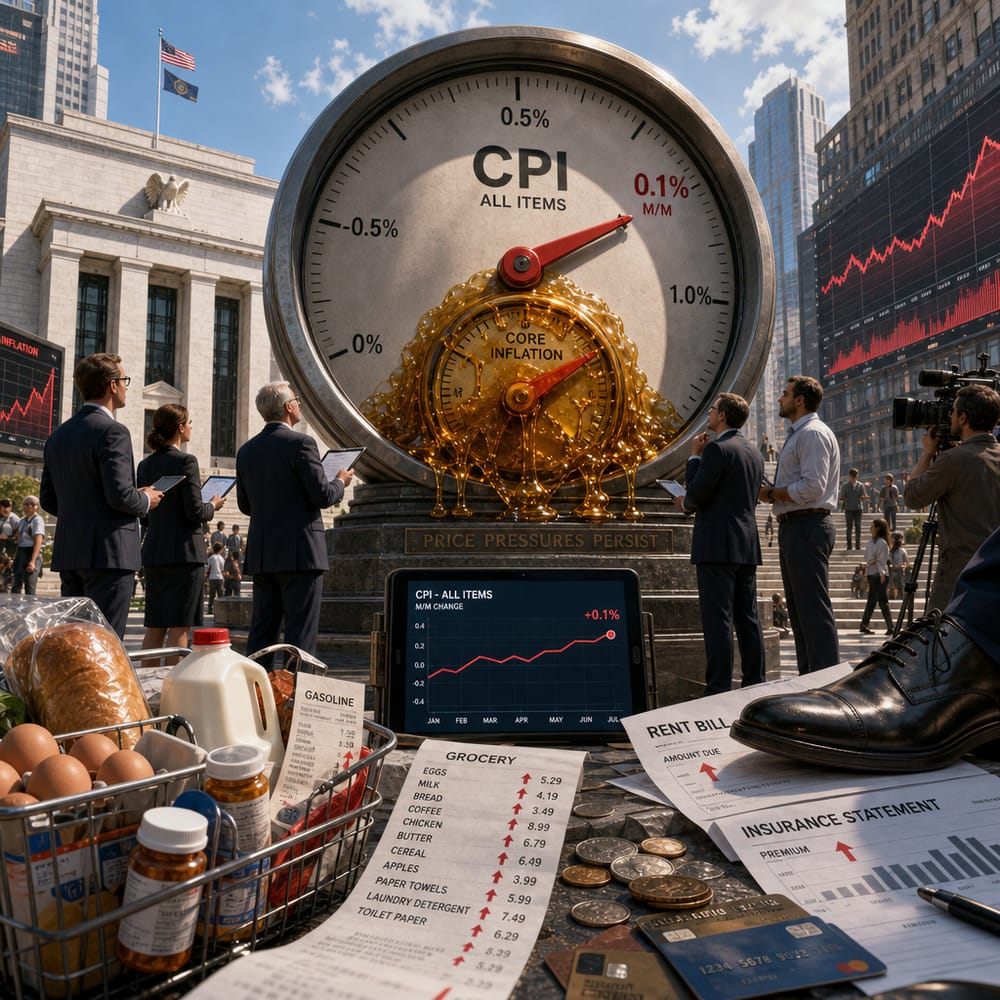
JUST WHEN WE THOUGHT IT WAS SAFE: JULY CPI SLIGHTLY RISES, CORE INFLATION PLAYS HARD TO GET
Remember when inflation was the financial boogeyman of 2022? Well, just like a bad penny, it's making a subtle yet noticeable comeback. The July Consumer Price Index (CPI) nudged up by 0.1% month-over-month. At first glance, that number might not seem like much, but hold on—it's the core inflation that's got the Federal Reserve sweating bullets like they're in a sauna.
HEADLINE VS. CORE INFLATION: WHAT'S THE TEA?
Headline inflation, which includes the whole colorful basket of goods from groceries to gas, was showing signs of chilling out. But core inflation, the more stubborn sibling that excludes food and energy costs, isn't playing as nicely. This number isn't budging the way the Fed would like, and it's causing quite the headache.
WHY DOES CORE INFLATION MATTER, YOU ASK?
Core inflation is like the financial equivalent of your credit card interest rate—persistent and unavoidable. While headline inflation can be volatile and influenced by short-term factors (hello, rising gas prices), core inflation tends to give a clearer picture of sustained price changes. And right now, it's signaling that those price changes aren't slowing down fast enough for the Fed's liking.
THE FED'S NEXT MOVE: EYES ON THE PRIZE
The Fed has been the stern headmaster wielding interest rates like a ruler over knuckles. For them, the persistence of core inflation means they might have to keep interest rates higher for longer than the market had been hoping. And if you’re thinking this sounds like the sequel to a horror movie, you’re not far off. Higher rates mean borrowing costs go up, which can lead to a cooling in everything from buying a new home to starting that business you've been dreaming about.
And let's not forget about the bond market, where the 30-year Treasury yield recently hit its highest in almost two decades. Persistent inflation and fears of rising rates send bond yields north, which in turn impacts everything from your mortgage to your car loan. If higher rates stick around, the cost of financing anything could become a lot more daunting—just ask anyone shopping for a new home in this “frozen” housing market.
CONSUMERS AND THE ECONOMY: WHAT'S THE IMPACT?
With the core CPI refusing to play ball, consumers could find themselves holding wallets tighter than a magic wallet trick. While spending hasn't fully dried up, the caution in the air is palpable. Home Depot, for instance, reported that its customers have the means to spend but are hesitant to dive into big projects. Phrases like "frozen housing market" are becoming all too common, and let's face it, who wants to buy a house when mortgage rates feel sky-high?
This spending hesitancy could ripple through the broader economy. When consumers dial back, businesses feel the pinch, and economic growth can slow. So, while the Fed is walking a tightrope between staving off inflation and encouraging growth, the rest of us are left to wonder if we're about to be caught in the middle of an economic balancing act worthy of a Vegas show.
WHAT SHOULD YOU DO?
For the everyday investor, this sticky inflation situation is a call to action. Keep an eye on Fed announcements and watch those interest rates like a hawk. They’ll be the compass guiding market movements. Diversification remains your friend, and staying informed is your best strategy. Watch out for those corporate earnings reports and market reactions to Fed speak because they could offer clues about where things are headed.
And while you're at it, maybe hold off on that new house—unless you like the idea of mortgage payments that could rival your student loans. Instead, focus on investments that have historically done well in times of high inflation, such as real estate investment trusts (REITs) or commodities, and always keep an eye on your long-term financial goals.
Bottom line: The Fed is on the case, but it’s a case fraught with complexity. So, stay sharp, stay savvy, and keep your financial game strong because this inflation story is far from over.
This article is for informational purposes only and is not investment advice. Always do your own research or consult a licensed financial professional before making investment decisions.
© Copyright 2024. All Rights Reserved.
© Copyright 2024. All Rights Reserved.