

July CPI in Line—Headline Comfortable, Core Sticky
Monday, August 17, 2026
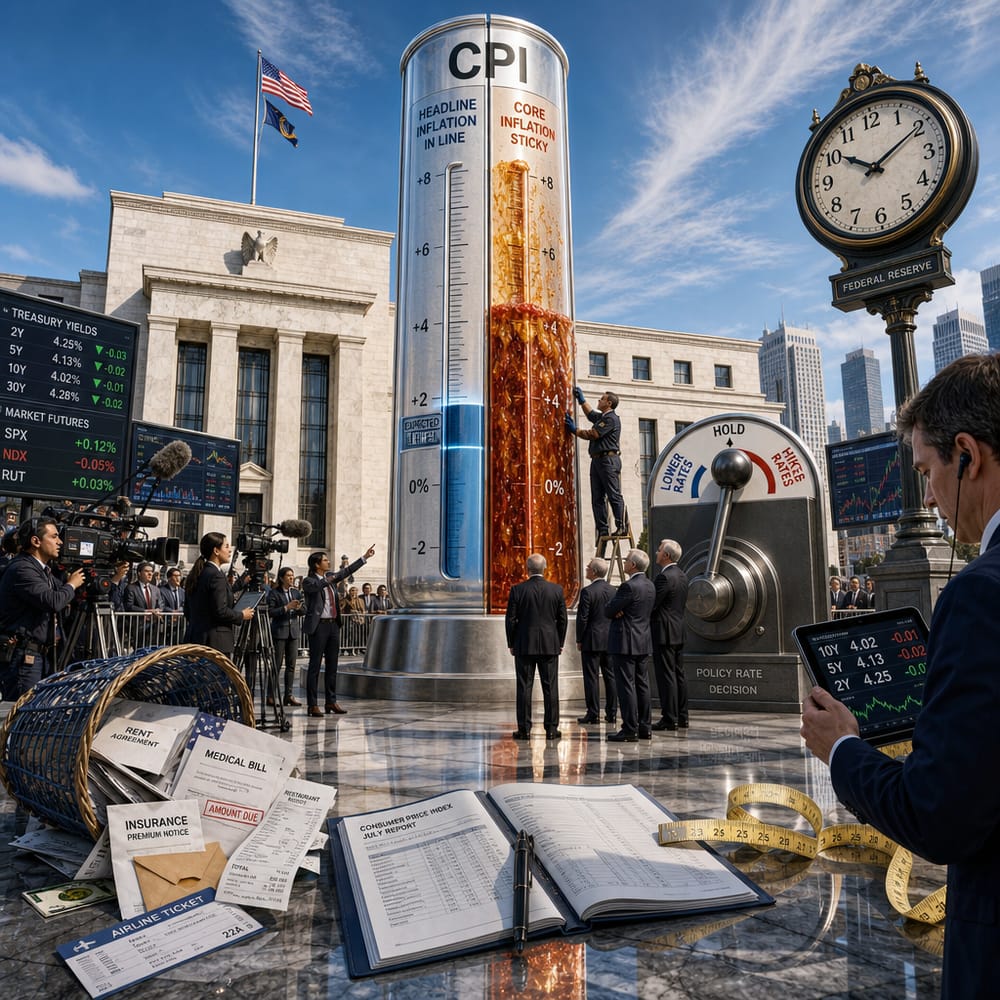
Here's the thing about inflation: it's like that uninvited party guest who just won't leave. You think you've got it under control, but then it sneaks back in through the side door. July’s Consumer Price Index (CPI) report just dropped, and while the headline numbers are playing nice, the core inflation is sticking around like gum on a hot sidewalk, leaving the Federal Reserve in a bit of a bind.
Before you dive into the numbers, let’s get one thing straight: CPI is the granddaddy of inflation reports. It’s like the weather forecast for your wallet. Headline inflation in July came in pretty much as expected, which is a sigh of relief. But don’t pop the champagne just yet. Core inflation, which strips out the volatile stuff like food and energy — and trust me, 'volatile' is an understatement — is proving to be as stubborn as a cat refusing to take a bath.
So, what exactly is being sticky here? It’s the core components, folks. We're talking housing, services, and some elements of healthcare. These aren’t just numbers on a chart; they’re the costs that hit you where it hurts: rent, medical expenses, and the price of getting your car fixed. And unlike the headline numbers, which can be swayed by a good harvest or an oil dispute halfway across the world, these core elements don't budge easily.
This is where the Fed comes in. You see, Jerome Powell and his Federal Reserve buddies have been on a mission to rein in inflation by hiking interest rates faster than your dad’s terrible jokes at Thanksgiving. The idea? Make borrowing more expensive, slow down spending, and bring prices back in line. But here’s the pickle: when core inflation is sticky, just jacking up rates might not do the trick. Think of it like trying to fix a leaky faucet with duct tape. It's a temporary fix at best.
Now, the Fed has to play this game of chicken with rate hikes and the economy. Too aggressive, and they risk sending the economy into a tailspin. Too lenient, and inflation keeps munching away on your paycheck. It’s like balancing a spinning plate on a toothpick — one wrong move, and crash!
And let’s sprinkle in a dash of geopolitics for good measure. Iran rattling sabers and oil prices bubbling up? Check. China showing signs of a slowdown? Check again. All these factors are like sneaky little gremlins that could throw a wrench into the Fed's best-laid plans. If oil prices spike because of tensions in the Strait of Hormuz, or if China’s slowdown sends shockwaves through global markets, the Fed's rate path could become about as predictable as a cat on catnip.
So, what is the Fed likely to do with this mixed bag of inflation data? Odds are, they'll keep a close eye on core components while leaving their rate-hike hammer by the bedside, ready to grab if things start going haywire. They’ve got a dual mandate: keep inflation in check and maximize employment. It’s a bit like trying to walk a tightrope over a pit of alligators, but hey, that's why they get the big bucks.
Retail investors, take note. This isn’t just financial kabuki theater. Persistent core inflation can ripple out, affecting everything from your mortgage rate to your stock portfolio. It’s why the Fed’s decisions are like the marionette strings of the markets. You can bet your coffee money that traders and investors will be hanging on every syllable Powell utters in the next Fed meeting.
In the meantime, what can you do? Stay informed, keep an eye on those sticky core components, and perhaps hold off on any impulse buys spurred by AI stock enthusiasm that seems to be fizzling out faster than a bottle of cheap champagne.
In conclusion, while the headline CPI may be in line, the sticky core inflation keeps things complicated, like a Netflix series plot twist you didn't see coming. And as for the Fed? Their next moves are as crucial as ever. Buckle up, because the economic rollercoaster is far from over.
This article is for informational purposes only and is not investment advice. Always do your own research or consult a licensed financial professional before making investment decisions.
© Copyright 2024. All Rights Reserved.
© Copyright 2024. All Rights Reserved.