

July CPI Headline Inflation Expected at ~3.4% – Key for Fed’s September Decision
Wednesday, August 12, 2026
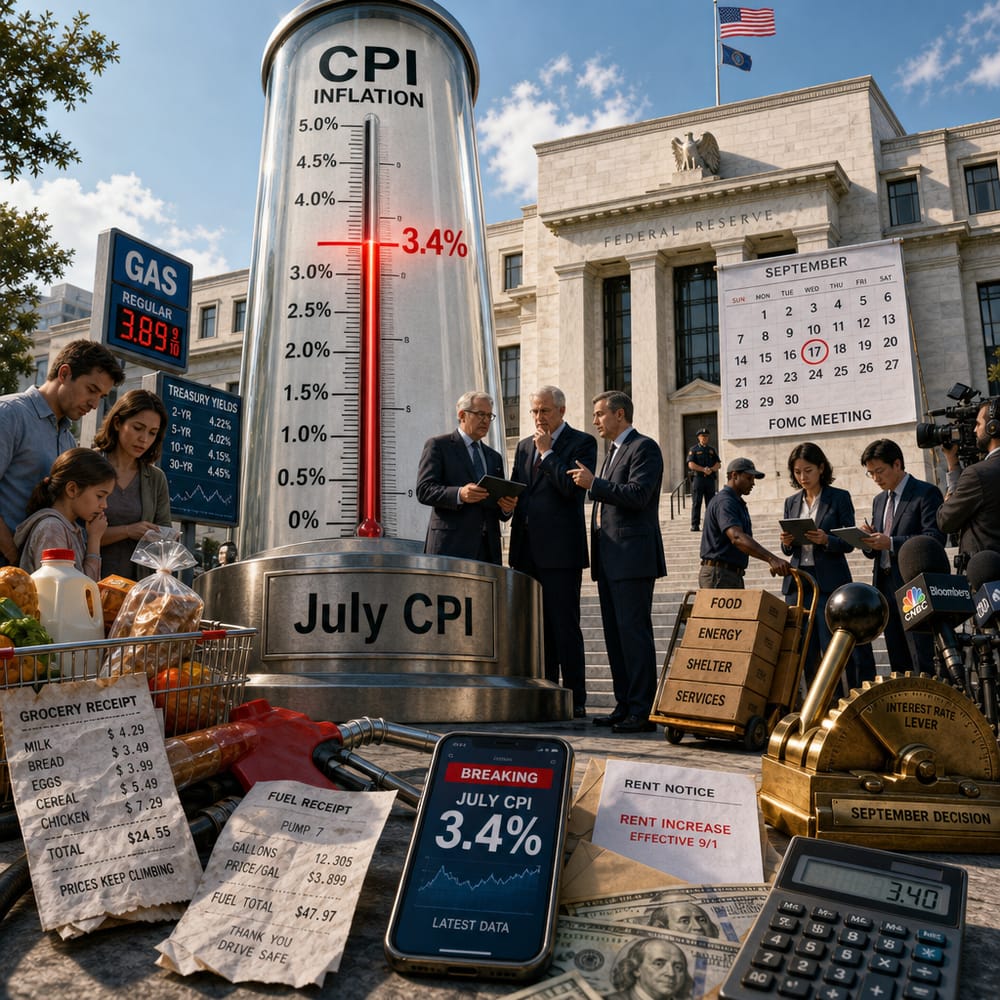
INFLATION INSPECTORS: WHY JULY CPI COULD MAKE OR BREAK THE FED'S NEXT MOVE
Ladies and gentlemen, grab your magnifying glasses and your economic detective hats—it's time to decipher the latest Consumer Price Index (CPI) figures. In a world where numbers can make or break your wallet, July’s CPI data is the next big thing on the economic calendar. Forecasts suggest a 3.4% increase year-over-year, but what does that mean for you, your savings, and those good ol’ Federal Reserve interest rates?
THE STAKES ARE HIGH
Think of CPI as the pulse of inflation. When this number goes up, it indicates that prices for the things we buy—like groceries, gas, and gadgets—are climbing. The Federal Reserve, or the Fed as it's affectionately known, keeps a hawk-eyed watch on this number. Why? Because controlling inflation is part of their job description. If prices rise too quickly, the Fed's usual game plan is to hike interest rates to cool things down. But if the CPI falls short? Well, that could keep rates stable or even lead to a cut.
For the Fed's meeting in September, July’s CPI print will be like a guiding star. A higher-than-expected number might push them to tighten the money taps with higher rates, while a softer reading could mean keeping those taps open just a little longer.
THE GREAT EXPECTATIONS
You might be wondering, what happens if the CPI exceeds or undershoots that 3.4% expectation? If it’s hotter than predicted, brace yourselves. Higher interest rates could mean pricier loans—from mortgages to car payments—since banks usually follow the Fed's lead. Investors might also start rethinking their stock market plays, shifting cash from equities to bonds, which become more attractive with higher yields.
Conversely, if the CPI comes in cooler than expected, it could spur confidence and spending—music to the ears of businesses and stocks. Households might feel more comfortable spending rather than saving, knowing their loans won’t get pricier anytime soon.
SPENDING SPREE OR SAVING STREAK?
Consumer confidence is a finicky friend, easily swayed by headlines and numbers. A higher inflation rate can make consumers cautious, pushing them to tighten their belts and save more. That’s bad news for businesses reliant on consumer spending, which forms the backbone of the U.S. economy. But if inflation shows signs of cooling off, people might just say, “Let’s splurge a little,” giving a much-needed boost to sectors like retail and hospitality.
THE WIDER PICTURE
Let's not forget, these numbers affect more than just Main Street. Wall Street has its ears perked up as well. Tech stocks, real estate, and commodities all react to inflation data in their own quirky ways. While rising inflation can be a thorn for growth stocks—it means their future cash flows are worth less today—some sectors might rejoice. Commodity stocks, for instance, could see a boost as tangible assets, like oil and metals, tend to perform well in inflationary climates.
So, as we wait for those July CPI numbers to roll in, remember this: they’re not just numbers. They’re the whispering winds that guide the sails of our economy. For the Fed, for businesses, and for you—the retail investor—this data is key to unlocking the next chapter in economic policy.
Stay tuned, keep your eyes peeled, and don’t lose sight of what matters. Whether the CPI comes in hot or lukewarm, remember: knowledge is power. And as always, savvy investors like you remain one step ahead by staying informed, because in the world of finance, that’s half the battle won.
This article is for informational purposes only and is not investment advice. Always do your own research or consult a licensed financial professional before making investment decisions.
© Copyright 2024. All Rights Reserved.
© Copyright 2024. All Rights Reserved.