

July CPI Gives Fed Breathing Room—Inflation Holds Steady at 3.4%, Markets Ease
Thursday, August 13, 2026
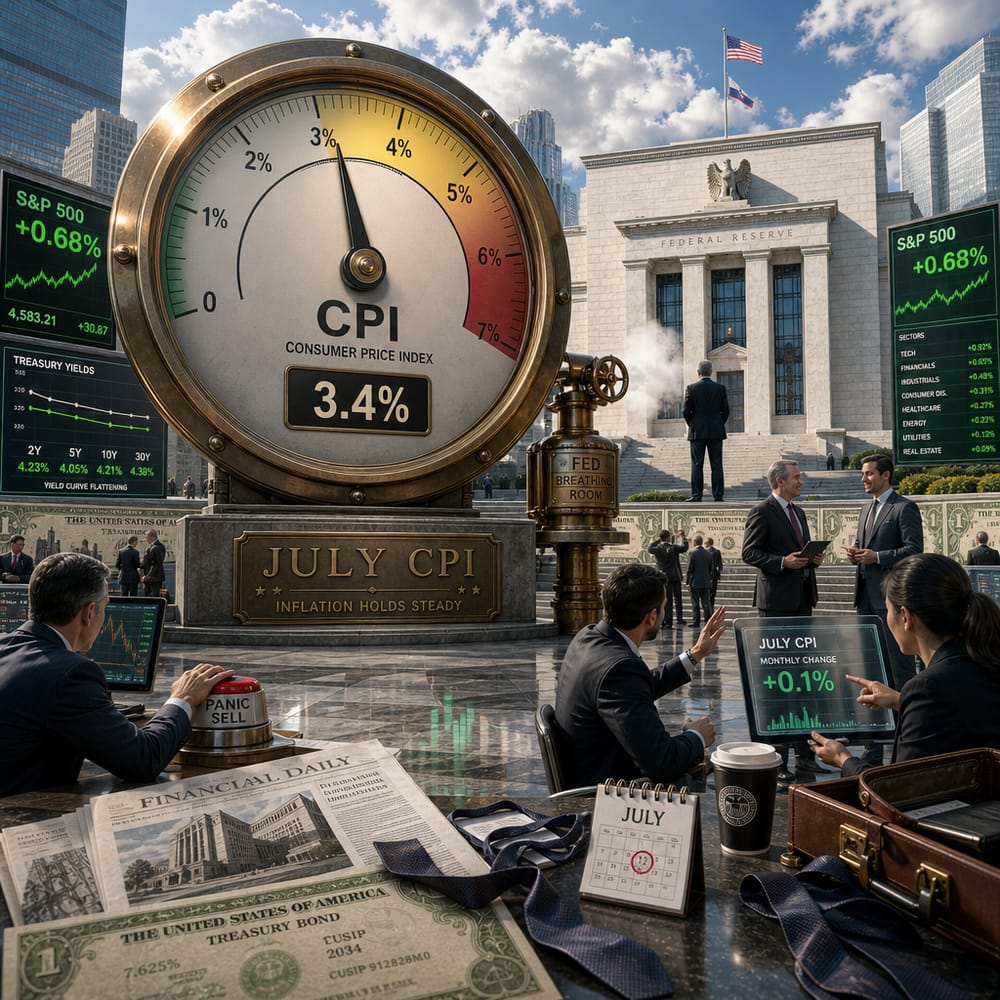
If inflation were a thriller, July's Consumer Price Index (CPI) data would be the calm protagonist, coolly strolling through a storm of market speculation and sleepless Fed nights. The CPI, our favorite economic yardstick for measuring inflation, held its ground in July, with a modest rise of 0.1%, keeping the warm annual inflation rate steady at 3.4%. In simpler terms, inflation is playing nice for now, giving Federal Reserve Chair Jerome Powell room to breathe. But the question is, for how long?
WHY STABLE INFLATION IS THE FED'S NEW BEST FRIEND
For the Federal Reserve, stable inflation is like finding a parking spot in downtown Manhattan—rare and valuable. With inflation maintaining its composure, the Fed can hold off on slamming the brakes with interest rate hikes. Higher interest rates are like a two-headed dragon for regular folks: they can cool down inflation, but also make borrowing for that dream home or college fund more expensive.
When inflation behaves, it signals to the Fed that they might not need to jack up interest rates anytime soon. This is good news for investors who dread the domino effect of rate hikes—higher borrowing costs leading to decreased consumer spending, ultimately putting a dent in corporate profits.
WHAT COULD GO WRONG? RISKS LURKING AROUND THE CORNER
While we're all enjoying this inflation intermission, it’s wise to keep an eye on the potential plot twists. If inflation were to rise unexpectedly, it could throw the Fed’s plans—and our wallets—into chaos. Several forces could stir this pot: geopolitical tensions, supply chain hiccups, or a spike in consumer demand. Any of these factors could trigger a fresh wave of inflation, forcing the Fed back into rate-hiking mode.
Historically, when inflation gets cozy above the 2% mark, the Fed feels the itch to act. An unexpected inflation surge could trigger a frenzy in bond markets, send stock indices spiraling, and leave investors scrambling to recalibrate their portfolios.
HOW MARKETS ARE RESPONDING TO THE CURRENT INFLATION DATA
The financial markets, those ever-fickle creatures, seem to be easing into the current inflation narrative with a sigh of relief. Following the latest CPI release, U.S. Treasury yields—those nifty indicators of market sentiment—took a slight dip. It appears investors are interpreting the stable inflation data as a sign that the Fed will adopt a "wait-and-see" approach rather than opting for immediate action.
Over on Wall Street, the S&P 500 is enjoying a pleasant boost, reflecting investor optimism that the Fed won’t need to rock the boat with rate hikes just yet. Stocks are finding a stable footing, buoyed by the hope that steady inflation will grant companies a reprieve and offer consumers a break from escalating prices for a little while longer.
THE INVESTOR'S TAKEAWAY: STRATEGY IN A STEADY MARKET
For retail investors scrolling through market updates while sipping their morning coffee, stable inflation might just be the gold star of the week. It suggests a more predictable environment where portfolio managers can breathe easier, and everyday investors can feel more confident in their strategies.
This could be a prime opportunity to assess your investment portfolio. Consider holding or even increasing positions in sectors that traditionally perform well in a stable interest rate environment, like tech stocks or consumer goods. At the same time, it might be wise to keep an eye on U.S. Treasury bonds—these are often seen as a safe-haven asset, especially when the future economic landscape feels a tad unpredictable.
In the grand scheme of things, steady inflation is like a serene horizon in the volatile world of finance. It offers a moment of peace before the next big move, a chance for investors and policymakers alike to pause, reflect, and strategize. Whether you're a seasoned investor or just dipping your toes into the market waters, keep your eyes on the economic headlines and your portfolio ready for whatever the next fiscal chapter might bring.
This article is for informational purposes only and is not investment advice. Always do your own research or consult a licensed financial professional before making investment decisions.
© Copyright 2024. All Rights Reserved.
© Copyright 2024. All Rights Reserved.