

July CPI & Fed Rate Odds
Monday, August 17, 2026
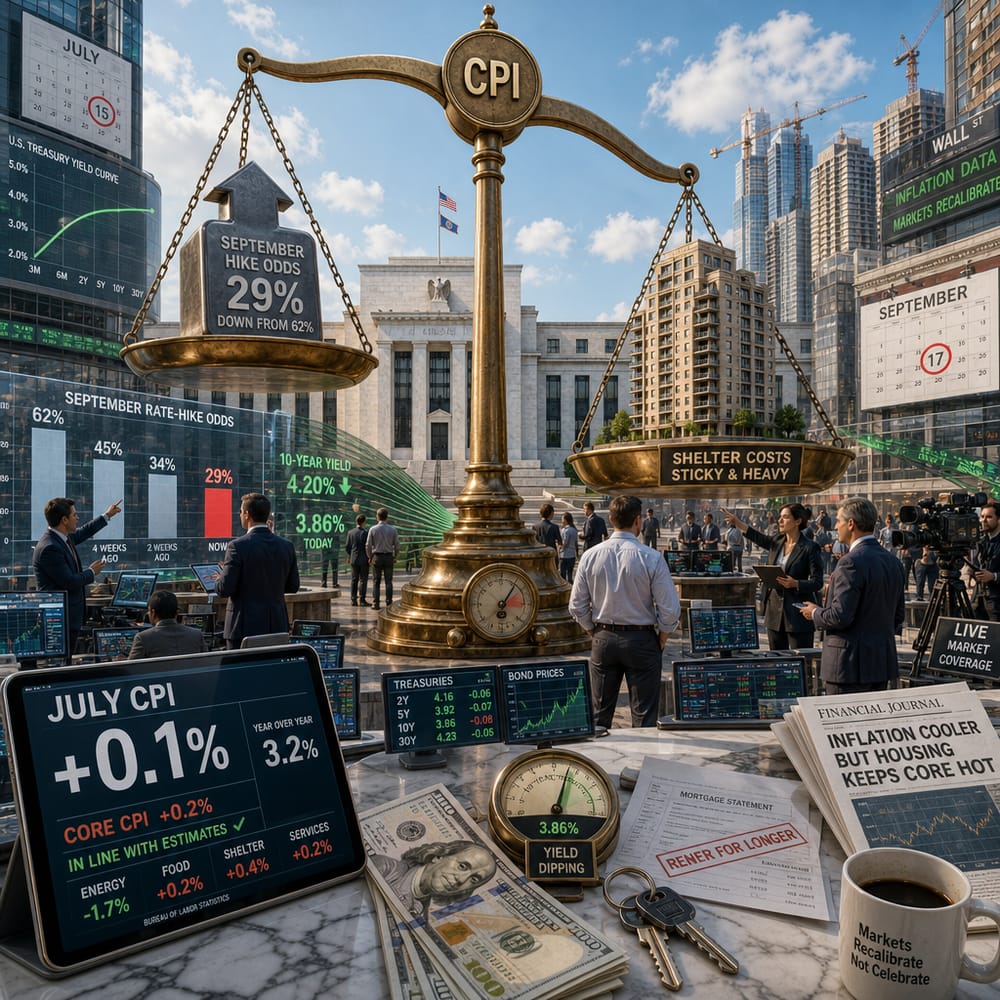
JULY CPI & FED RATE ODDS: INFLATION COOLS BUT HOUSING COSTS KEEP THE HEAT ON
Grab your popcorn and settle in because this summer’s economic drama isn’t over yet. July's Consumer Price Index (CPI) numbers are in, and it seems like inflation might finally be chilling out. But don't get too cozy—housing costs are still partying hard, leaving core inflation clinging on like a stubborn stain. As a result, investors are now betting that the Fed might just sit out of the September rate hike dance. Let's break it down.
INFLATION TRENDING DOWN: IS IT FINALLY COOLING?
So, what's the scoop with the July CPI? The overall index rose by a modest 0.1% compared to June. It’s like inflation decided to take a breather and grab a cold drink. But why the slowdown? Think of lower energy costs—good news for anyone planning a road trip or just trying to survive this summer’s heat wave without skyrocketing utility bills.
Yet, core inflation—which excludes volatile food and energy prices—remains annoyingly persistent, up by 0.3% from the previous month. And yes, you guessed it, our dear friend housing is the troublemaker here. With shelter costs making up a significant chunk of the core CPI, they’re proving to be more sticky than gum on a hot sidewalk.
THE FED’S DILEMMA: TO HIKE OR NOT TO HIKE?
Now, onto the Federal Reserve, the economic party planners of sorts, who have to decide whether to bring out the interest rate hike punch bowl in September. With inflation not exactly running away like a spooked cat, the odds of a rate hike are shrinking faster than a deflated balloon. Markets are starting to bet that the Fed might just pause in September, giving everyone a breather.
But what happens if the Fed decides to hold off on raising rates? For starters, it could mean continued relief for borrowers—think mortgages, car loans, and your credit card rates. Lower rates keep borrowing costs down, making it easier for consumers and businesses to spend and invest.
HOUSING MARKET IMPLICATIONS: STILL IN THE HOT SEAT
Now, let's talk about the housing market—the life of this inflationary party. Even with the overall cooling of inflation, housing costs remain a sticky issue. High demand and limited supply have kept prices elevated. So, while a pause in rate hikes might offer some relief to prospective homeowners by possibly slowing down the rapid ascent of mortgage rates, it doesn’t change the fact that housing affordability remains a significant challenge.
For those invested in or considering the housing sector, this sticky core inflation could mean continued high prices but potentially slower growth if borrowing remains expensive. The balancing act between cooling demand and sustaining supply is what's keeping this sector on its toes.
TREASURY YIELDS AND MARKET MOOD
Let’s not forget about Treasury yields, the go-to barometer for market sentiment. With the Fed potentially taking a break on rate hikes, yields might ease, offering a bit of relief to those invested in government bonds. Low yields generally suggest investors are expecting slower economic growth, possibly giving stocks a chance to shine—particularly growth stocks that benefit from lower borrowing costs.
THE BIG PICTURE: WHAT DOES IT MEAN FOR YOU?
For the everyday investor, understanding these inflation trends and rate hike expectations isn’t just an exercise in economic gymnastics. It’s about seeing the road ahead for your investments, your borrowing costs, and ultimately, your financial health. Lower odds of a Fed rate hike could mean a more stable outlook for equities, especially growth stocks, and potential stabilization in the housing market, albeit with persistent affordability issues.
So, there you have it: the latest episode in the ongoing saga of inflation and Fed policy. Keep your eyes peeled on the next CPI report and any Fed signals in the coming weeks. Because in this economic game of chess, every move counts.
This article is for informational purposes only and is not investment advice. Always do your own research or consult a licensed financial professional before making investment decisions.
© Copyright 2024. All Rights Reserved.
© Copyright 2024. All Rights Reserved.