

July CPI Eases Slightly—Market Now Prices Less Than 35% Chance of September Hike
Monday, August 17, 2026
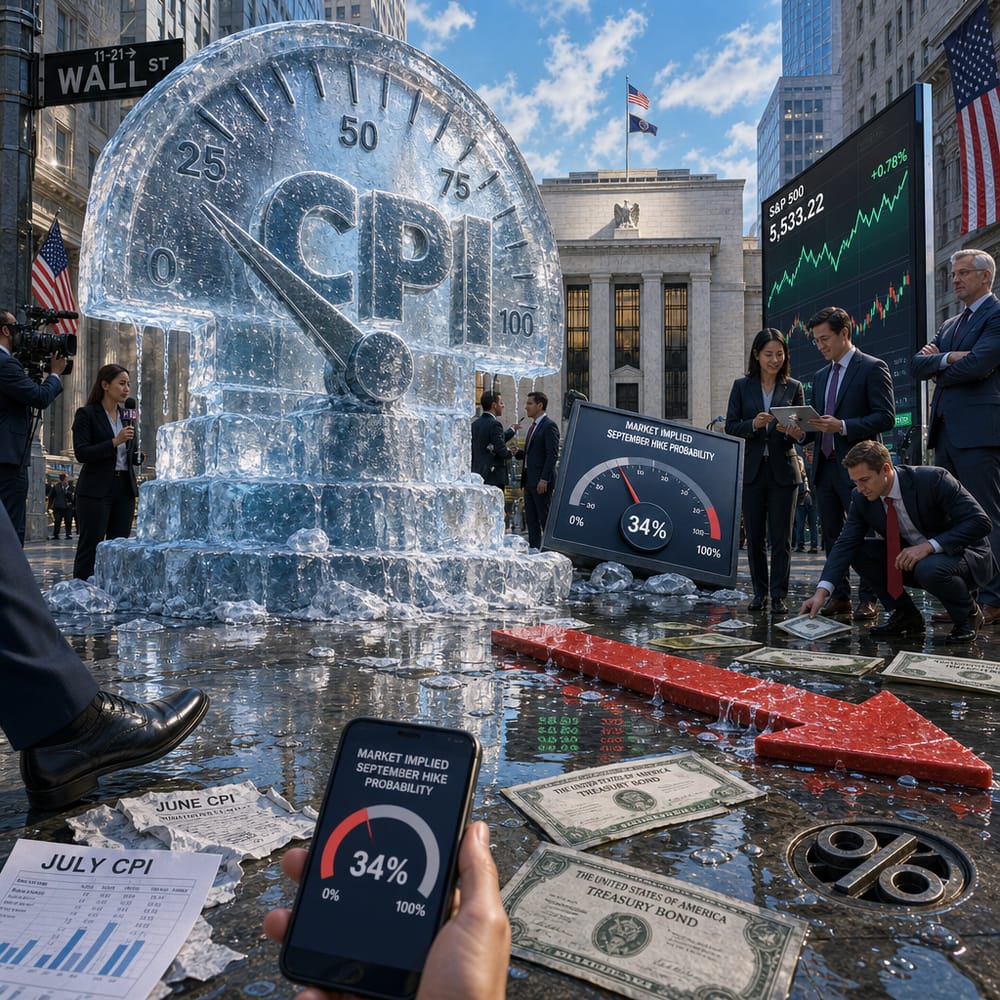
SOFTENING INFLATION EASES PRESSURE ON THE FED, MARKETS TAKE A BREATHER
If inflation were a starlet, July’s Consumer Price Index (CPI) reading would be its first mildly successful indie film. Barely a headline-grabber, this month's CPI rose a mere 0.1% on a month-over-month basis and 3.4% annually, easing slightly from June’s 3.5% annual pace. So, what does this mean for your wallet, the Fed, and, more importantly, your investment portfolio? Let's dissect this unfolding economic drama.
THE FED'S DILEMMA: TO HIKE OR NOT TO HIKE
The Federal Reserve’s decision to hike interest rates is akin to a teen's decision on what to wear to prom—it’s all about reading the room. The Fed, in its never-ending battle to tame inflation without causing an economic meltdown, has been aggressively raising rates. But with July’s inflation numbers coming in cooler than expected, the Fed might just feel comfortable enough to loosen its death grip on the interest rate lever.
Why does this matter? For starters, lower inflation reduces the urgency for the Fed to hike rates. With the probability of a September rate hike slumping to just 34%, markets have practically taken a collective sigh of relief. And for good reason—higher rates make borrowing more expensive, which can curb spending and dampen economic growth. In short, lower inflation equals lower pressure on the Fed, which equals less borrowing pain for you and me.
BOND MARKETS: THE YIELD CURVE'S NEXT MOVE
If you own U.S. Treasury bonds, you might be feeling a little less stressed. Normally, when inflation is high, bond yields tend to rise since investors demand higher returns to counteract inflation's eroding effect. But with inflation cooling, bond yields can take a breather too.
Lower expectations for future rate hikes mean that bond prices could stabilize after a jittery period. However, the bond market is like that friend who’s always worried—anything can trigger panic, including geopolitical tensions and economic shocks. But for now, bondholders can enjoy some much-needed tranquility.
STOCK MARKETS: BREATHING ROOM FOR EQUITIES
Over in stock land, July's CPI figures have been met with a warm reception. The S&P 500 might not have broken into a dance just yet, but the reduced likelihood of another rate hike is good news for equities. Why? Lower rates typically mean cheaper borrowing costs for companies, encouraging investment and expansion. Plus, lower discount rates make future earnings more valuable today, a boon for stock valuations.
That said, don’t go throwing confetti just yet. While the inflation news is a reprieve, the stock market remains a complex creature, heavily influenced by corporate earnings, economic data, and investor sentiment. Even so, a more dovish Fed could provide the tailwind needed for equities to continue their upward trajectory.
THE WILD CARDS: WHAT COULD GO WRONG?
Despite the good news, it’s not all rainbows and unicorns. Geopolitical tensions, like Russia's recent ventures in Ukraine, could stir the pot. And let's not forget our old friend, the economic slowdown, which could rear its ugly head with less warning than a rogue wave capsizing an unsuspecting tourist boat.
Investors should also keep an eye on consumer spending—less spending means less revenue for companies, which could mean less enthusiasm for stocks. And while inflation seems to be on a diet, any surprise upticks could send markets into a tizzy.
THE TAKEAWAY
July’s CPI report was like a cooling draft on a muggy summer day—refreshing, but not quite enough to declare victory over the heat. For retail investors, this easing inflation means a temporary stay of execution from rapid rate hikes.
As you scrutinize your portfolio, remember that while the Fed might be cooling its jets, the financial markets are anything but predictable. Diversification, a keen eye on economic trends, and a smidgen of luck are your best allies as you navigate this ever-changing landscape. Here’s to hoping the Fed keeps its cool—and your investments follow suit.
This article is for informational purposes only and is not investment advice. Always do your own research or consult a licensed financial professional before making investment decisions.
© Copyright 2024. All Rights Reserved.
© Copyright 2024. All Rights Reserved.