

July CPI Eases, Markets Trim September Rate-Hike Odds
Friday, August 14, 2026
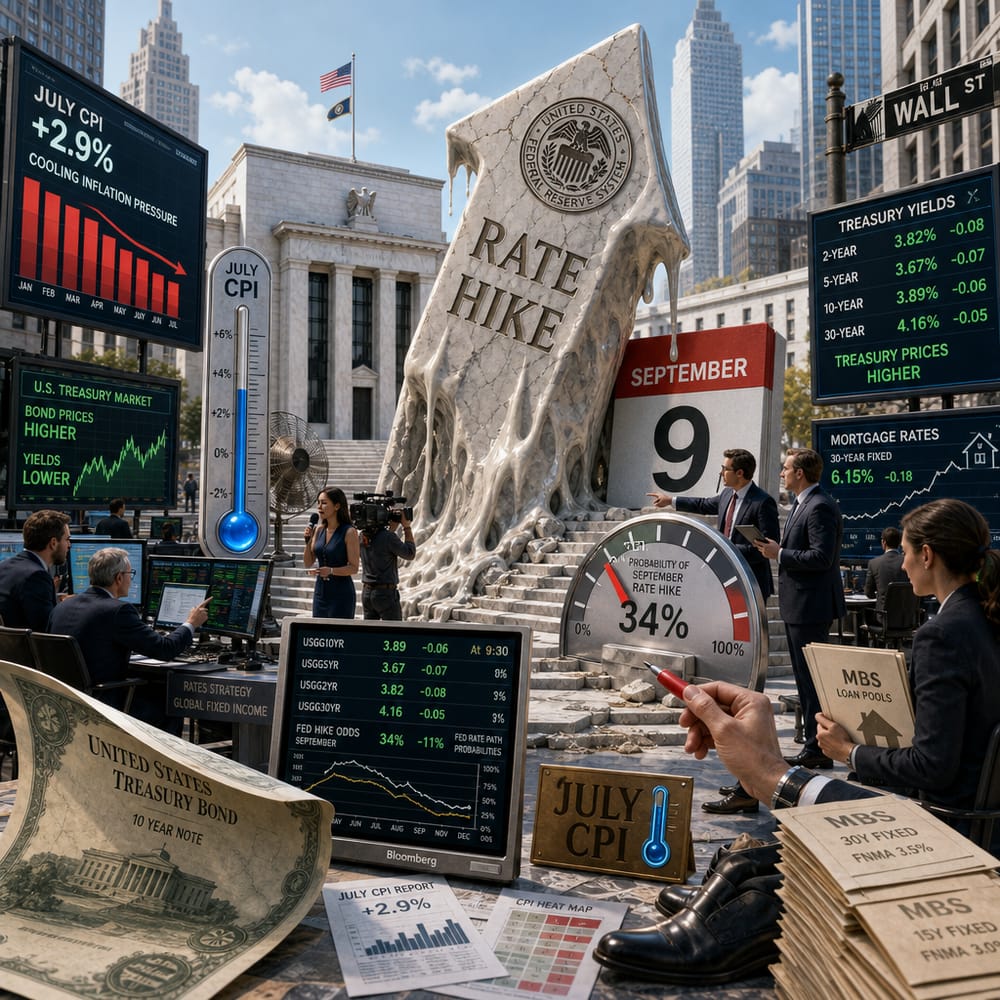
JULY CPI EASES, MARKETS TRIM SEPTEMBER RATE-HIKE ODDS
Well folks, grab your popcorn because the drama isn't just on your favorite streaming service—it's playing out on Wall Street, too. Cue the entrance music for the Consumer Price Index (CPI), July’s star performer, which moseyed in with a smooth 0.1% month-over-month rise. Over the past year? A casual 3.4% climb. Not exactly a fireworks show, but enough to keep the financial crowd buzzing.
Now, why should you care about this measured performance? Picture the Federal Reserve as the world’s strictest dance instructor, forever tweaking interest rates to keep inflation from stepping on the economy's toes. When inflation is up, the Fed might crank interest rates skyward, making borrowing costlier. But a subdued CPI suggests inflation’s not partying too hard, so the Fed might ease up on hurling rate hikes like confetti at a wedding.
With July’s CPI numbers defying the urge for dramatics, the markets have dialed back their betting odds on a September rate hike to about 34%. This isn’t Vegas, but investors love a good gamble. Less certainty about the Fed raising rates means lower Treasury yields—those somewhat dull but reliable government bonds you might know from your 401(k) plan.
And what about mortgages, the perennial thorn in the side of potential homeowners everywhere? Well, lower Treasury yields usually imply mortgage rates might finally calm down from their recent caffeine high. For anyone daydreaming about a white picket fence, that's some welcome news.
Speaking of Treasury bonds, they’ve got their own subplot. Lower yields are often the market’s way of putting on sweats and lounging on the couch, signaling risk aversion. When investors feel jittery, they flock to what’s safe and sound—U.S. Treasuries. It's like choosing a warm blanket and a cup of cocoa over a night out when the weather’s iffy.
But let’s not forget the mortgage-backed securities, the less flashy cousin of Treasury bonds that deserves its moment in the spotlight. As mortgage rates shuffle down, the value of these securities—bundles of home loans sold by banks like financial fruit baskets—tends to perk up.
Look, the CPI’s modest rise might not be the Hollywood blockbuster of financial data, but it’s definitely a plot twist. A market navigating the murky waters of inflation, rate hikes, and a Federal Reserve that’s cryptic as your least favorite tarot card reader is a scene worth watching.
Now, keep in mind, the Fed isn’t huddling over tarot cards to make its decisions. It’s a bit more scientific than that. Besides CPI, they’re scrutinizing labor markets, economic growth, and the general vibe of global financial conditions. Basically, they’re like that friend who overanalyzes every text for context—except their texts are the entire American economy.
But, alas, we don’t have a crystal ball. With over 90% of S&P 500 companies having already spilled the beans on their second-quarter earnings, investors have plenty to chew on as they decide how to play their next hand. Stocks are still keeping it interesting, with the S&P 500 and Nasdaq Composite prancing towards their third winning week, while the Dow’s looking a bit like it’s just rolling out of bed on a Monday morning.
All in all, the latest CPI report is a breezy reminder that not every market move needs to be seismic. Sometimes, a gentle nudge is enough to steer this economic ship. Whether you’re rooting for lower mortgage rates or just trying to keep your savings account from gathering dust, the dance of inflation and interest rates is one to watch—even if it doesn’t always end in a standing ovation.
So, dear reader, as the market spins its tale, keep one eye on the Fed’s next step and the other on your own financial goals. This economic rollercoaster may not have the loops and thrills of an amusement park ride, but it’s got enough twists to keep us all on our toes.
This article is for informational purposes only and is not investment advice. Always do your own research or consult a licensed financial professional before making investment decisions.
© Copyright 2024. All Rights Reserved.
© Copyright 2024. All Rights Reserved.