

July CPI Cooling but Core Pressures Lingering
Wednesday, August 26, 2026
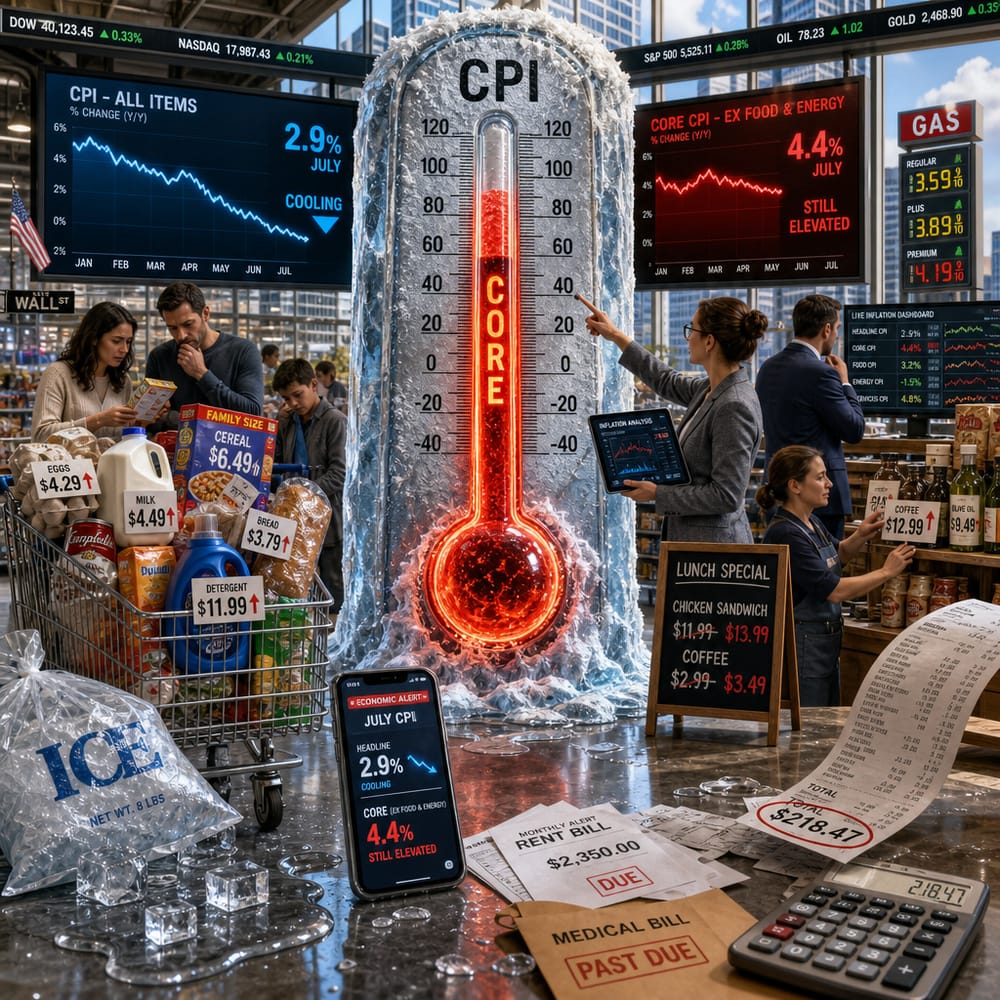
COOLING HOT: WHY JULY'S CPI NUMBERS ARE THE NEW TALK OF THE TOWN
Drumroll, please. The July CPI (Consumer Price Index) numbers have just waltzed in, and boy, do they have everyone buzzing. Think of the CPI as the nation’s fever thermometer, which shows how hot—or not—prices are running. In July, it seemed like we finally got a little relief from the scorching heat of inflation. But wait, there's a twist: while headline inflation took a chill pill, core inflation is still throwing a stubborn tantrum like a toddler in the candy aisle.
CRACKING THE CODE: HEADLINE VS CORE INFLATION
First things first, let's decode these fancy terms. Headline inflation includes everything you buy, from your morning coffee to that shiny new gadget. It's the whole enchilada. Core inflation, however, is like stripping that enchilada down to its basics, excluding the volatile goodies like food and energy prices. So why do we care? Because core inflation can be a better predictor of where prices are headed in the long term.
Right now, core inflation is like that irresistible burner that just won’t cool down. While headline inflation showed signs of cooling with a slight dip, core prices are holding their ground with the tenacity of your grandma's secret cookie recipe.
WHAT'S KEEPING CORE INFLATION SO STUBBORN?
The usual suspects are flexing their muscles here—housing, healthcare, and certain sticky services that refuse to budge. Housing, in particular, holds the heavyweight title in maintaining relentless price growth. After all, the U.S. housing market has been on a wild rollercoaster, and it's pulling core inflation along for the ride. Then there’s healthcare, a sector where prices rarely take a day off. Even in the face of changing costs, we've got labor shortages and feisty wage increases fanning the flames.
SO, WHAT’S THE BIG DEAL?
Enter interest rates, the central bank's magic wand for taming inflation. Persistent core inflation means the Federal Reserve might keep rates high for longer than we'd like. Picture it as the Fed playing the role of stern parent, saying, "No more easy money for now." If they decide to keep interest rates elevated, borrowing becomes pricier. That means mortgages, car loans, and even credit card rates could continue pinching our pockets.
HIGHER RATES, LOWER SPENDING
The domino effect starts when folks start cutting back on spending because their debt costs are eating away at their disposable income. When consumers tighten their purse strings, businesses feel the squeeze, and the ripple effect can slow down the entire economy. For Wall Street, this might be like rain on a parade, with potential repercussions across various sectors.
LOOKING AHEAD: WHAT DOES THIS ALL MEAN?
The key question is whether these persistent price pressures will push the Federal Reserve to hike rates yet again or hold them steady for longer. If the Fed decides to stick it out with higher rates, brace yourself for a possible bumpy ride in the consumer goods market. Companies might jack up prices even more to cover rising costs, creating a vicious cycle.
However, there is a silver lining. If we can gradually guide this inflation beast back into its cage while avoiding a full-blown recession, the economy might just find its sweet spot. It's a tightrope walk, a delicate balance between reining in inflation and keeping growth afloat.
MARKETS ON EDGE
Traders and investors are now on pins and needles, waiting to see how the Federal Reserve and the broader economy play their cards in this high-stakes game. While stock futures have been steady, everyone is peeking at the upcoming earnings for major players like Nvidia, looking for any signs of what direction the market might take.
BOTTOM LINE
As we navigate these choppy waters, keep a keen eye on core inflation as your compass. It's like that uninvited guest who overstays their welcome, dictating the party's direction. The next few months will be pivotal, and as always, being informed and agile will be your best assets. Keep your ear to the ground and your strategy flexible. When the dust settles, you'll want to be ready for whatever the economic landscape decides to throw your way.
This article is for informational purposes only and is not investment advice. Always do your own research or consult a licensed financial professional before making investment decisions.
© Copyright 2024. All Rights Reserved.
© Copyright 2024. All Rights Reserved.