

JPY Weakens as Bank of Japan Maintains Ultra-Low Rates
Monday, August 17, 2026
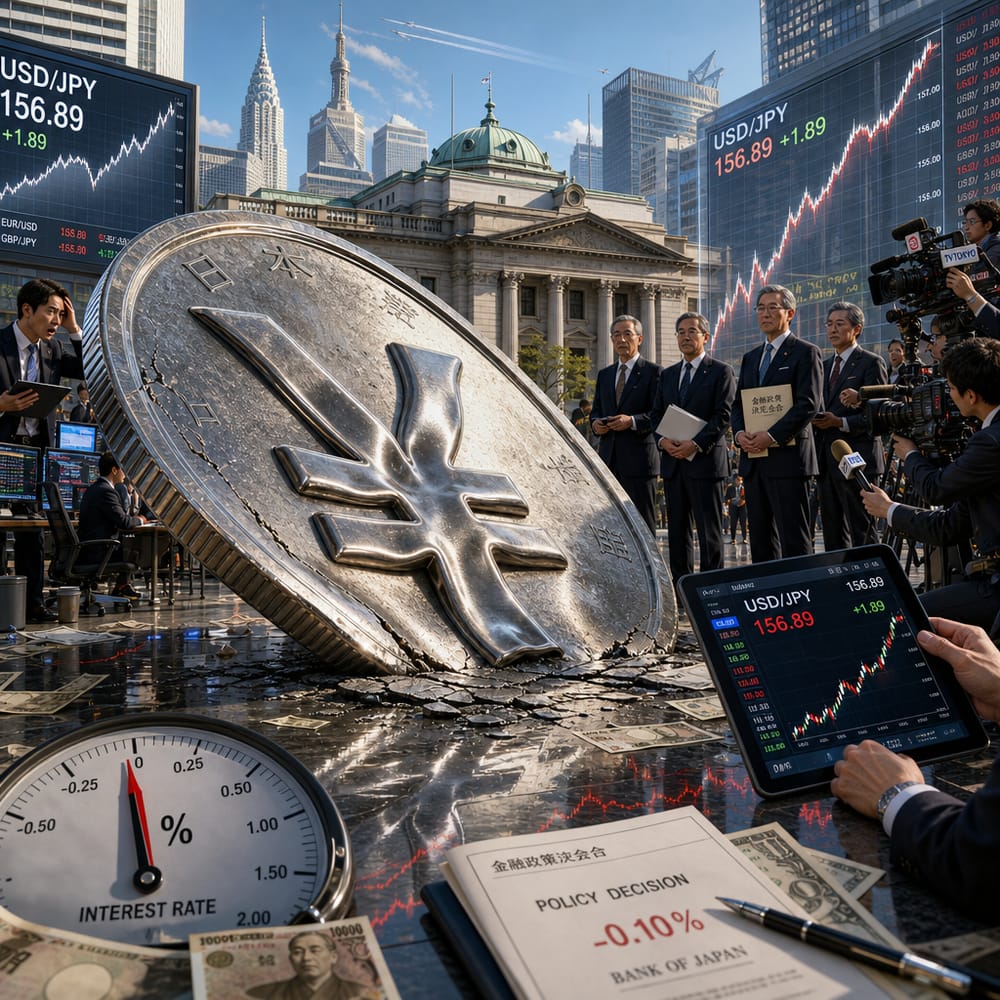
WHY THE JAPANESE YEN IS FEELING A LITTLE WOOZY
Well, folks, the yen is taking a bit of a nap, and the Bank of Japan is fluffing the pillow. While other central banks are hiking interest rates like they’re on a stairmaster, the BOJ is planted firmly in its ultra-low interest rate beanbag chair, and it shows no signs of getting up. Why, you ask? Let’s dive into this financial soap opera and find out how this affects not just Japan but the whole globe.
WHY KEEP RATES IN THE BASEMENT?
So, why is the BOJ so committed to keeping interest rates low when the rest of the world is doing the opposite? Think of it as Japan’s version of “If it ain’t broke, don’t fix it.” The BOJ’s strategy is all about boosting economic growth and tackling the deflation monster that’s been haunting it for decades. While inflation is the villain du jour for many economies, Japan has been battling persistent price decline, and low rates are one of the few swords it has to fight this dragon.
The BOJ’s Grand Master, Kazuo Ueda, is playing the long game. He’s using low rates to try to stimulate borrowing and spending within Japan, hoping to shake the economy from its long slumber. It’s a risky move, like trying to nudge a sleepy bear with a stick—you might get cuddles, or you might get claws. But Ueda seems to believe it’s a gamble worth taking.
THE COST OF A YEN THAT SNOOZES
Now, let's talk about the yen itself, which is currently feeling a bit like a college student after finals—exhausted and somewhat undervalued. A weaker yen can be both a blessing and a curse for Japan. On the one hand, it makes Japanese exports cheaper and more attractive abroad. Imagine high-tech gadgets and cars flying off the shelves like sushi on a conveyor belt. This tends to boost the revenues of big Japanese exporters, providing a bit of a sugar rush to the economy.
But there’s always a flip side. A weaker yen also means pricier imports. Japan, being as reliant on imports for necessities like energy and food as a cat is on naps, finds itself paying more for these goods. That's not a small thing in an economy that's trying to avoid inflation's seductive cousin, stagflation—where prices rise, but the economy doesn’t exactly follow suit.
GLOBAL WAVES FROM JAPAN'S POND
Alright, so Japan’s got its own economic soap opera going on. But why should you, dear reader, sitting somewhere far from Tokyo, care about any of this? Well, the yen’s performance is like a pebble in the global economic pond, sending ripples everywhere.
For starters, investors often view the yen as a safe haven. When it’s weak, they might run to other currencies like the Swiss franc or the U.S. dollar—currency equivalents of a warm blanket on a cold night. This can lead to fluctuations in global markets, affecting exchange rates and making international trade a bit of a rollercoaster ride.
Then there’s the impact on American wallets. For U.S. companies operating in Japan, their revenues take a hit when converted back to dollars. Imagine selling a thousand cup noodles and then realizing you’ve just earned enough for lunch. Not exactly the incentive to keep investing.
Finally, let’s not forget about interest rate parity—the financial world’s version of the Three Musketeers, where interest rates, exchange rates, and inflation poke at each other’s backs. Japan’s low rates pressure other countries to either lower theirs (unlikely) or risk their currencies strengthening too much, making exports less competitive. It’s like a Vegas dance-off where everyone needs to keep time, or they risk stepping on each other’s toes.
WRAPPING IT UP
The BOJ's decision to keep interest rates in the basement while the yen sags is more than just a saga for Japan. It impacts global trade, investment strategies, and currency markets worldwide. So, while the yen might be feeling a bit woozy, the BOJ seems comfortable with the state of affairs, at least for now.
As always, the world of finance keeps us all on our toes, and today’s yen might just be tomorrow’s hero or horror story. So keep an eye on it; who knows what the next chapter will bring? For now, we watch and wait, because in the ever-turning ballet of global finance, the only constant is change.
This article is for informational purposes only and is not investment advice. Always do your own research or consult a licensed financial professional before making investment decisions.
© Copyright 2024. All Rights Reserved.
© Copyright 2024. All Rights Reserved.