

Johnson & Johnson's Q3 Earnings: A Deeper Dive into the Unexpected Sell-off
Tuesday, October 13, 2026
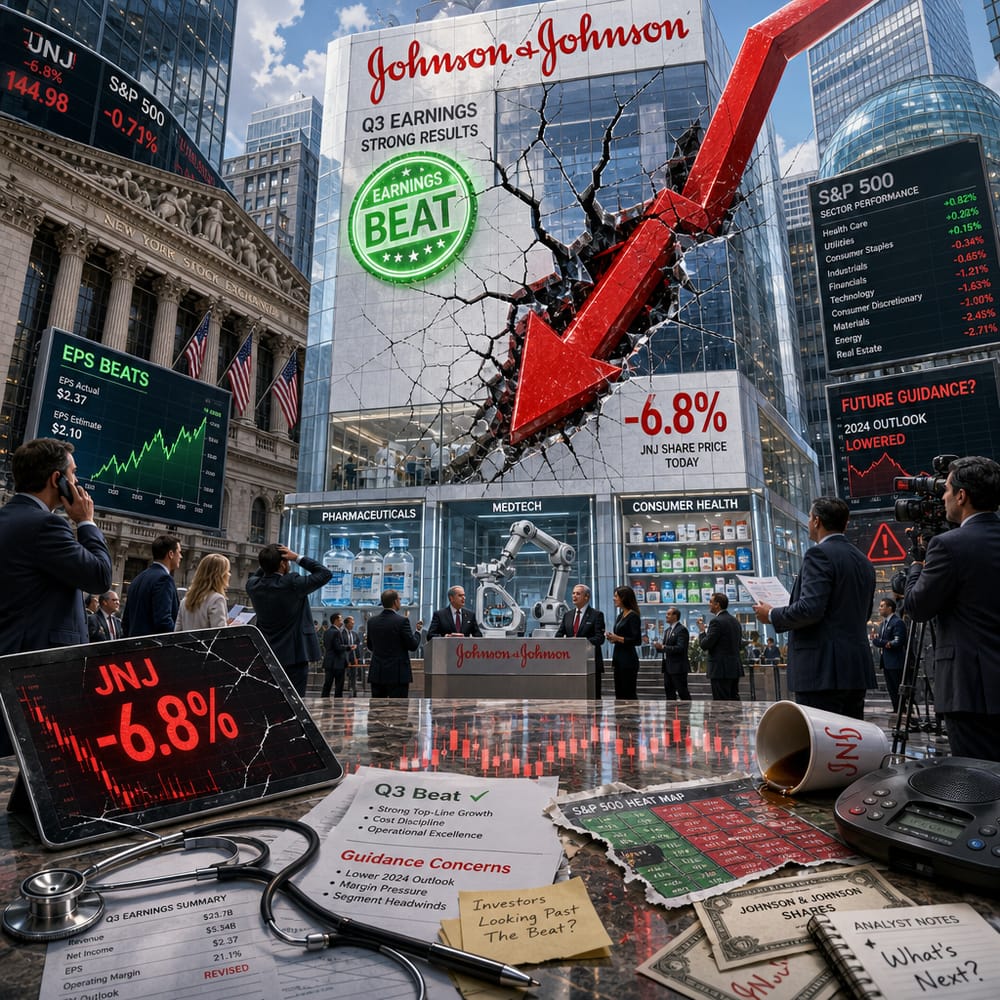
Johnson & Johnson just can't catch a break. Picture this: the iconic healthcare behemoth waltzes onto the stage, triumphing over Wall Street's earnings expectations, only to watch its stock trip and faceplant with a dramatic 6.8% tumble. It's like winning a marathon and then twisting your ankle at the finish line. But why did investors decide to ditch J&J faster than a New Year’s resolution?
THE DEVIL'S IN THE DETAILS
Let's start with the elephant in the room. Yes, Johnson & Johnson beat expectations. But here's the kicker: investors aren't just looking for good numbers; they want assurances about the future. And it seems like J&J handed out more riddles than answers. Analysts are buzzing about uncertainties in the company's forward guidance, which is Wall Street speak for "we don’t know what's coming next." The stock market, much like your overly cautious friend, doesn't do well with unknowns.
One major eyebrow-raiser is J&J's pharmaceutical division, which has been the company's golden goose for years. But this time around, investors are whispering about potential headwinds. The loss of exclusivity on some key drugs could mean a reduction in fat margins as cheaper generics enter the fray. And when your golden goose starts laying fewer eggs, well, that’s problematic for a giant who’s paraded its pharma prowess.
COMPARE AND CONTRAST
Taking stock of J&J’s performance isn't complete without peeking over the fence at the neighbors. Industry giants like Pfizer and Merck have been showing off their blockbuster developments, especially in the lucrative oncology and vaccine markets. While J&J has its own set of exciting prospects, the looming patent expirations cast a shadow that rivals’ recent triumphs don’t have to dodge just yet.
Moreover, let's remember that the healthcare sector isn't isolated. As broader market jitters, like those surrounding AI bubbles and chip stock volatility, make investors tap their feet nervously, any hint of instability can send them running towards safer pastures. J&J’s sell-off could also be partly a symptom of this wider unease — the financial world’s equivalent of throwing out the baby with the bathwater.
IS THERE LIGHT AT THE END OF THE TUNNEL?
Now, before you start hoarding canned goods and building a fallout shelter, it’s worth pondering the recovery possibilities. J&J isn’t a house of cards ready to collapse. It’s a diversified titan with sprawling operations in consumer health, medical devices, and pharmaceuticals. The fundamentals aren't suddenly as stale as old bread.
Take their consumer health segment, for instance. The separation of this arm into a standalone company called Kenvue might unshackle some hidden potential. Plus, J&J’s pipeline still boasts promising drugs and therapies that could revive investor confidence if they hit the mark.
Meanwhile, the healthcare sector itself is traditionally seen as relatively recession-proof. People get sick regardless of market conditions, and companies that can adapt tend to bounce back. If J&J can navigate its patent cliff and reignite growth flames in its other divisions, a stock recovery could very well be on the horizon.
CONCLUSION
The world of investing is as fickle as it is fascinating. What happened with Johnson & Johnson is a reminder that even the kings of the hill can slip on banana peels. While J&J’s stumble might feel like a plot twist, it’s part of the broader narrative that keeps the market both thrilling and notoriously unpredictable.
As always, do your homework and consult with someone who knows the nitty-gritty details before diving into the deep end of any stock. But remember, the market is a living, breathing entity. Today’s drama could be tomorrow’s opportunity, and in the world of investing, fortunes can shift faster than you can say “patent expiration.”
This article is for informational purposes only and is not investment advice. Always do your own research or consult a licensed financial professional before making investment decisions.
© Copyright 2024. All Rights Reserved.
© Copyright 2024. All Rights Reserved.