

Jobs Report Fallout: Fed's Dilemma Intensifies
Friday, August 14, 2026
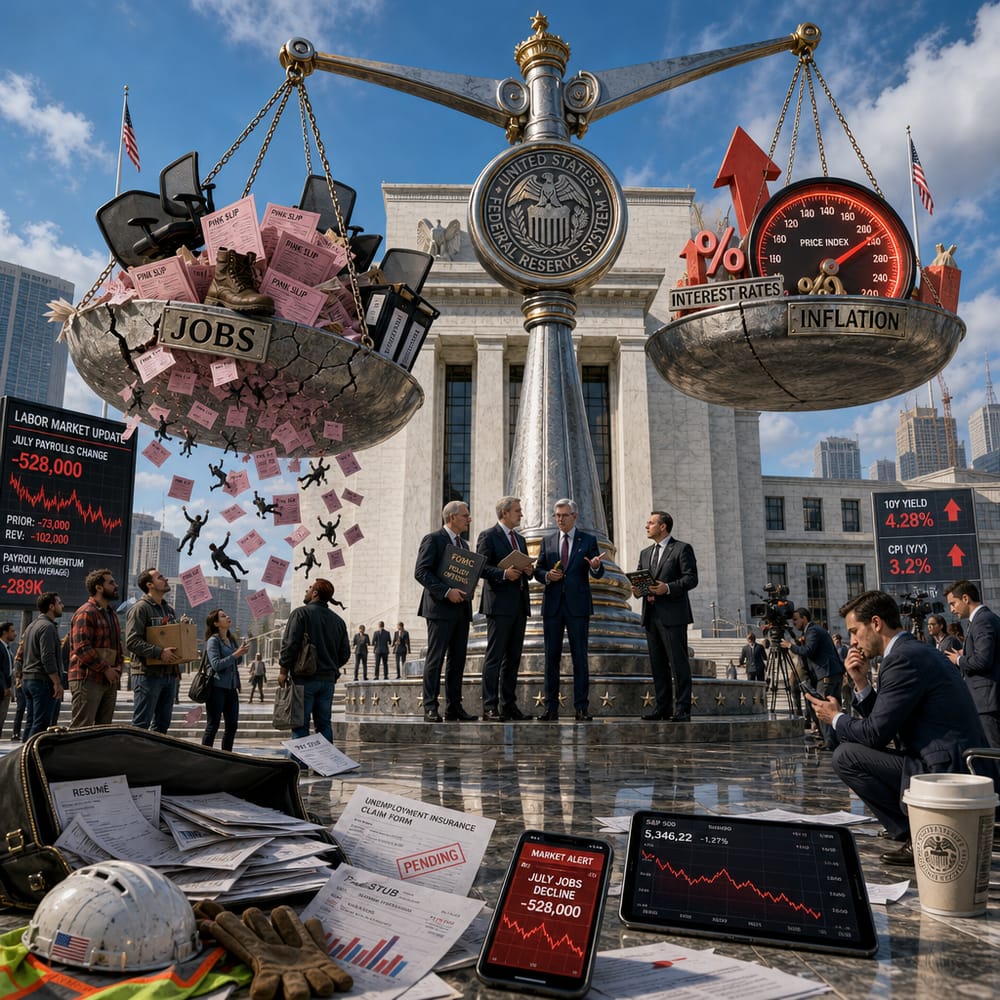
JOBS REPORT FALLOUT: FED'S DILEMMA INTENSIFIES
Stop the presses, folks—America’s job market just threw a curveball that even Clayton Kershaw would admire. In July, Uncle Sam waved goodbye to 23,000 jobs. It’s the first slip since February, and what’s the market's response? A puzzled shrug, as the unemployment rate simultaneously drops to 4.1%. It's like celebrating a touchdown while realizing you forgot to score it.
Now, let’s dig into this stew of confusion. Why did the job market take a nosedive? Experts are scratching their heads, but a few theories have bubbled to the surface. First up, the apocalypse of automation continues to roll out like a dystopian buffet, turning positions once occupied by human hands into gigs for robots. In sectors like retail, where folks used to stock shelves and ring up orders, software and machines are increasingly taking the reins. Secondly, some blame the inclement weather. July’s heatwaves were no joke, sending construction sites into a literal meltdown as workers sought shade rather than sweaty labor.
But the cherry on this job-loss sundae? Global supply chain hiccups. They’re still causing headaches from LA to New York. If businesses can’t get the materials they need, it’s hard to justify keeping folks on the payroll. It’s like inviting people to a potluck and forgetting to bring the main course.
So, what’s the Federal Reserve to do with such mixed signals? Picture Jay Powell—the Fed’s big cheese—sitting at his desk, hands in a steeple, pondering the economy like a chessboard. The Fed has a dual mandate: keep unemployment low and inflation in check. But this latest jobs report makes him look like a tightrope walker trying to balance on a greased wire.
Historically, when employment dips, the Fed might lower interest rates to jazz up the economy. But here’s the kicker: inflation hasn't exactly been napping on the job. It’s been busy playing tag with your grocery bills and gas prices. If the Fed cuts rates now, it risks throwing gasoline on the inflation fire, turning up the heat in an economy already feeling a little sweaty.
Yet, standing pat could mean watching the economy stall. With unemployment unexpectedly down, Powell and his merry band need to decide if they’re willing to gamble on inflation easing its relentless march. It’s a bit like playing poker with the economy’s future—do they hold the line, or do they make a bold move?
And let’s not forget the backdrop of the broader stock market, where indexes like the S&P 500 are flirting with all-time highs. Tech and communication sectors are strutting around like they own the joint, thanks to companies like Reddit joining the fray. This exuberance might be an inflation warning bell—or merely a sign that investors are ignoring the job market’s mixed messages.
In the end, the Fed’s decision will hinge on whether they believe this job dip is a blip or the start of a trend. If July’s job losses become a habit, expect Powell to get itchy with those rate cuts. Conversely, if the labor market rebounds swiftly, the Fed could maintain its current course, letting the economy run its wild, inflationary course with just a gentle hand on the tiller.
In the meantime, what’s a retail investor to do? Keep your eyes on economic indicators and stay light on your feet. The markets might be unpredictable, but staying informed can help you ride the wave instead of getting swept away by the tide.
As the Fed ponders its next move, the rest of us can only sit back, watch, and hope this economic drama doesn’t morph into a full-blown thriller. Because when it comes to balancing jobs and inflation, the stakes have rarely been higher.
This article is for informational purposes only and is not investment advice. Always do your own research or consult a licensed financial professional before making investment decisions.
© Copyright 2024. All Rights Reserved.
© Copyright 2024. All Rights Reserved.