

Jobs Report Eases Inflation Fears, Boosts Major Indices
Saturday, October 03, 2026
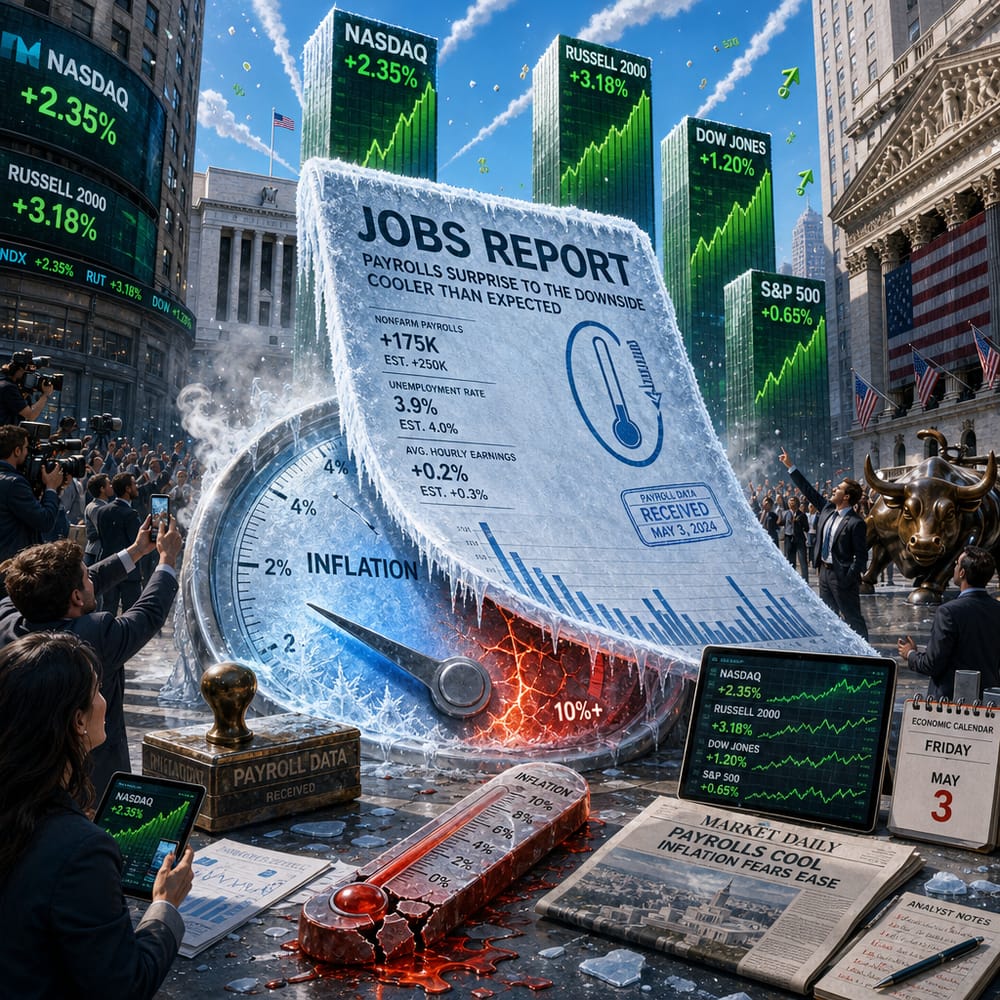
THE SILVER LINING IN COOLER JOBS REPORT: NASDAQ AND RUSSELL 2000 ROAR BACK TO LIFE
Investors, grab your popcorn. In a plot twist worthy of a binge-worthy drama, Wall Street found itself breathing a collective sigh of relief last Friday. The latest jobs report dropped, revealing a job market that's caught a bit of a chill, and stocks danced in response. The Nasdaq and Russell 2000 took center stage, leaving the S&P 500 lurking in their shadow like a nervous understudy.
Let's break it down. The Bureau of Labor Statistics reported that the U.S. economy added a mere 29,000 jobs in September, with the unemployment rate nudging up to 4.2%. For some, that might sound like bad news. But in the topsy-turvy world of finance, less-than-stellar job growth is sometimes just what the doctor ordered. It suggests that the Federal Reserve might hit pause on those dreaded interest rate hikes—an outcome that's music to investors' ears.
So why did the Nasdaq and Russell 2000 leap forward while the S&P 500 lagged behind? It's all about tech stocks and small-cap darlings. The Nasdaq, home to the tech glitterati, surged as investors bet that a less aggressive Fed could mean a rosier future for growth stocks. Meanwhile, the Russell 2000, a family photo of small-cap stocks, took a victory lap as investors felt more daring, ready to embrace riskier bets.
The S&P 500, however, played it cool. Sure, it climbed, but not with the same gusto. It's like the designated driver at the market's party—solid, reliable, but not the one doing cartwheels on the lawn. This index, representing the broader market, is more sensitive to economic conditions than its high-flying peers, which might explain why it didn't get the same adrenaline boost.
But don't be fooled—there's more brewing beneath the surface. In the colorful tapestry of the stock market, certain sectors took the lead in this rebound. Tech stocks naturally basked in the glow, but they weren't alone. Consumer discretionary, a sector that's all about what people splurge on when they feel good, also rode the wave. Think of it as the retail therapy of stocks—when folks are optimistic, they spend, and when companies see that spending, their stocks tend to shine.
This jobs report had another trick up its sleeve: wrestling with inflation fears. With wage growth cooling off, investors are pondering the possibility of inflation slowing down. It's the financial version of "Is it safe to come out now?" And if inflation does chill out, it could mean less pressure on the Fed to pump those interest rate brakes, giving stocks more room to run.
Investors are now reading the Fed's signals like a cryptic novel, trying to predict their next move. If the central bank decides to ease up on rate hikes, borrowing money to grow businesses could become more attractive, fueling further optimism in the market. It's a delicate dance, but one that could keep the positive momentum going.
As we bask in the afterglow of this market rally, it's crucial to remember that we're dealing with a financial puzzle—one where every piece, from jobs reports to Fed policies, plays a role. The bond market is watching closely too, with interest rates lurking in the background like a lurking shark in a beach movie. Rising bond yields have been nudging stocks, but Friday's data offered a temporary reprieve.
So what's next? Keep an eye on the Fed's next move, watch for any signs of inflation cooling its heels, and don't forget to check if your portfolio has enough exposure to those sectors riding this wave. The stock market is a roller coaster, and right now, the ride is thrilling.
In the end, this jobs report was a subtle reminder that even when things look a bit gloomy, there's often a silver lining waiting to shine. As investors continue to navigate the twists and turns, they'll be hoping this story has a happy ending, with a strong market rally as the grand finale.
This article is for informational purposes only and is not investment advice. Always do your own research or consult a licensed financial professional before making investment decisions.
© Copyright 2024. All Rights Reserved.
© Copyright 2024. All Rights Reserved.