

Jobs Market Softness Eases Fed Rate-Hike Outlook
Tuesday, August 11, 2026
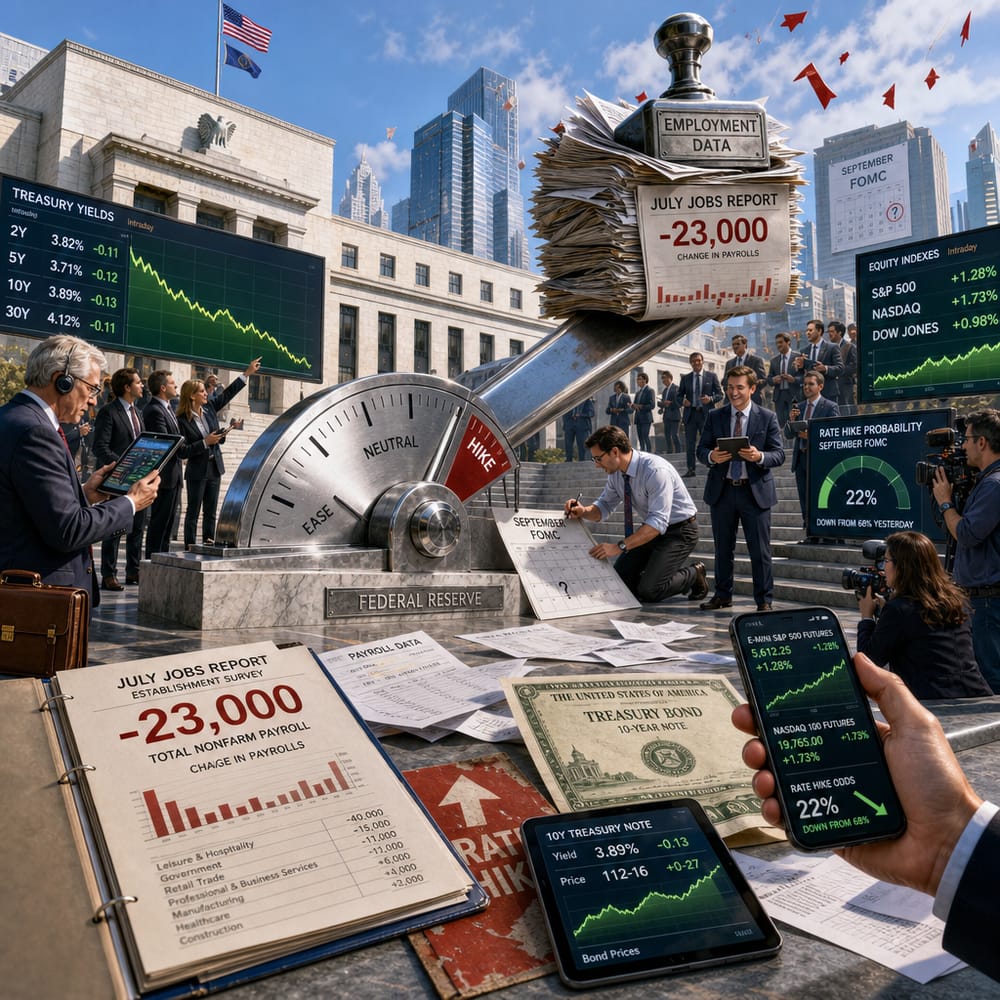
Brace yourselves, folks—news just flew in faster than an Amazon Prime drone, and it’s shaking up the financial landscape like a double espresso on a sleepy Monday morning. The U.S. jobs market just dropped a bombshell in the form of an unexpected decline of 23,000 jobs in July, catching everyone from economists to armchair investors off guard. But before you start panic-selling everything, let’s unpack what this means for your wallet and the broader economic picture.
This surprise downturn has put a dent in the widespread expectation that the Federal Reserve was gearing up for another interest rate hike this September. Think of it like getting ready to sprint, only to find out your shoelaces are tied together. With fewer jobs added to the economy, the Fed has less ammunition to justify tightening monetary policy. In plain English, they might keep their foot off the rate hike pedal for now.
The Federal Reserve is like the DJ at an economic party. They crank the volume up or down to keep things lively without blowing out your eardrums. When they raise interest rates, it’s typically to cool off an overheating economy. But with job numbers sagging, they might decide that now’s not the time to crank it up. Instead, they might leave rates where they are, or even consider turning them down a notch if things don’t pick up.
So, what’s got the job market in a funk? It’s a mix of factors, really. Inflation’s been like that one guest who overstays their welcome, refusing to leave even after dessert is served. Higher costs mean businesses might be hesitant to hire. Add in global uncertainties—the kind that make investors jittery enough to spill their coffee—and you’ve got yourself a recipe for economic caution.
For investors, this shift in expectations could be a game changer, especially when it comes to bonds and equities. Bond yields have been as stable as a tightrope walker lately, barely changing as investors hold their breath for more news. Yields and prices move in opposite directions, so if the Fed chills on rate hikes, bond prices might just get a little lift. Cue bondholders doing a small, cautious victory dance.
Meanwhile, equities—those loveable rascals in our stock portfolios—are feeling the pressure from all sides. The recent tech sell-off hasn't helped, with major players like Alphabet and AppLovin taking hits akin to a surprise left hook in a boxing match. If interest rates stay low, that could be a silver lining for stocks, as lower rates typically mean cheaper borrowing costs for companies. But with geopolitical tensions and oil prices swinging like a pendulum, it’s still a bumpy ride.
Speaking of oil, those prices just can’t make up their mind. With the Strait of Hormuz still a no-go zone thanks to ongoing U.S.-Iran tensions, oil prices have been as volatile as a soap opera plot twist. Higher oil prices can make inflation worse, squeezing consumers and businesses alike, but they do give oil stocks a bit of shine—because who doesn’t love a silver lining, right?
As we sift through the economic tea leaves, it’s clear that the Fed’s next move isn’t set in stone. They’ll be watching the data closer than a hawk eyeing its prey. For everyday investors like us, it means playing the field with a bit of extra caution. Diversification remains the name of the game, spreading investments across different sectors to weather whatever storms might come our way.
In the end, whether you’re bullish, bearish, or somewhere in between, the market’s just like life: full of surprises, challenges, and opportunities for those willing to seize them. So keep your eye on the ball, your ear to the ground, and your portfolio diversified. After all, in the world of investments, fortune favors the bold—and the well-informed.
This article is for informational purposes only and is not investment advice. Always do your own research or consult a licensed financial professional before making investment decisions.
© Copyright 2024. All Rights Reserved.
© Copyright 2024. All Rights Reserved.