

Jobs Market Softens—Implications for Labor-Driven Inflation
Monday, August 24, 2026
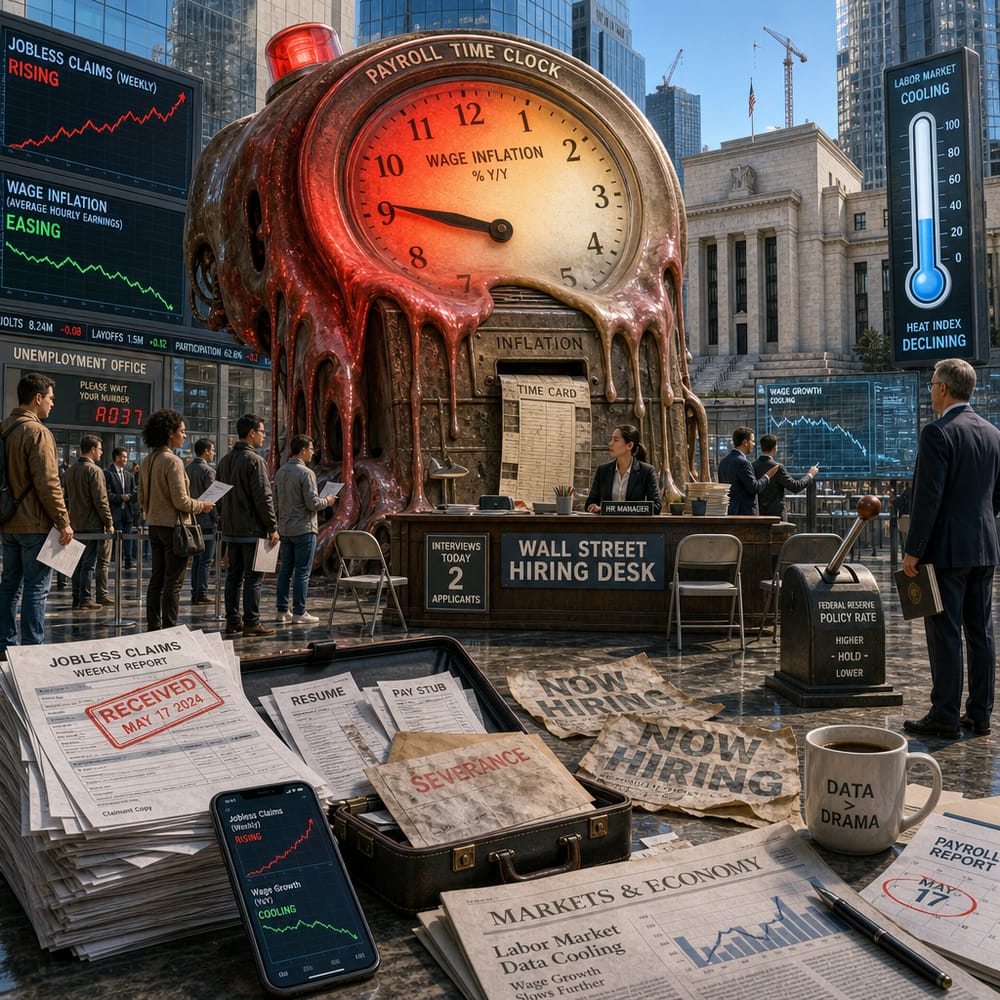
There's a new headliner in town, and no, it's not the latest Hollywood scandal or a tech billionaire's misstep. It's the U.S. jobs market, and it's sending signals like a teenager with a new crush—confusing, intriguing, and oh-so-important. Recent data on jobless claims are suggesting the labor market is taking a bit of a breather. But what does this mean for the pocketbooks of everyday Americans, the Fed's strategy, and the overall economic soap opera? Buckle up, we’re diving in.
IMPACT ON INFLATION: COOLING DOWN THE HEAT
First things first, let’s talk about inflation. It’s been the villain in our economic drama for a while now, with prices rising faster than you can say “supply chain disruption.” A softening labor market, where job openings dwindle and layoffs increase, could be the hero we didn’t know we needed. Why? Fewer job openings mean less competition among employers to snag that perfect employee, leading to slower wage growth.
Slower wage growth could ease the pressure on prices. With businesses not having to shell out extra dollars to lure new hires, they might not pass those costs onto us—the consumers—in the form of higher prices. It's like a financial sprinkler system cooling down the inflationary flames.
CONSUMER SPENDING AND ECONOMIC GROWTH: A DOUBLE-EDGED SWORD
Now, before we pop open the champagne, let's consider the flip side. A cooling jobs market might mean less cash in hand for workers, leading to cautious spending. After all, if you think your job security is as shaky as a Jenga tower in the final rounds, you might just save those extra bucks rather than splurging on the latest iPhone or those extra avocado toasts.
Less consumer spending could slow down economic growth. This situation is a bit like trying to lose weight while eyeballing a pizza—you want the benefits but have to sacrifice some indulgences. The key is balance. Too much cooling in the labor market can dampen consumer confidence and spending, stalling economic momentum.
FEDERAL RESERVE’S DILEMMA: TO PAUSE OR NOT TO PAUSE
With the labor market showing signs of fatigue, the Federal Reserve faces a conundrum worthy of a Shakespearean play. The Fed has been on a rate-hiking spree to combat inflation—raising interest rates to make borrowing more expensive, hoping to cool spending and prices. But with signs of a weakening jobs market, they might hit the brakes.
If the Fed decides to pause or even cut interest rates, borrowing becomes cheaper. This could spur investments and spending, giving the economy a shot in the arm. But, the risk is that inflation could rear its ugly head again if the economy overheats. It's a delicate dance, akin to walking a tightrope with no net below.
A SOFTER JOBS MARKET: FRIEND OR FOE?
So, what’s the bottom line for you, the retail investor scrolling through this article? A softening jobs market could mean less inflation, which is good news for your grocery bills and gas prices. But it could also mean slower economic growth, affecting everything from stock market performance to interest rates on loans.
Keep an eye on the Fed’s next moves. They’re like the captain of this economic ship, trying to steer us clear of recessionary waters while keeping inflation at bay. Watch how consumer spending trends develop, as they’ll be a critical indicator of the economy’s pulse.
THE TAKEAWAY: BALANCING ACT REQUIRED
In the ever-theatrical world of economics, the jobs market is setting the stage for the next act. Whether it’s a comedy or a tragedy will depend largely on how businesses, the Fed, and consumers react to these shifts. As retail investors, staying informed and adaptable will be your best strategies.
So, the next time you hear about jobless claims and labor market data, pay attention. Behind those numbers lies the story of your next paycheck, the price of your groceries, and the shape of the grand economic narrative. In a world where every financial decision can feel momentous, a little knowledge can go a long way.
This article is for informational purposes only and is not investment advice. Always do your own research or consult a licensed financial professional before making investment decisions.
© Copyright 2024. All Rights Reserved.
© Copyright 2024. All Rights Reserved.