

Jobless Claims Tick Up but Labor Market Remains Tight
Saturday, August 15, 2026
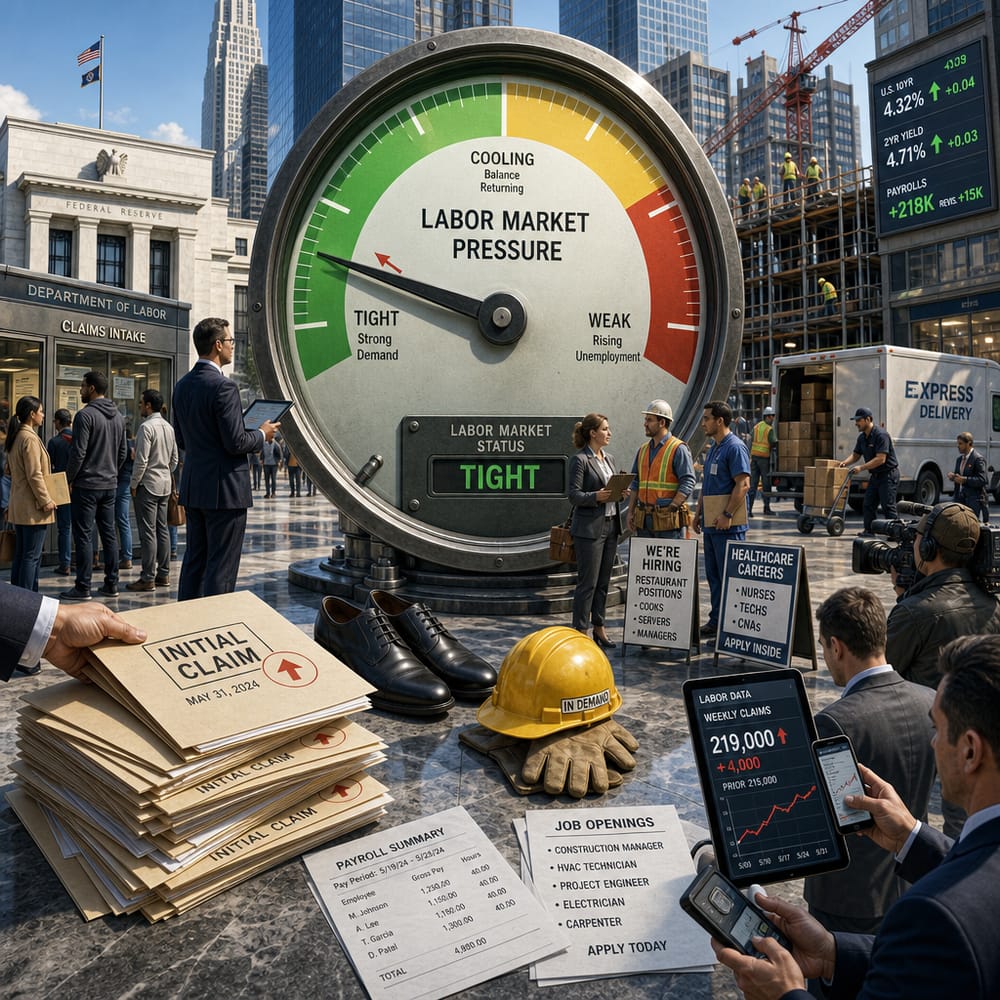
Blink and you'll miss it, but jobless claims just ticked up ever so slightly. Last week, initial claims for unemployment benefits edged up to 209,000. That might sound like a big number, but in the grand scheme of the US labor market, it's more of a whisper than a shout.
So why should we care about a measly increase when it barely dents the robust labor market narrative? Well, think of it like a pebble in your shoe. Annoying now, but if you ignore it, you might end up limping. Understanding these claims is key to gauging the health of the labor market, which is crucial for economic stability and growth. And let’s face it, nobody likes an economic limp.
But what's causing this minor uptick? Is it a glitch in the matrix, or is there more beneath the surface? Seasonal hiring fluctuations could play a role, as businesses adjust workforce levels post-summer. Or perhaps it's a ripple effect from ongoing global uncertainties — shoutout to geopolitical tensions and natural disasters, which love to keep us on our toes.
While this rise might seem as trivial as debating pineapple on pizza, the implications for the labor market can’t be ignored. The increase challenges the perception of an ironclad job market, which has been the darling of economists and policymakers alike. Even a slight uptick can signal shifts in employer confidence and hiring practices. A job market on the brink of softening might send shivers down the spine of investors and policymakers.
Enter the Federal Reserve, our economic Gandalf, aiming to keep the economy from wandering into Mordor — or stagflation, in this case. The Fed watches jobless claims like a hawk, considering them a vital sign of economic health. An uptick might not set off alarms yet, but it sure piques interest.
So what's the Fed's play here? If jobless claims keep nudging upwards and hint at a cooling labor market, we might see the Fed tap the brakes on interest rate hikes. A cautious Fed could mean a gentler approach to curbing inflation, keeping borrowing costs from skyrocketing and giving our wallets a bit more breathing room.
And let's not forget consumer confidence — the heartbeat of economic activity. A strong labor market fosters a feel-good factor that's crucial for consumer spending, which fuels two-thirds of the U.S. economy. If people start feeling jittery about job security, they might tighten purse strings faster than you can say "recession fears," potentially slowing down spending and growth.
But before you start panicking and stuffing cash under your mattress, remember that the labor market is still showing resilience. Unemployment remains low, and job openings are plentiful, keeping the U.S. economy buoyant. Think of this as a speed bump on the economic highway, not a stop sign.
Juggling this economic circus are sectors like tech and healthcare, which continue to thrive and absorb many job seekers. Meanwhile, the service industry — still licking wounds from the pandemic — is marching back, albeit cautiously. Yet, the broader economy feels the need to brace as these slight shifts could be the straw nudging the Fed to reassess its policy toolkit.
So keep your eyes peeled and your ears open. A few more weeks of jobless claims data will reveal if this is a blip or the start of something bigger. The market will be watching, the Fed will be analyzing, and investors should be ready to adapt. But for now, the labor market remains strong. And until proven otherwise, it’s safe to say that the economic engine is still humming.
This article is for informational purposes only and is not investment advice. Always do your own research or consult a licensed financial professional before making investment decisions.
© Copyright 2024. All Rights Reserved.
© Copyright 2024. All Rights Reserved.