

Jobless Claims Slip Further — Layoffs Remain Scarce
Thursday, August 27, 2026
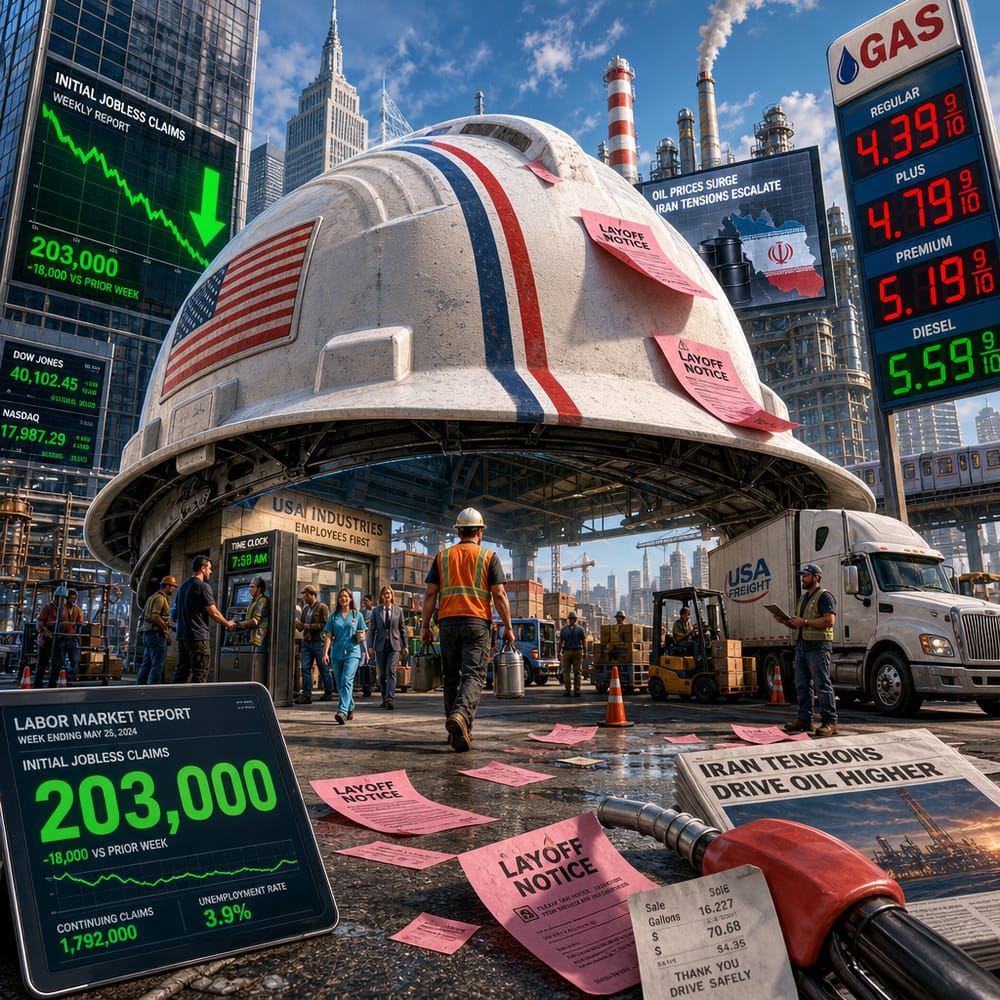
LAYOFFS ARE SO LAST SEASON: JOBLESS CLAIMS HIT RECORD LOWS
In a world where gas prices skyrocket faster than a dog chasing a squirrel and geopolitical tensions breed uncertainty like rabbits, you'd think the American job market would be running for the hills. But hold onto your hats and gas up the lawnmower, because the number of Americans filing for unemployment benefits just dropped to 203,000. That's right—despite the odds, layoffs are scarcer than a steak at a vegan barbecue.
So what’s making the labor market so dang resilient? For starters, businesses are clutching their employees tighter than your grandma holds onto her prized cookie recipe. That's partly because hiring new talent is a little like trying to find parking at the mall on Black Friday—tedious and tricky. Employers are keen to keep the talent they’ve got, knowing that finding replacements can be as daunting as reading the fine print on a mortgage contract.
On top of that, the economy is still humming along nicely, even if it's doing so while twirling a few hula hoops. Consumers, though squeezed by high gas prices, aren't entirely slamming the brakes on spending. That means companies still need workers to meet demand, contributing to a labor landscape where jobless claims are plummeting faster than a lead balloon.
Now, here's where it gets interesting for our friends over at the Federal Reserve. The Fed, that maestro of interest rates and monetary policy, has been debating whether to keep hiking rates. Why? Because it’s in its DNA to combat inflation before it turns into a beast more terrifying than your Netflix backlog. With jobless claims so low, this could be the nudge they need to consider tightening the screws a little more.
Federal Reserve Chairman Kevin Warsh is about to take the stage at Jackson Hole, and while he's been as cryptic as a cat in a cupboard, all eyes are on whether this labor market resilience will coax him into hawkish territory. For the uninitiated, a hawkish stance means the Fed might raise interest rates to keep inflation from running amok. This is a bit like turning up the thermostat in winter—just enough to keep things comfy without turning your living room into a sauna.
If the job market keeps flexing its muscles, Warsh and his merry band of policymakers might decide that the economy can handle another rate hike or two. After all, a strong job market suggests an economy that can weather higher interest rates without breaking a sweat. But they’ve got to tread carefully, lest they stir up a recession quicker than you can say "economic downturn."
So, what does all this mean for you, the accidental economist scrolling through your feed? Well, steady jobless claims are a good sign that the labor market is still batting for the home team. However, if the Fed tightens policy, it might make borrowing pricier, affecting everything from your mortgage to your credit card rates. Whether you’re planning to buy that dream house or simply sitting on your porch watching the world go by, staying clued into these shifts can help you make savvy financial choices.
In the end, while the job market is showing strength that would make a bodybuilder weep with envy, the economic landscape is as unpredictable as a soap opera plot twist. But that’s why we stay tuned, right? Because in the world of finance, just like in life, it’s all about expecting the unexpected. So keep those notifications on and your fingers crossed. Until next time, happy scrolling!
This article is for informational purposes only and is not investment advice. Always do your own research or consult a licensed financial professional before making investment decisions.
© Copyright 2024. All Rights Reserved.
© Copyright 2024. All Rights Reserved.