

Jobless Claims Remain Low Amid Fed's Inflation Concerns
Friday, August 28, 2026
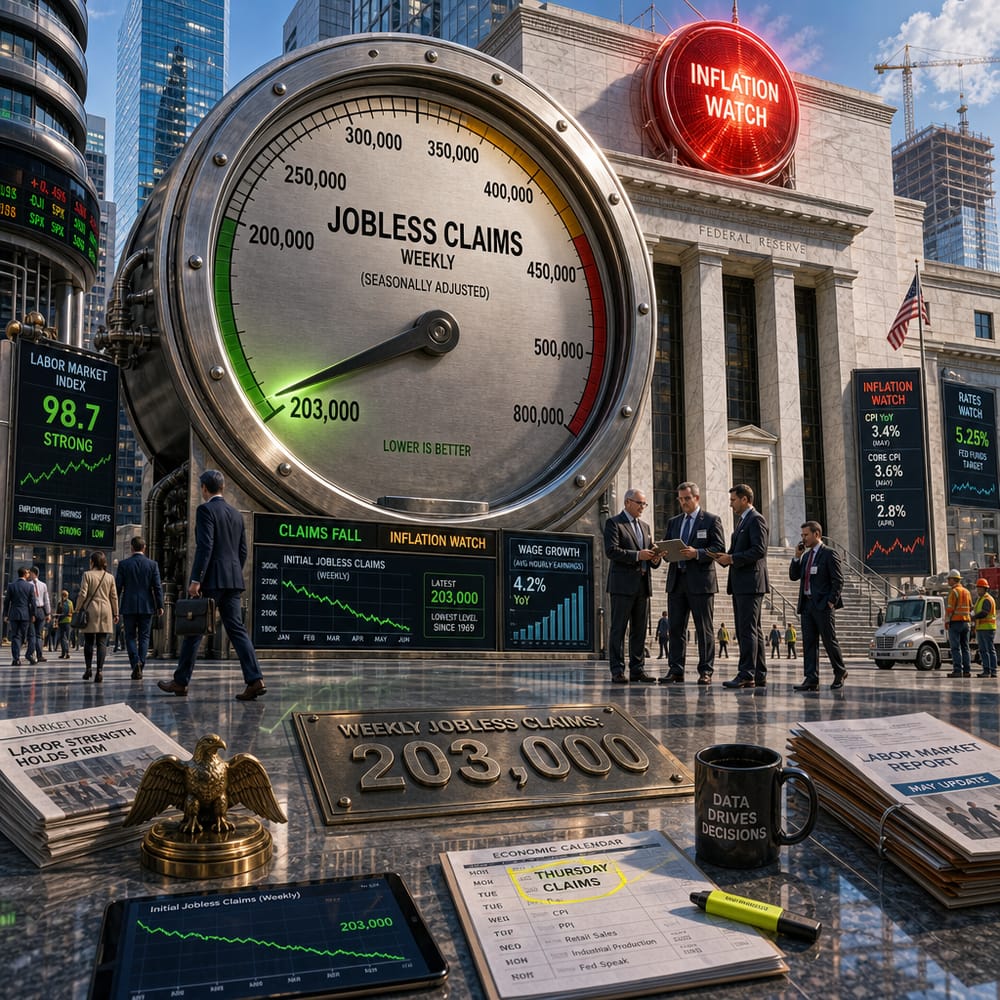
THE LOWDOWN ON JOBLESS CLAIMS: THE FED'S DANCE WITH INFLATION
Here's a riddle for you: What stays low and wakes up the Federal Reserve in a cold sweat at night? If you guessed "jobless claims," give yourself a pat on the back. This week's headline is that weekly jobless claims have dipped to 203,000, maintaining levels so low they're practically scraping the floor. But while job seekers are finding gigs aplenty, the Fed is nervously eyeing the inflation thermometer.
The labor market is showing off its biceps, and there's no sign of weakness in sight. For the everyday investor, this might look like a rosy picture—after all, it means that folks are working, earning, and spending. But like a plot twist in your favorite thriller, this labor market strength has a downside. It’s also the perfect breeding ground for inflation to rear its ugly head and dramatically throw a wrench into our economic works.
INFLATION: THE UNINVITED GUEST
Let’s have a quick heart-to-heart about inflation. The Federal Reserve—the folks who set interest rates and control the money supply—has a love-hate relationship with inflation. A little inflation means the economy is growing, but too much? That's a one-way ticket to economic indigestion.
When jobless claims are low, it usually means more people are working, which is great for consumer confidence. However, when everyone is spending their hard-earned cash, businesses might jack up prices to keep up with demand, leading to—you guessed it—inflation.
THE FED'S GAME PLAN
Federal Reserve Chairman Kevin Warsh has been clear: the central bank isn't rolling over on inflation just yet. Speaking at the recent Jackson Hole symposium—a gathering where economic bigwigs share their two cents—Warsh dropped a few not-so-subtle hints that the Fed might still have "work to do" to keep inflation in check. Translation? More interest rate hikes could be on the horizon.
Interest rates are like the Fed's remote control for the economy. Pressing the "up" button on rates makes borrowing more expensive, which can cool spending and, by extension, inflation. It’s a delicate dance—too many rate hikes and you risk sending the economy into a tailspin.
If the Fed decides it’s time for action, sectors sensitive to interest rates, like housing and consumer goods, might feel the squeeze. Higher rates mean more expensive mortgages and loans, which could slow down home buying or discourage people from splurging on big-ticket items.
THE INVESTOR'S TAKE
So, what’s a savvy investor to do? First, keep your eyes peeled on labor market indices—they’re a bellwether for potential Fed moves. If jobless claims keep up this low streak, brace yourself for more inflation chatter and possible Fed intervention.
For those with a finger on the market’s pulse, look to inflation-sensitive sectors. Companies that can pass costs onto consumers without losing customers—think utilities or consumer staples—might be your safe haven if interest rates go up.
In conclusion, the economy's tightrope walk between a robust labor market and lurking inflation is one for the books. As retail investors, staying informed and agile will be your ticket to navigating these choppy economic waters. Keep your investment portfolio diversified, and remember: in the world of stocks and bonds, information is power. With jobless claims staying low and inflation keeping the Fed on high alert, now is not the time to hit snooze. Stay sharp, stay invested, and always, always have a plan.
This article is for informational purposes only and is not investment advice. Always do your own research or consult a licensed financial professional before making investment decisions.
© Copyright 2024. All Rights Reserved.
© Copyright 2024. All Rights Reserved.