

Jobless Claims Fall to 203,000—Labor Market Remains Tight But Shifting
Sunday, August 30, 2026
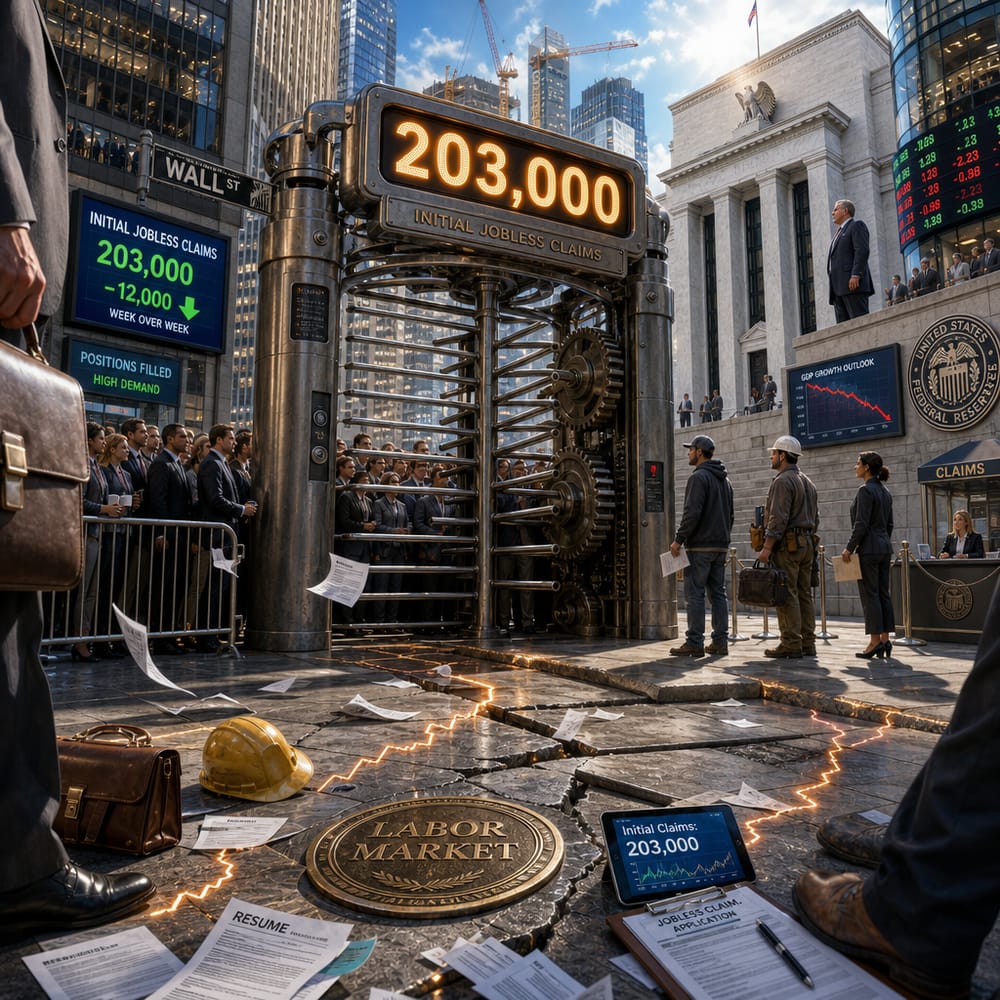
THE JOBLESS CLAIMS DROP IS A MIXED BLESSING: WHAT DOES IT MEAN FOR YOU?
Picture this: You’re strolling through the job jungle, wearing your economic explorer hat, when suddenly you stumble upon a shiny treasure. Spoiler alert: It’s not gold. It’s the new jobless claims report, and it’s a doozy. The claims have dropped to 203,000, a signal that the labor market is tighter than your favorite pair of skinny jeans post-holiday feast. But before you pop the bubbly, there’s a lot more to this story than just a headline number.
The labor market’s pulse is a vital sign of economic health. Imagine it like a human heartbeat. Too fast or too slow, and you’ve got a problem. So, why should you care? Because this pulse guides the Federal Reserve’s hand on the economic thermostat. It affects whether they’ll crank up interest rates, making your mortgage and credit card payments more painful, or ease them down, throwing a party for borrowers everywhere.
First things first, what does this drop in jobless claims mean? A lower number is like a thumbs-up emoji for the economy, suggesting people are gaining and holding onto jobs. But it’s not all sunshine and rainbows. The Fed, the mighty gatekeepers of interest rates, have to decide whether this low number justifies tightening the screws on monetary policy. Translation: They might raise interest rates to combat inflation, making borrowed money more expensive. But is that the best move in an economy that’s like a car with one wheel on the highway and the other in a ditch?
Now, let's dig deeper into the trends. Labor force participation — the percentage of people either working or looking for work — is the wallflower at the party. It’s hanging back, not really dancing. While it’s been creeping up slowly, it's not exactly taking the cha-cha by storm. Aging demographics, a shift in the gig economy, and post-pandemic lifestyle changes have kept participation rates a bit sluggish. It's like that friend who always RSVPs "maybe" to your BBQs but rarely shows up.
Then there's the big question: What should you, the savvy investor, watch out for ahead of the next jobs report? Keep an eagle eye on wage growth. If wages are jumping up like popcorn on a hot skillet, it might spur the Fed to act. Also, watch sector-specific employment data. Tech might be having a ball, but if retail or manufacturing decides to sit out the dance, it could signal uneven growth.
All of this ties back to the Federal Reserve's game plan. Can they interpret these jobless claims as a green light for hawkish policies? Well, in theory, a robust labor market allows for more aggressive interest rate hikes without torpedoing the economy. But in practice, it's like doing karaoke — you must hit the right notes, or it turns into a disaster.
In this complex matrix, the Fed has to weigh inflation, which is stubbornly persistent, against a labor market that looks healthy but is quietly dealing with an economic cold. Their conundrum? Push rates too high, and you risk driving the economy into a recession. Keep them too low, and inflation might just don its party hat and stick around longer.
So, what's your takeaway from this economic soap opera? Stay informed, keep your portfolio diversified, and maybe lay off binge-buying on credit until you see where the Fed lands. Remember, the economy, much like life, is about balance — a little bit of give, a little bit of take, and a whole lot of staying on your toes.
In the meantime, enjoy the economic ride. It’s unpredictable, sure, but that’s part of what makes it exciting. Just make sure you’ve got your financial seat belt fastened — it’s bound to be a bumpy, but hopefully rewarding, journey.
This article is for informational purposes only and is not investment advice. Always do your own research or consult a licensed financial professional before making investment decisions.
© Copyright 2024. All Rights Reserved.
© Copyright 2024. All Rights Reserved.