

Jobless Claims Edge Lower, Keeping Labor Market Robust
Thursday, August 20, 2026
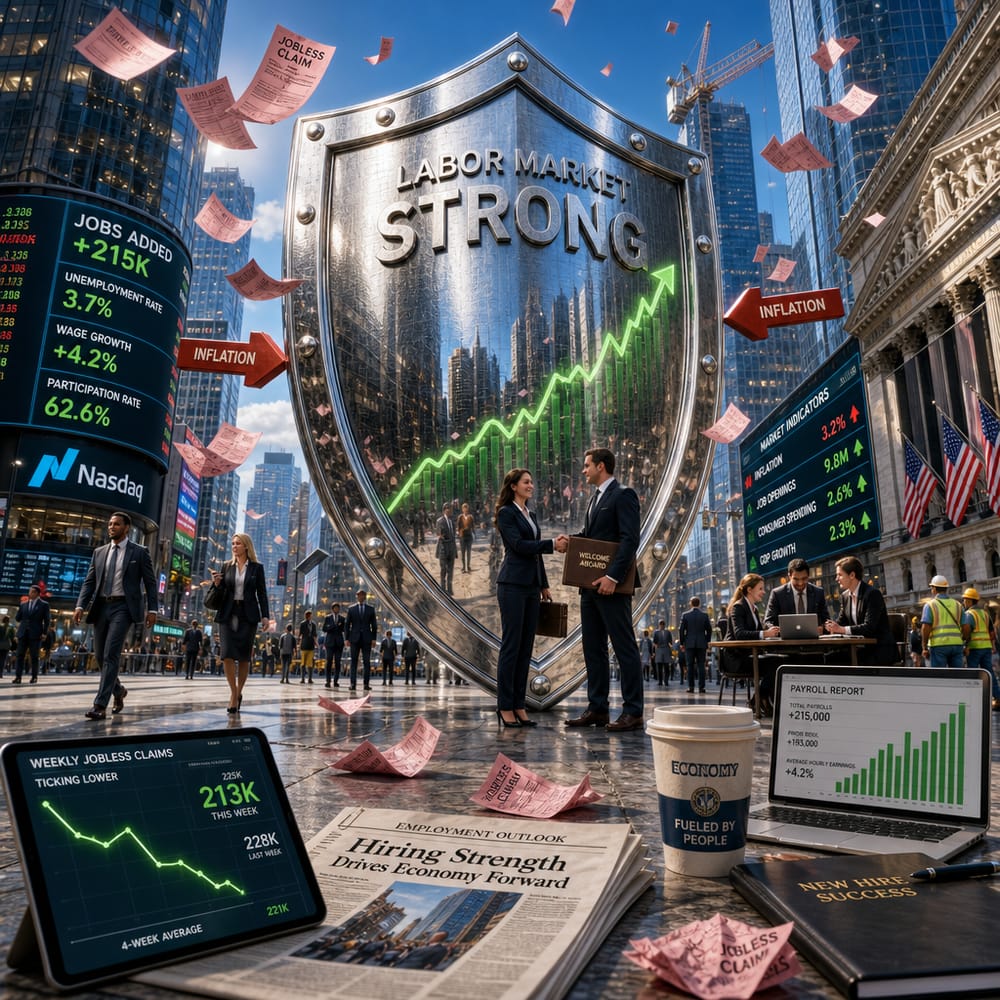
JOBLESS CLAIMS EDGE LOWER, KEEPING LABOR MARKET ROBUST
Ever heard the saying, "It's easier to find a job when you already have one?" Well, the latest jobless claims data suggests that most people are hanging onto those jobs for dear life—and bosses aren’t exactly rushing to hand out pink slips. Initial jobless claims just took another dip, reminding everyone that the labor market is flexing its muscles like it's gearing up for a heavyweight bout. So, what's driving this show of strength, and how might it twist the financial plotlines of inflation, monetary policy, and your everyday economy? Buckle up, because we're diving in.
WHY JOBLESS CLAIMS ARE FEELING SHY
First, let's unwrap why initial jobless claims are playing the disappearing act. The economy is buzzing with more job openings than a candy store on Halloween. Companies are still on the hunt for talent, and layoffs are more about individual cases than industry-wide crises. The demand for workers has businesses clinging to their employees like treasure. After all, training new hires isn't just costly—it's a full-blown hassle.
Moreover, sectors like tech, which have been shedding jobs faster than a dog in summer, seem to be stabilizing. And while the ghosts of past layoffs linger, other industries like healthcare and hospitality are balancing the scales with robust hiring. It's a mixed bag, but overall, fewer pink slips are being handed out, and that means fewer people are stepping into unemployment lines.
THE FEDERAL RESERVE AND THE MAP TO INFLATION
Now, if there's one entity that's got its eye on the labor market more closely than a hawk on a mouse, it's the Federal Reserve. Why? Because a strong labor market has the power to influence inflation faster than a viral TikTok dance. When people are gainfully employed, they're also spending money—fueling consumer demand which in turn nudges prices up.
Now, let's not forget, inflation is the Fed's favorite hot potato. Too hot, and it burns the economy; too cold, and growth gets a case of the chills. A robust job market could push wages higher as businesses compete for talent. And while that’s good news for workers, it could also stir the inflation pot. The Fed's got the tricky task of keeping this in check, potentially paving the way for more interest rate hikes if things get too steamy.
THE RIPPLE EFFECTS OF A MUSCULAR MARKET
It's not just the Fed that’s taking notes. A vigorous labor market has ripple effects that extend beyond the realm of economics textbooks. First up, let's talk about consumer confidence. When people feel secure in their jobs and see their paychecks getting fatter, they're likely to spend more. That boost in consumer spending can give the economy a caffeine shot, fueling growth across sectors.
Secondly, businesses might start investing more in automation and efficiency to keep up with demand. That means more tech spending and possibly more innovation—hello, future gadgets we never knew we needed!
THE LONG GAME
So, what's the long-term picture here? With a strong labor market, there's potential for sustainable economic growth, assuming inflation doesn't crash the party. But there's also a cautionary tale—if wages climb too steeply, businesses might pass those costs onto consumers. And if the Fed steps in to cool things down too quickly, we might see some hiccups in economic growth.
But for now, the labor market's impressive performance is a comforting sign that the economy has resilience. It's a testament to the adaptability of businesses and the workforce. The key is balance—like walking a financial tightrope where every step is crucial.
So, there you have it. The labor market is alive and kicking, and its moves will have repercussions that echo through boardrooms, the Fed's hallowed halls, and right down to the wallets of everyday consumers. As jobless claims continue their descent, keep an eye on how this dynamic dance plays out across the wider economic stage. After all, in the grand theater of finance, the labor market's act is one show you won't want to miss.
This article is for informational purposes only and is not investment advice. Always do your own research or consult a licensed financial professional before making investment decisions.
© Copyright 2024. All Rights Reserved.
© Copyright 2024. All Rights Reserved.