

Jobless Claims Dip Slightly—and July Jobs Report Looms After Unexpected Weakness
Sunday, August 30, 2026
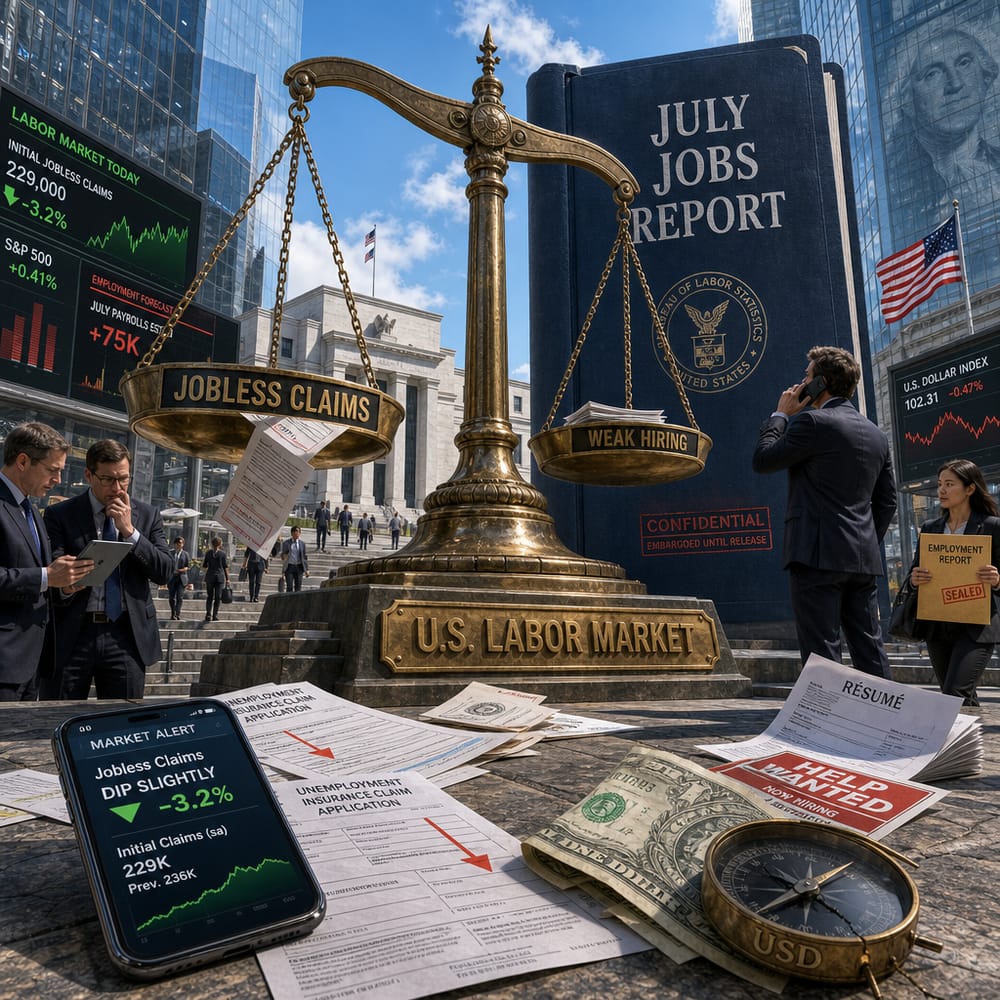
STRIKES, SANCTIONS, AND JOBS: THE ECONOMIC BALANCING ACT
Jobless claims trickling down is like finding a lone tortilla chip at the bottom of the bag—it's hardly the feast we hoped for. The July jobs report, lurking just around the corner, promises to reveal weak job growth. It's the plot twist nobody asked for, but everyone saw coming. Like a heatwave in July, weak job growth could affect everything from your neighborhood stock portfolio to how the Federal Reserve plays its next move in this high-stakes economic chess game.
But why should you, the everyday retail investor between sips of your morning coffee, care about weak job growth? Well, because this isn't just a snapshot of market statistics—it’s the pulse of the U.S. economy as we know it. A sluggish job market might suggest that the economy is taking a breather. And just like that impatient guest at a party, the Fed could swoop in to rouse things up—or stifle the music.
THE SETTING: AN ECONOMIC SLOW DANCE
Weak job growth is like that awkward slow dance at prom. It’s not fast, not exciting, and leaves many feeling uncertain about what comes next. For the economy, it might hint at a potential slowdown, with businesses hesitant to hire and consumers clutching their wallets a little tighter. This cautious approach can lead to a vicious cycle where folks spend less, businesses earn less, and everyone ends up binge-watching the latest Netflix series instead of hitting the town.
This reality check could prompt the Federal Reserve to whip out its toolkit. A faltering job market might spur the Fed to hit pause on any plans to hike interest rates. On the flip side, a robust bounce in employment numbers might tempt them to tighten the screws, slowing down inflation as efficiently as a tortoise on a treadmill.
FEDERAL RESERVE TO THE RESCUE?
If the job market drags its feet, the Fed might step in with strategies that sound like they're from a sci-fi script. Imagine interest rate adjustments designed to nudge businesses into borrowing and investing. Picture a world where quantitative easing—a fancy term for buying government bonds—injects money into the economy like a caffeine shot for your bank account.
These interventions might not just influence the job market—they could also ripple through sectors like tech, which has been sprinting ahead like the hare in the story. This month, the tech sector has been strutting its stuff, riding high on AI-linked stocks. Companies like Nvidia and Microsoft have seen gains that would make a marathon runner jealous. But if the Fed decides to stabilize the economy, sectors like tech might have to readjust their pace.
AFFECTED SECTORS: WHO'S ON THE LINE?
When job growth stumbles, sectors like retail and hospitality often feel the tremors. With fewer jobs and less spending, these industries might take a hit akin to a high-stakes game of musical chairs. But hold onto your hats, because this storm isn't all doom and gloom.
The other side of the coin shows sectors like healthcare and tech might remain relatively resilient. As long as hospitals keep healing and tech companies keep innovating, these sectors could be your investment game's ace in the hole.
THE DOLLAR DANCE
While all this unfolds, keep an eye on the U.S. dollar. Weak job growth could weaken the dollar, a scenario where our money loses some of its swagger on the international stage. This might make imports pricier and exports cheaper, potentially nudging overseas markets to gobble up more U.S. products. It's a delicate dance—too weak a dollar, and inflation becomes the uninvited guest at the party.
THE FINAL ACT: WHAT DOES IT MEAN FOR YOU?
In this economic theater, each move impacts your portfolio. Weak job growth could affect everything from inflation rates to how much your favorite online retailer charges for shipping. If the Fed decides to lower interest rates in response, borrowing becomes cheaper, possibly prompting big-ticket spending—think homes and cars, not just groceries and gas.
In the grand scheme, understanding these market moves means keeping your finger on the pulse. So, as you sip your coffee or scroll through your phone, remember: while the economic forecast might seem cloudy, smart investing could still give you that silver lining. Stay sharp; the economic play is far from over.
This article is for informational purposes only and is not investment advice. Always do your own research or consult a licensed financial professional before making investment decisions.
© Copyright 2024. All Rights Reserved.
© Copyright 2024. All Rights Reserved.