

Job Openings Plateau at 7.1 Million in August—Resilient Labor Market Signals
Wednesday, September 30, 2026
JOB OPENINGS PLATEAU AT 7.1 MILLION IN AUGUST—RESILIENT LABOR MARKET SIGNALS
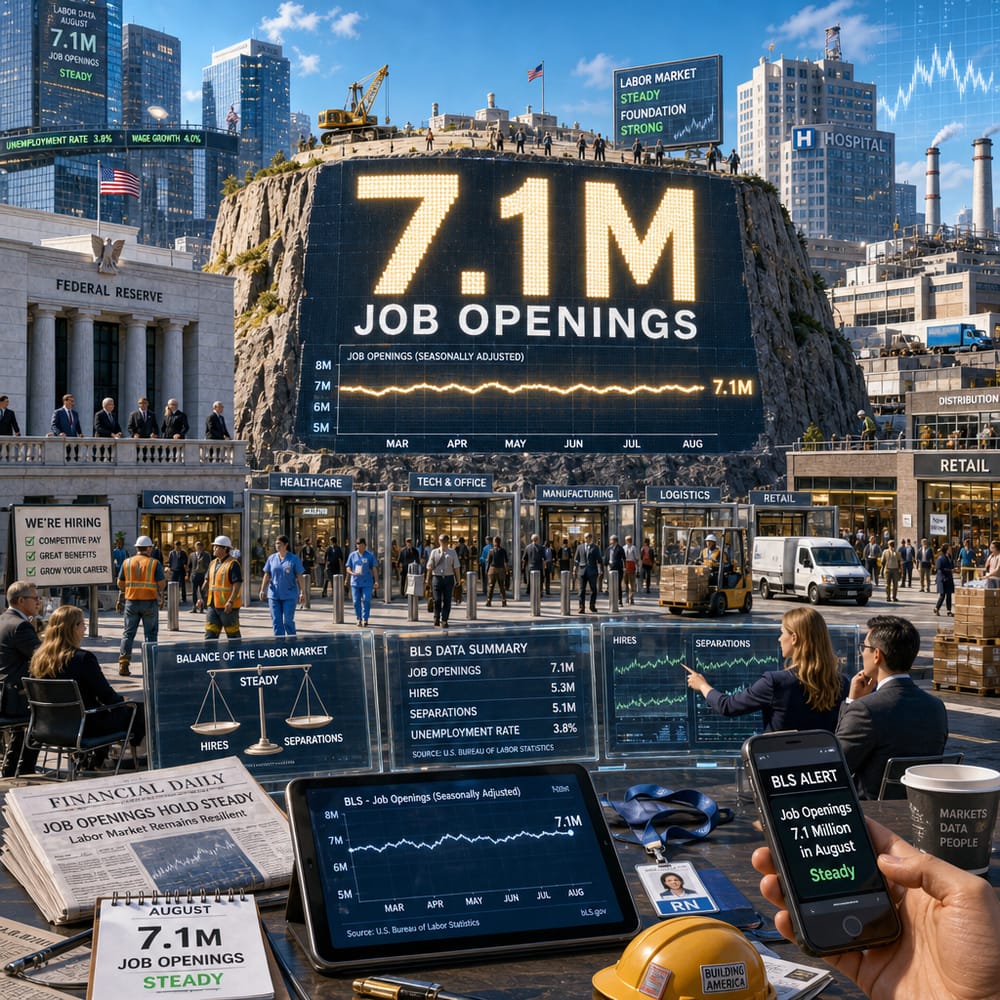
Here’s a number to chew on: 7.1 million. That’s how many job openings were up for grabs in August, according to the Bureau of Labor Statistics. It’s like we're on a steady merry-go-round in the jobs market—there's no dramatic dips or dizzying surges. Just a calm, predictable rotation that suggests the U.S. job market is not in crisis mode but holding its ground. So, why should you care? Well, that stability says a lot about the economy's resilience and might just give the Federal Reserve boardroom a few sleepless nights.
Let’s break down what this means in plain English. When job openings hold steady, it tells us that employers are neither in a hiring frenzy nor slamming the brakes on new hires. That makes the job market about as exciting as a low-budget rom-com—but in this economy, boring is good. It means businesses are feeling confident enough to keep positions open but cautious enough not to expand too quickly.
So, what’s the Federal Reserve likely to think about all of this? The Fed folks love a stable job market because it helps them sleep better at night knowing they’re hitting their dual mandate of maximum employment and stable prices. But, there's a wrinkle. A steady number of job openings in a tight labor market could keep wage pressures simmering. Paychecks might get fatter, meaning more cash for Netflix and chill nights but also potentially juicier inflation.
Picture the Fed as a cautious tightrope walker, balancing between not jacking up interest rates too much to give the economy a nosebleed, and not keeping them too low, risking an inflation headache. The job openings plateau could make the Fed more likely to play it cool on future rate hikes. Why? Because if wages climb faster than a cat up a curtain but jobs remain steady, it suggests that inflation might not spiral out of control.
Now let’s talk about consumer spending—the lifeblood of our economy. When people feel secure in their jobs, they’re more likely to spend on more than just the essentials. With stable job openings, folks are likely feeling pretty good about their job security. Think less “I should probably save this bonus” and more “Let’s splurge on that vacation.” This kind of spending helps keep businesses ticking and the economy humming.
But here’s the kicker: if wages rise due to sustained job openings and a tight labor market, we might see a shift. People could start focusing their spending on essentials due to rising costs of goods, which could put a crimp in discretionary spending—the kind done on a whim or for fun. And that would be a different kind of economic story altogether, one where self-indulgence is swapped for belt-tightening.
So, what should retail investors glean from this? Keep an eye on sectors tied to consumer spending like retail and travel—they’ll benefit from any surge in spending confidence. But also watch the labor market indicators. Any shift in job openings or wage growth could signal the Fed to adjust rates, impacting everything from mortgage rates to your stock portfolio's health.
In summary, the job market is like a well-cooked steak right now—neither too raw nor overdone. It’s perfectly palatable for the Fed, which might just keep interest rates on a slow simmer. For consumers, stable jobs mean more cash to spread around, fueling economic growth. But if wages outpace job growth, inflation could spoil the party.
So here’s the takeaway: enjoy the steady ride, keep an eye on your paycheck, and don’t forget to glance at those Fed announcements. You never know when a dull day might turn into a fireworks show.
This article is for informational purposes only and is not investment advice. Always do your own research or consult a licensed financial professional before making investment decisions.
© Copyright 2024. All Rights Reserved.
© Copyright 2024. All Rights Reserved.