

Job Market Slows Dramatically—Fed Likely to Skip October Hike
Saturday, October 03, 2026
THE JOB MARKET STUMBLE: WHAT'S THE FED TO DO?
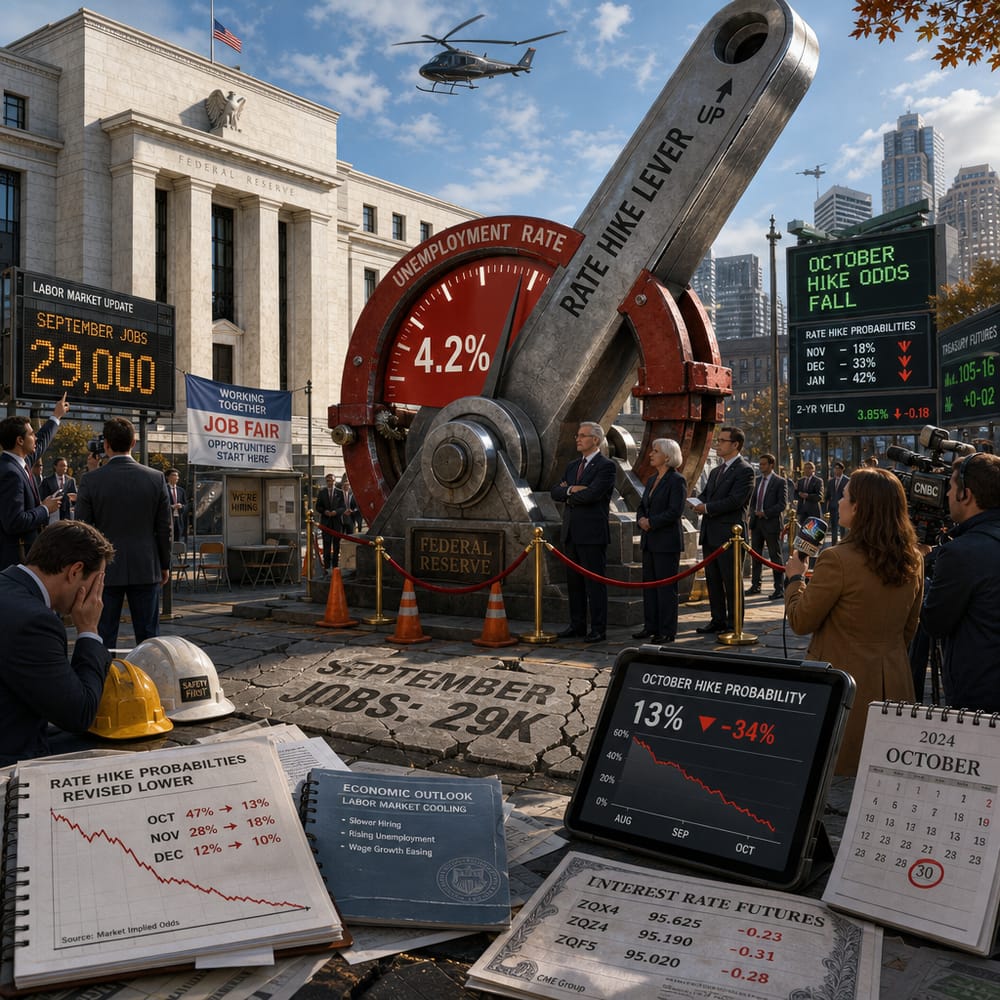
Once bustling like a Manhattan intersection at rush hour, the U.S. job market has hit a speed bump. September saw the economy add just 29,000 jobs, a figure that’s about as thrilling as a Tuesday night infomercial. Meanwhile, unemployment ticked up to 4.2%—a number that makes economists grimace like they’ve bitten into a sour lemon. So, what's the deal here, and why should you care? Let’s break it down, folks.
The job market slowdown is a crucial piece of the Federal Reserve's puzzle as it eyes its next move on interest rates. With an October meeting just around the corner, the Fed's decision could have ripple effects on everything from your mortgage rate to Wall Street's mood swings. Historically, the Fed hikes interest rates to pump the brakes on inflation, but with the labor market losing steam, the central bank might have to rethink its strategy. After all, nobody wants to tiptoe into a recession.
Right now, traders are starting to bet their chips against an October rate hike. It's like pulling out of a poker game because the cards dealt don’t quite add up. The Fed has always been about balancing the economy on a tightrope, but with job growth faltering, it could steer clear of any aggressive moves. It’s a bit like deciding not to accelerate into a fog—you just don’t know what’s ahead.
So why all the fuss over job numbers? These stats are not just numbers on a spreadsheet; they’re a barometer of economic health. Slower job growth could lead to less consumer spending, and when people tighten their wallets, it can reverberate through the economy like a clumsy elephant on a trampoline. If the Fed decides to keep interest rates steady, it might signal a focus on nurturing growth rather than stifling inflation. That's music to the ears of anyone with a car loan or student debt hoping for a break.
The bond market, meanwhile, has been making its own kind of noise. Yields are creeping up, partly in response to the Fed’s indecision. Historically, rising bond yields can indicate investors are worried about long-term growth. It reflects a kind of economic seasickness, where the market isn't sure whether it's heading into a storm or a sunny day.
Beyond the immediate decisions of the Fed, there are long-term implications. A sustained job market slowdown could mean rethinking the whole economic growth model. As the population ages and Baby Boomers hang up their work boots, the U.S. faces a structural shift. We're talking fewer workers contributing to Social Security and Medicare, with more people taking out than putting in. Not exactly a recipe for a sustainable buffet.
Then there's the tech revolution—AI and automation are reshaping what jobs look like in the first place. But don’t panic yet; history shows us these shifts often create as many opportunities as they destroy. It’s like jazz music—improvisation is often the name of the game, and the economy will need to adapt.
For everyday folks, all this can seem like watching a game of economic chess with rules that change mid-match. But even if you're not a rates aficionado or a job market guru, understanding these dynamics can help you make more informed decisions about your finances. Whether you’re timing a big purchase or planning for retirement, knowing the broader context can put you a step ahead.
In short, the job market slowdown is a wake-up call for all of us, and the Fed's next move will have real implications for our wallets and the broader economy. So keep your eyes peeled and your financial plans flexible—after all, the only constant in economics is change.
While the Fed and its chairperson, Jerome Powell, deliberate over their next steps, traders and investors are left to ponder what lies ahead. Will they play it safe, or take the plunge? Only time will tell. Meanwhile, stick with me, and we’ll keep navigating this wild economic ride together.
This article is for informational purposes only and is not investment advice. Always do your own research or consult a licensed financial professional before making investment decisions.
© Copyright 2024. All Rights Reserved.
© Copyright 2024. All Rights Reserved.