

Jim Cramer Calls for Proof of AI's Financial Impact
Thursday, July 16, 2026
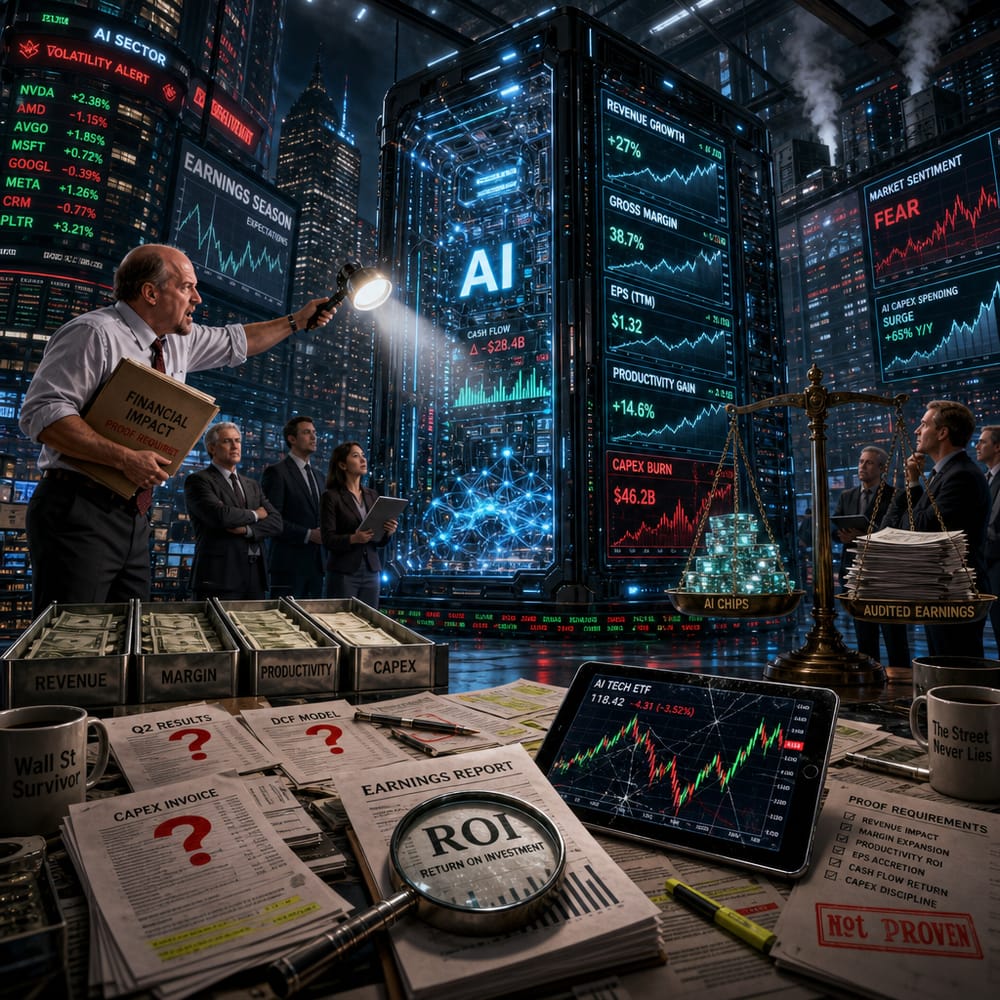
CRAMER CALLS FOR AI'S FINANCIAL TEST: A REALITY CHECK OR NECESSITY?
Jim Cramer isn't one to mince words, and his latest battle cry is as blunt as a sledgehammer to a piñata. The "Mad Money" host has thrown down the gauntlet, demanding "cold hard" proof that artificial intelligence is paying off. In an era where AI is considered the golden child of technology, promising to revolutionize everything from toaster ovens to quantum computing, Cramer wants receipts. But before you toss your AI stocks out with yesterday's takeout, let’s unpack what he’s really getting at.
SHOW ME THE MONEY
Jim Cramer, a man who’s no stranger to bold proclamations, wants to see tangible returns on the massive AI investments pouring in like a caffeinated waterfall. It's not enough for companies to just sprinkle AI dust on their earnings reports; he’s looking for proof that those algorithms are turning into dollar signs. As much as AI is becoming the backdrop of our digital lives, its financial impact is still more theory than practice for many companies.
The evidence Cramer’s calling for isn't some futuristic vision of robot overlords demanding ransom in cryptocurrencies. No, it’s about hard numbers that demonstrate how AI is boosting revenues or slashing costs. It’s the kind of financial impact that makes investors sleep soundly at night, dreaming of returns instead of market volatility nightmares.
A MATTER OF CONFIDENCE
Investor sentiment is a fragile creature, prone to bouts of exuberance and existential dread. Cramer’s call for proof of AI’s financial clout is a reminder that confidence can’t solely be built on hype and speculation. If AI investments turn out to be just another bubble waiting to pop, it could shake the very foundation of the tech sector and beyond.
For investors, the promise of AI is like a siren’s call—irresistible, but potentially disastrous if it turns out to be a mirage. Without concrete evidence that AI technologies can deliver robust financial returns, the sector could face a crisis of confidence. Think of it as a high-stakes poker game where everyone’s betting on AI, but no one’s seen the cards yet.
RISKY BUSINESS OR GOLDEN OPPORTUNITY?
As with any investment, diving into AI stocks comes with its own set of risks and rewards. On one hand, there's the potential for groundbreaking innovations that can redefine industries and generate substantial profits. On the other, there's the risk that AI might not live up to its lofty promises, especially in the short term.
For investors willing to take a leap of faith, the rewards could be substantial. But let’s not forget the lessons of the past; being first in line doesn’t always mean getting the biggest piece of the pie. Remember the dot-com bubble? The names may have changed, but the game remains the same. The key is balancing optimism with caution, keeping an eye out for that "cold hard" evidence Cramer is so keen on.
A REALITY CHECK
So, what does this mean for your portfolio, dear reader? It means doing your homework before hopping on the AI bandwagon. Look beyond the buzzwords and focus on fundamentals. Check if the companies you're investing in are actually leveraging AI to enhance their business models, not just using it as a marketing gimmick.
It’s a reality check for an industry that often feels more like science fiction than Wall Street. As Cramer urges, the real test for AI is how it translates into financial success. And until those numbers hit the spreadsheets, investor enthusiasm might be best tempered with a healthy dose of skepticism.
In the meantime, as Cramer and the rest of us wait for the curtain to lift on AI's grand financial performance, keep your eyes peeled for those nuggets of proof. Whether you’re an AI evangelist or a cautious observer, understanding the potential—and pitfalls—of AI could make all the difference in navigating its investment landscape.
This article is for informational purposes only and is not investment advice. Always do your own research or consult a licensed financial professional before making investment decisions.
© Copyright 2024. All Rights Reserved.
© Copyright 2024. All Rights Reserved.