

JetBlue and First Bancorp Analyst Rating Changes
Wednesday, October 07, 2026
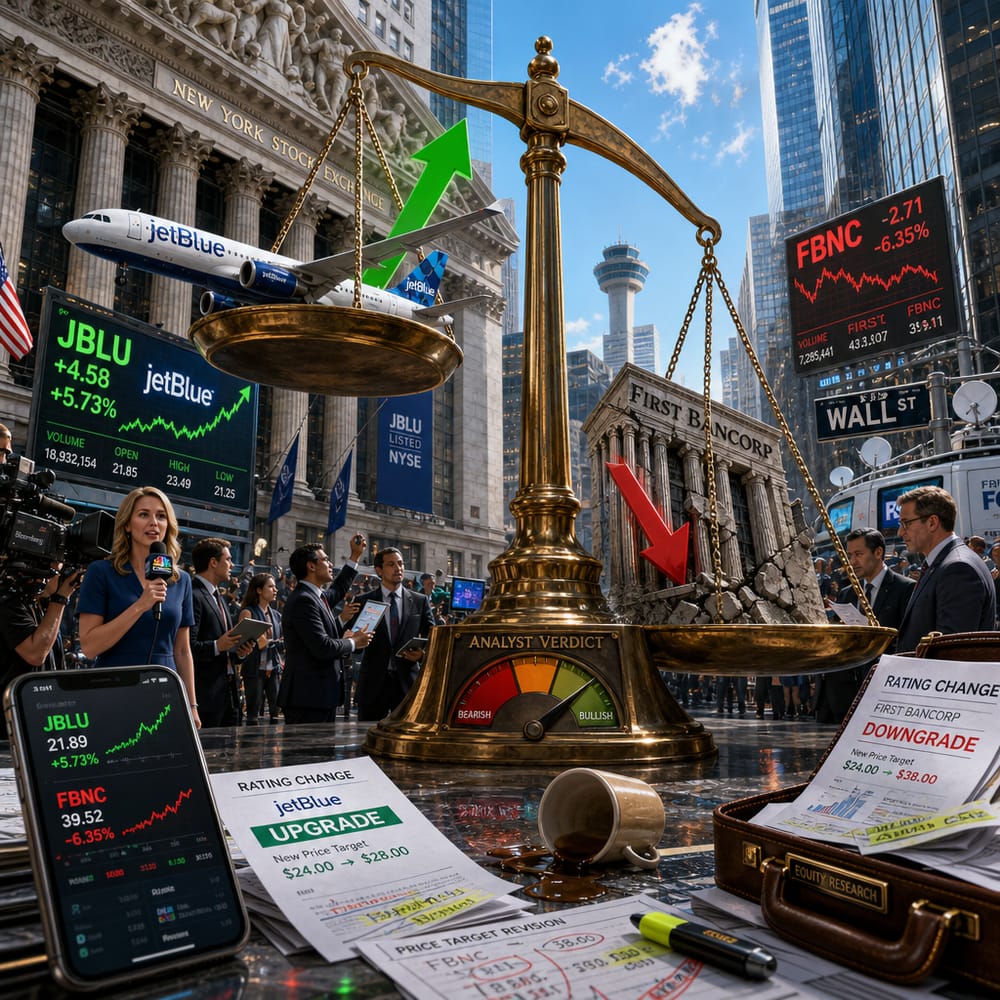
JETBLUE GETS A LIFT, WHILE FIRST BANCORP LOSES ALTITUDE: WHAT IT MEANS FOR YOU
Picture this: You're waiting at the gate for your flight, sipping a $5 water bottle and scrolling through stock news on your phone. Suddenly, you see that JetBlue just got an upgrade from analysts. Your eyebrows raise. A low-cost airline getting some love during a time of high fuel costs and uncertain traveler sentiment? What's the story here? And why is First Bancorp, the regional bank that usually flies under the radar, seeing its rating nosedive?
The plot twist in the skies and finance world comes from recent analyst actions. JetBlue Airways just got a shiny upgrade, while First Bancorp was handed a downgrade. This isn’t just a casual thumbs-up or thumbs-down; these ratings can steer investor behavior and, by extension, stock performance. But why now, and what could it mean for the sectors they’re in?
WINGS UP FOR JETBLUE
JetBlue's upgrade isn’t just a lucky draw of the analyst card. The airline has been quietly navigating some strategic shifts. Despite turbulence in the broader travel sector, JetBlue's commitment to its low-cost business model and strategic partnerships has analysts seeing smoother skies ahead. The company’s focus on expanding routes, especially in lucrative markets, might be giving it an edge. Analysts likely view these moves as signs of resilience, even as the industry faces headwinds like fluctuating fuel prices and labor challenges.
Investors reacted with enthusiasm. Shares of JetBlue saw a bit of a lift following the upgrade – a testament to how even a single analyst action can push sentiment into the fasten-your-seatbelt-for-takeoff mode. For retail investors, this might signal a chance to consider if the airline stock fits into their portfolio, particularly if they’re betting on a strong travel rebound.
FIRST BANCORP’S TOUGH LANDING
On the flip side, First Bancorp isn’t having such a sunny day. The regional bank, which usually enjoys its fair share of stability, was downgraded due to some underlying issues that have become harder to ignore. With interest rates doing the cha-cha and the economic climate bracing for impact from potential slowdowns, banks are in a precarious position.
The downgrade likely stems from concerns about First Bancorp's exposure to these macroeconomic uncertainties and perhaps a less-than-stellar earnings outlook. Rising interest rates can be a double-edged sword for banks, boosting loan margins but also cranking up the pressure on borrowers – and by extension, the banks themselves if defaults rise.
Investors didn’t brush off this downgrade. The stock took a dip as traders weighed the potential risks involved. For everyday investors, it might be time to reassess their banking sector bets, especially with an eye on how interest rate dynamics could play out over time.
BROADER MARKET IMPLICATIONS
So, what's the bigger picture here? For the travel sector, JetBlue’s upgrade might hint at a potential silver lining amid the clouds. If JetBlue can leverage its strategic initiatives effectively, it could set a precedent for other airlines. Conversely, First Bancorp’s downgrade highlights the broader caution in the banking sector. With the Federal Reserve navigating a tricky interest rate environment, banks are left in a delicate dance of managing risk while trying to capitalize on lending opportunities.
These analyst ratings don’t just reflect isolated company stories – they’re chapters in a broader narrative of market sentiment. For investors, staying informed on these shifts can offer clues to where the wind might blow next in the travel and banking worlds. After all, in the ever-evolving landscape of stocks and sectors, knowledge is your boarding pass to making savvy investment decisions.
So next time you're at the gate or lounging at home, keep an eye on those analyst ratings – they might just point you towards your next investment destination.
This article is for informational purposes only and is not investment advice. Always do your own research or consult a licensed financial professional before making investment decisions.
© Copyright 2024. All Rights Reserved.
© Copyright 2024. All Rights Reserved.