

Jefferies Spots Solid Cash-Flow Stocks Riding Buybacks
Tuesday, August 04, 2026
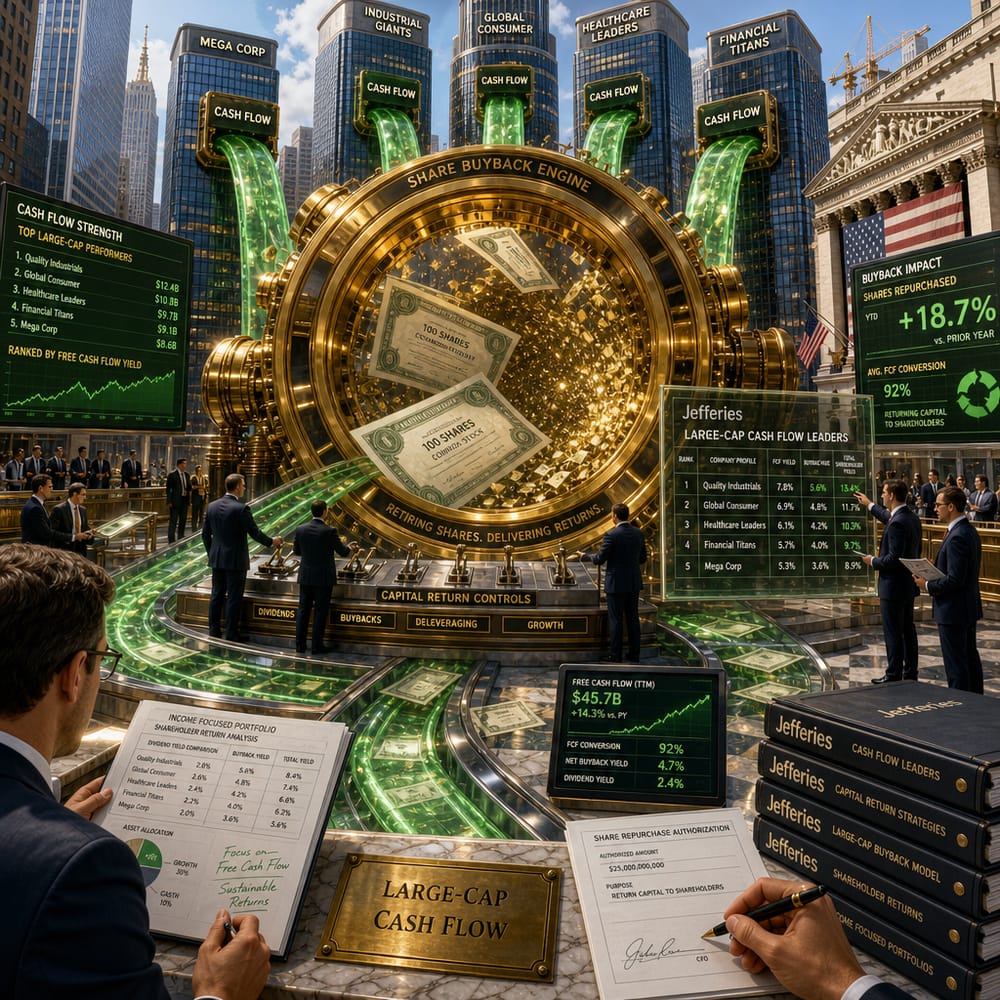
BUYBACK BONANZA: JEFFERIES SPOTS LARGE-CAP STARS WITH CASH TO BURN
Picture this: You’ve just discovered a magical money machine. It churns out cash, and instead of hoarding it or going on a wild spending spree, you decide to use it to boost the value of your own shares. Sounds like a dream? Well, for some large-cap companies, it's reality. Jefferies, the investment banking heavyweight, is spotlighting a group of companies doing exactly that—using their robust cash flows for stock buybacks, a move that can significantly impact shareholder value.
Jefferies recently waved the flag on a selection of big names with impressive cash flows and active share repurchase programs. But why should we care? For starters, buybacks can be a potent sign of financial health. They're a way for companies to return value to shareholders without the commitment of ongoing dividends. In essence, it's like the company saying, "We believe in ourselves. We're betting our money on our future."
But let’s decode the magic for a moment: What exactly are buybacks, and why do they matter? Simple. When a company buys back its own shares, it reduces the number of shares available in the market. Fewer shares can mean higher earnings per share, potentially boosting the stock's price. It’s a bit like cutting a pizza into fewer slices—it makes each slice a bit bigger.
So, which companies are leading the charge in this buyback bonanza? The list is hefty, with giants like Apple, Microsoft, and Alphabet consistently flexing their financial muscles. Apple has been a poster child for buybacks for years, funneling billions into repurchasing its shares. And guess what? It's not just tech behemoths joining the party. Financial powerhouses like JPMorgan Chase and consumer goods titans such as Procter & Gamble are also making waves.
But why are these companies so gung-ho about buybacks? For one, they’ve got the cash. In a world where cash is often king, these firms have it by the bucketload. Take Apple, for instance. With its cash reserves rivaling the GDP of some small countries, it can afford to reinvest in itself. Similarly, Microsoft and Alphabet are cash-rich and have used their resources to fuel growth and reward shareholders.
Now, where there's smoke, there's often fire. So, how does this buyback fervor impact stock performance? Well, there’s a compelling case that buybacks can indeed boost a stock's appeal. When companies buy their own shares, they’re not just reducing supply—they’re also signaling confidence in their future prospects. Investors usually see this as a positive sign, and it can lead to increased demand and, subsequently, higher stock prices.
Take a closer look at Apple again. Over the years, as it’s embarked on aggressive buyback programs, the stock has seen substantial appreciation. It’s a similar story with Microsoft and Alphabet, where buybacks have complemented robust business performance, making shareholders smile from ear to ear.
But let's not get carried away thinking buybacks are a one-way ticket to stock market heaven. They’re not without their critics. Some argue that companies might be better off using their cash for expansion or innovation. Others caution that buybacks can artificially inflate earnings per share without real business growth.
Still, for income-focused investors, companies with healthy buyback strategies can be an attractive proposition. They offer a blend of confidence and capital return that's hard to resist. With Jefferies pointing the spotlight on these firms, it's worth considering whether they deserve a place in your portfolio.
In a world buzzing with market uncertainties—from geopolitical tensions to economic fluctuations—it's refreshing to see companies steering their own course by betting on their future. So, the next time you hear about a company launching a buyback program, remember that it might just be a savvy move to keep shareholders happy.
In the end, investing is all about making informed choices, and buybacks offer one more layer of insight into a company's financial health and strategy. So, keep your eyes peeled for these buyback stars; they might just be the shining addition your portfolio needs.
This article is for informational purposes only and is not investment advice. Always do your own research or consult a licensed financial professional before making investment decisions.
© Copyright 2024. All Rights Reserved.
© Copyright 2024. All Rights Reserved.