

Japan Turns to AI to Solve Elderly Care Crisis
Tuesday, March 18, 2025
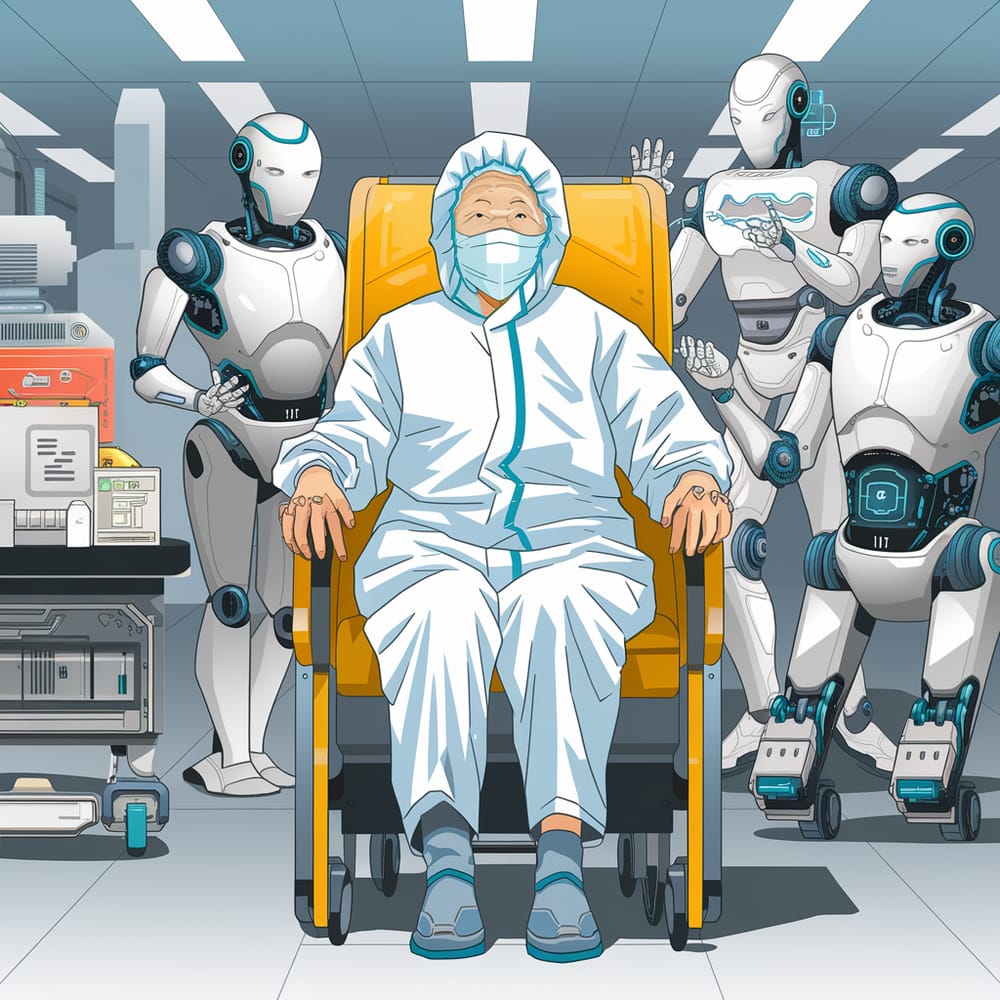
Japan is facing a severe elderly care crisis, with a record 36.25 million senior citizens and a shrinking workforce. In response, one of the country’s largest insurance companies, Sompo Holdings, is turning to artificial intelligence to fill the gap.
The company is integrating AI-powered monitoring systems and automation tools into nursing homes to reduce staff workloads and improve elderly care quality.
How AI Is Changing Elderly Care
Sompo’s AI-driven approach includes:
-Sleep monitoring sensors – Instead of caregivers making frequent room checks, AI-powered bed sensors track sleep patterns and quality in real-time, alerting staff if intervention is needed.
-Automated record-keeping – AI handles paperwork and administrative tasks, which currently take up 20-25 percent of caregivers' time, allowing staff to focus more on patient care.
-Data-driven care improvements – AI analyzes health trends and patient behavior, helping facilities adjust meals, activity schedules, and medical routines to enhance well-being.
These innovations aim to increase efficiency while maintaining high-quality care, crucial as Japan’s senior population grows.
Japan’s Aging Population Problem
Japan has one of the longest life expectancies in the world, but its birth rate is at a record low. As the workforce shrinks, the demand for elderly care is outpacing the number of available caregivers.
Sompo CEO Mikio Okumura sees this demographic shift as one of Japan’s biggest economic challenges. To combat the labor shortage, Sompo is focusing on expanding its AI-powered services while shifting its business growth overseas, where populations are still growing.
Sompo’s Global Expansion Plan
In addition to AI-driven care solutions, Sompo is restructuring its business, splitting into two main units: "Sompo Property and Casualty" and "Sompo Wellbeing", the latter of which includes Japan-based nursing care and life insurance services.
However, Okumura acknowledges that expanding Sompo’s AI-driven elderly care model internationally isn’t easy due to differences in regulations, culture, and social security systems.
By 2030, Sompo expects 80 percent of its profit growth to come from its insurance business, with only 20 percent from Wellbeing services.
AI’s Role in the Future of Elderly Care
With AI transforming elderly care in Japan, the big question remains: Can technology truly replace human caregivers, or will AI only serve as a tool to support them?
For now, Sompo believes that AI isn’t replacing workers—it’s making their jobs easier, allowing them to spend more time on human-centered care.
As Japan continues to grapple with an aging population and labor shortages, AI-driven solutions like Sompo’s may become a global model for elderly care innovation.
© Copyright 2024. All Rights Reserved.
© Copyright 2024. All Rights Reserved.