

Is the AI Bubble Starting to Deflate? Inside the Reckoning
Tuesday, June 09, 2026
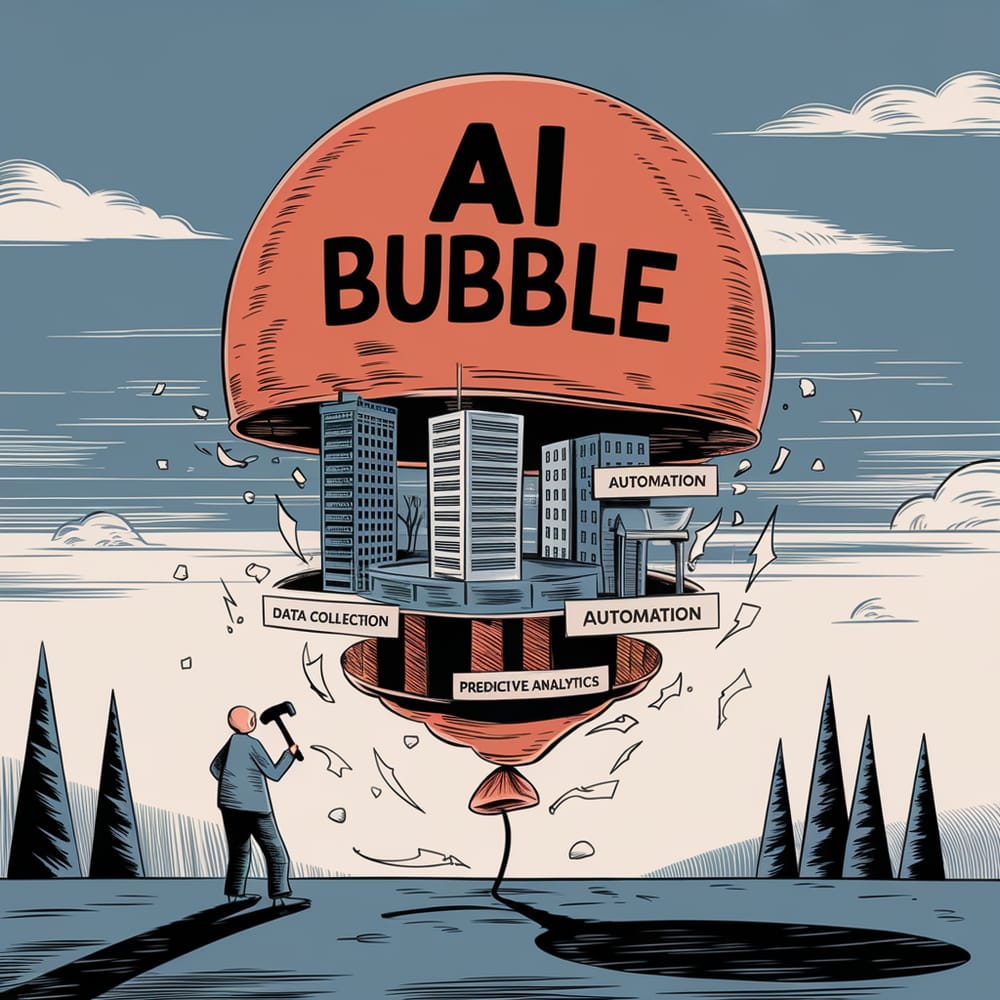
For two years, artificial intelligence has been the story driving the stock market higher. Now the mood is shifting. After waves of euphoria, investors and the companies actually paying the bills are asking a harder question: can AI live up to the hype? Welcome to what many are calling the AI "reckoning."
From Mania to Doubt
The change isn't that AI stopped working — it's that the easy optimism has cooled. Stocks tied to AI had soared on the belief that demand would grow without limit. Lately, sharper questions about cost, profit, and real-world results have crept in, and even a hint of doubt has been enough to send these high-flying names swinging. The conversation has moved from "how high can it go?" to "is any of this actually paying off?"
The Three Phases of the AI Story
The debate has rolled through three rough stages. First came suspicion — could AI really automate meaningful work? Then came mania, as tools like AI coding assistants and autonomous "agents" dazzled the business world and money poured in. Now comes the reckoning: a growing recognition that AI can be extraordinary when aimed at the right problem, but ruinously expensive when treated as a magic fix for everything.
When the Bills Come Due
The clearest sign of the new mood is companies watching their AI spending. Reports describe firms capping how much staff can use pricey AI tools after blowing through annual budgets in just months, and at least one big-tech executive reportedly told employees not to "use AI just for the sake of using AI." In plain English: the tools are powerful, but the computing bills behind them are enormous, and businesses are starting to demand a payoff.
Why Wall Street Is Paying Attention
So much of the market's recent gains rest on a narrow group of AI-linked companies — chipmakers, cloud providers, and software firms. Their share prices assume years of booming demand. If that spending slows, or if the promised profits are slow to arrive, stocks priced for perfection have a long way to fall. That concentration is exactly why an "AI wobble" can rattle the whole market.
The Bull Case Hasn't Disappeared
It's worth stressing the other side. Plenty of seasoned investors argue this is a healthy shakeout, not a popping bubble. Real-world adoption of AI keeps climbing, and the best uses are delivering genuine productivity gains. History is full of world-changing technologies that looked like bubbles in their early innings. The honest answer is that breakthroughs and bubbles can look remarkably alike at this stage — which is why the debate is so heated.
What Retail Investors Are Watching
The key signals ahead are earnings from the biggest AI spenders, their guidance on how much they plan to invest, and any evidence that revenue is finally catching up to the enormous costs. Whether this turns out to be a brief pause or the start of a deeper reset, it's a reminder that even the most exciting stories eventually have to prove they can make money.
This article is for news and informational purposes only and is not investment advice. Figures as of June 9, 2026.
© Copyright 2024. All Rights Reserved.
© Copyright 2024. All Rights Reserved.