

Investor Sentiment Wanes Despite Recent Market Highs
Thursday, August 20, 2026
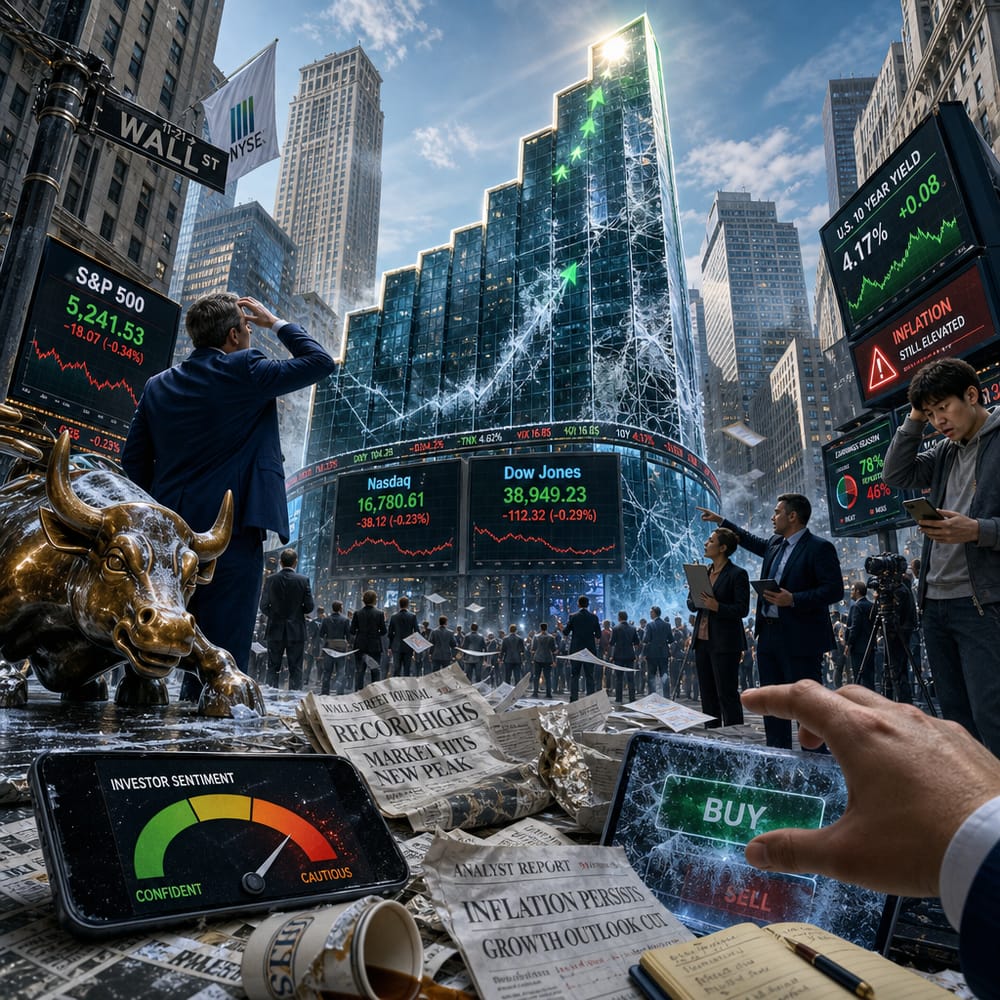
Investor Sentiment Wanes Despite Recent Market Highs
If only stock markets came with a warning label: "Past performance is not indicative of future results." Just as investors were popping the champagne over record highs, the market decided to pull a fast one, leaving many feeling like they’d been offered a ride in a Lamborghini only to end up on a roller coaster. Welcome to the world of investing, where yesterday’s thrills quickly turn into today’s nail-biters.
KNOW YOUR ENEMY: INFLATION AND YIELDS
So, what's got investors feeling jittery despite those recent dazzling numbers? Enter the double whammy: inflation and bond yields. Inflation, the monster hiding under every investor's bed, is showing up at the party uninvited, thanks in part to rising oil prices. Treasury Secretary Scott Bessent's plans to step up debt buybacks might have sounded like a great idea to keep yields in check, but markets were quicker to call the bluff. Yields on the 10-year and 30-year Treasury bonds are climbing faster than a TikTok challenge, spooking even the most seasoned market players.
For investors, higher yields mean higher borrowing costs, which can often lead to a chain reaction of tighter wallets and shrinking corporate profits. It's not just about paying more on a mortgage; it's the broader ripple effect on the economy that’s raising eyebrows and dropping stock prices. With the Dow, S&P 500, and Nasdaq all taking hits, it's clear that investors are dunking for cover.
CASH IS KING, BUT IS IT THE RIGHT KINGDOM?
With economic concerns casting a long shadow, investors are now caught in the age-old debate: play it safe or go full throttle? For some, parking cash in bonds might seem tempting with yields on the rise. But be cautious. Bonds might offer shelter from the storm, but they can also lock in lower returns compared to equities during bull markets.
On the flip side, equities aren't looking entirely doomed. Certain sectors could thrive if inflation stirs the pot too much. Companies with pricing power or those linked to commodities might ride the inflation wave rather than get swamped by it. Remember, not all heroes wear capes, and not all stocks plummet when fears arise.
NEW RISKS, UNSEEN OPPORTUNITIES
The latest market retreat underscores a golden rule of investing: volatility is the norm, not the exception. But just because the market's acting like it's had too much coffee doesn’t mean there aren't pockets of promise. The drop in Walmart shares, for instance, was a heavy hitter for the Dow. Yet, as consumers tighten their belts, discount retailers might eventually see increased foot traffic.
Moreover, those whispering winds of change in digital currencies (thanks to the Clarity Act buzz) might also shift focus for some investors. XRP, for instance, saw a notable surge, and whether it’s a bubble or a beacon, it’s proof that the right news can shake up the crypto world and present intriguing opportunities.
STAYING RESILIENT
For the average Joe scrolling through their investment app, the current market turbulence might feel like a scene from a disaster movie — tense with a side of popcorn. But it’s vital to remember that no downturn lasts forever. The key is not to panic-sell or make impulsive decisions based on short-term market noise.
As always, diversification remains your best friend in times like these. Spread across various sectors, assets, and geographies; it's like having a well-stocked toolbox for when the market starts throwing curveballs. It's not just about weathering the storm; it's about steering through it with strategy and resilience.
So, as you sip your slightly cooled coffee and watch the market dance its erratic dance, take a deep breath. Remember, investing is a marathon, not a sprint. Adjust your portfolio as needed, remain informed, and keep your eyes on the horizon. The market roller coaster might be wild, but it's those who stay buckled in for the ride who often come out ahead.
This article is for informational purposes only and is not investment advice. Always do your own research or consult a licensed financial professional before making investment decisions.
© Copyright 2024. All Rights Reserved.
© Copyright 2024. All Rights Reserved.