

Intel's Stunning Re-Rate: How the Market's Favorite Turnaround Got Its Mojo Back
Sunday, June 21, 2026
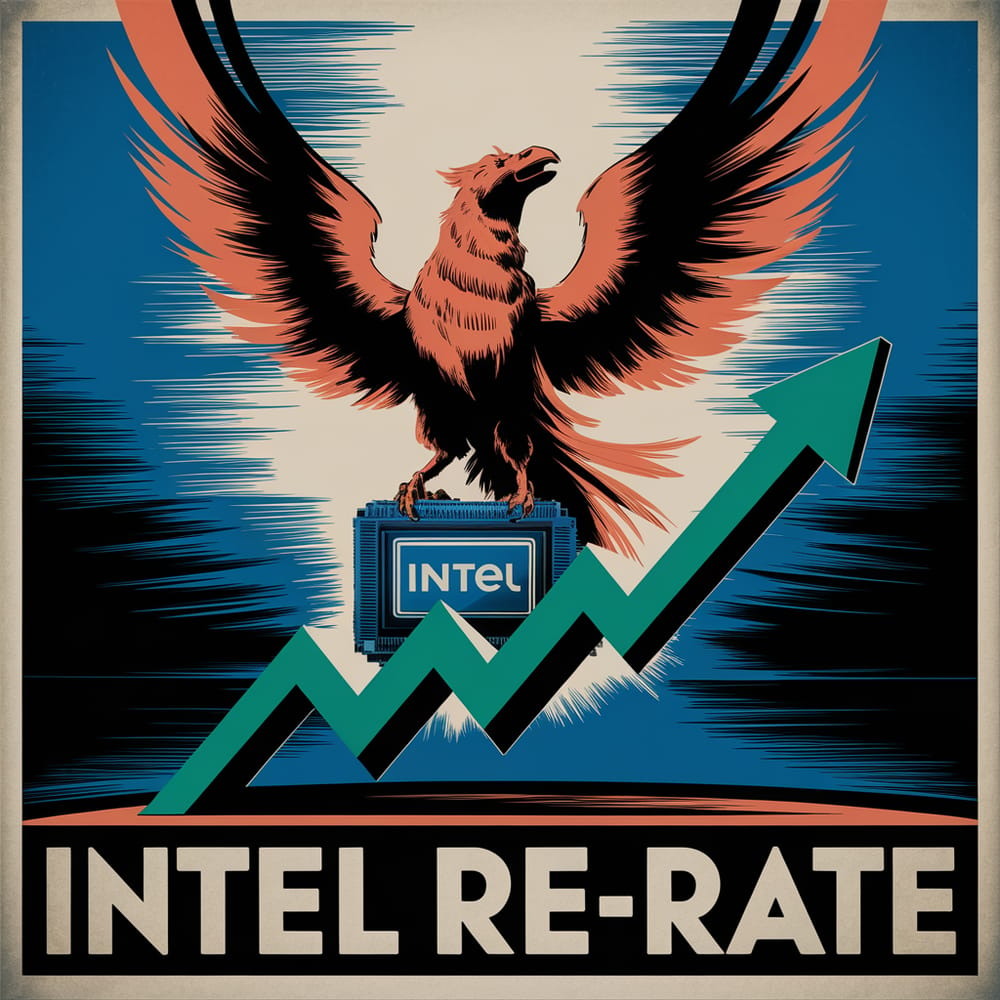
For years, Intel was the stock investors loved to leave for dead — a fallen giant outpaced by Nvidia, AMD, and TSMC while its turnaround dragged on. So the recent re-rating in Intel shares has caught a lot of people off guard. The chipmaker that couldn't catch a break has suddenly become one of the market's more talked-about comeback stories, and Wall Street's tone has shifted from skeptical to cautiously intrigued.
For investors, the question isn't just why the stock is moving. It's whether a re-rate this sharp is the start of something durable or just a relief rally in a long-struggling name.
What a "Re-Rate" Actually Means
When analysts talk about a re-rate, they mean the market is willing to pay a higher multiple for the same company — not because this quarter's numbers exploded, but because the perceived future has changed. Investors are repricing Intel's risk and reward, betting the worst is behind it. That's a powerful shift, because re-rates can run well ahead of the actual fundamentals once sentiment turns.
The Turnaround Pieces Coming Together
Several threads are feeding the optimism at once. Intel's push to build a world-class foundry business — manufacturing chips for other companies, not just itself — is finally showing signs of traction, and that's the linchpin of the whole bull case. Cost discipline and restructuring have started to show up in the numbers. And the broader strategic backdrop, with governments treating domestic chip manufacturing as a national priority, gives Intel a tailwind few competitors can claim.
None of these are slam dunks. But together they've been enough to make investors who wrote the stock off reconsider whether they were too pessimistic.
What It Means for Your Money
A sharp re-rate is exciting, but it's also where discipline matters most. Turnaround stories are seductive precisely because the upside sounds enormous — "what if Intel really does come back?" The flip side is that re-rated turnarounds are volatile, and they can give back gains just as fast if a single milestone slips, like a foundry customer win that doesn't materialize or a delayed product ramp.
For investors, the sensible frame is to treat Intel as a higher-risk turnaround bet, not a sure thing. The re-rate tells you sentiment has improved and the market sees a path forward. It does not tell you the execution is finished — that story still has chapters left to write, and each earnings report will be a test.
The Bottom Line
Intel's re-rate is a genuine sentiment shift, driven by a foundry strategy that's finally gaining credibility and a market hungry for the next comeback. Just remember what a re-rate is: a bet on a better future, not a confirmation it has arrived. The optimism is real — and so is the execution risk that comes with every turnaround.
This article is for informational purposes only and is not investment advice. Always do your own research before making investment decisions.
© Copyright 2024. All Rights Reserved.
© Copyright 2024. All Rights Reserved.