

Intel: U.S. Government Acquires 10% Equity Stake in Strategic National Chip Project
Sunday, August 30, 2026
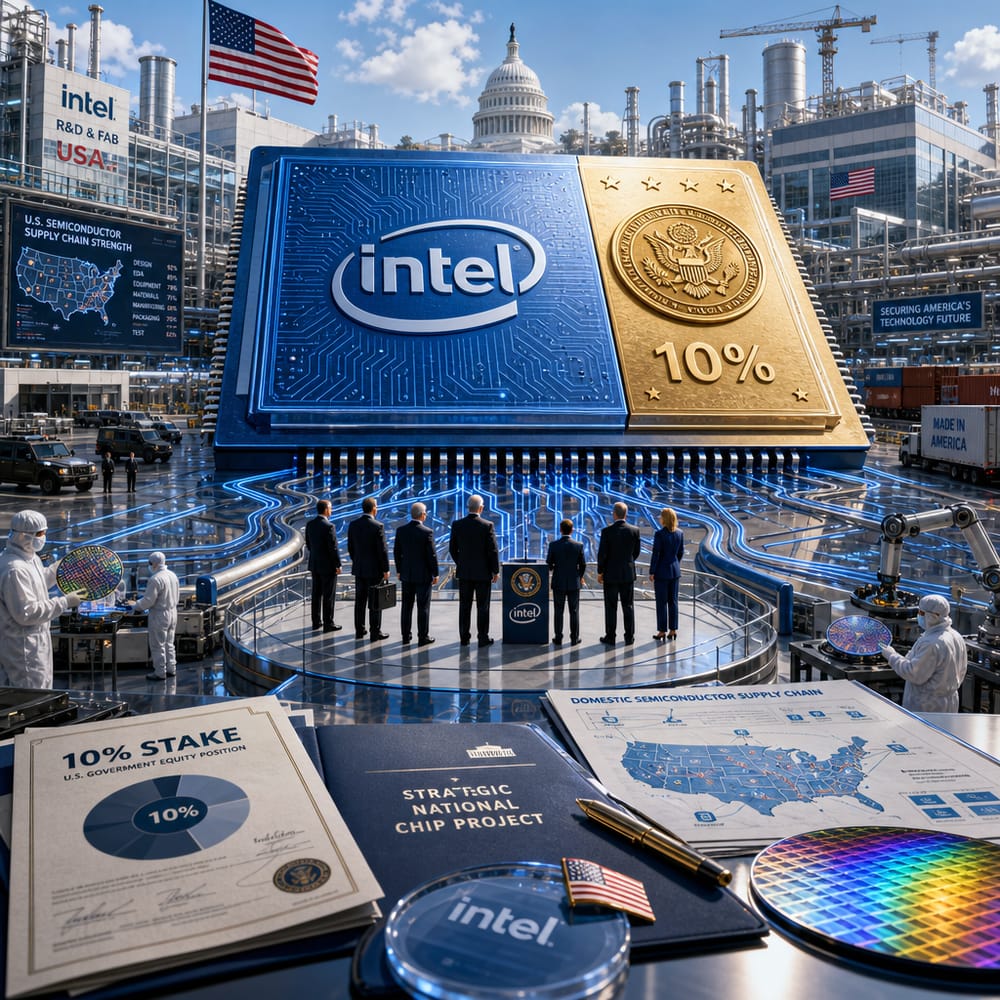
INTEL: U.S. GOVERNMENT ACQUIRES 10% EQUITY STAKE IN STRATEGIC NATIONAL CHIP PROJECT
It’s not every day that Uncle Sam decides to play investor, but when he does, you know it's serious business. And in a headline that’s shaking the tech world, the U.S. government has snagged a 10% equity stake in Intel. That’s right, folks, the stars and stripes just planted their flag on the semiconductor giant's turf. Why? Well, let’s just say this isn't about Uncle Sam getting tech-savvy or buying shares for a rainy day.
Let’s cut to the chase: chips—that’s what this is all about. Semiconductors are the lifeblood of modern technology. Everything from your smartphone to your smart fridge needs these tiny miracles. They've become as indispensable as coffee on a Monday morning, and arguably, more valuable. But lately, the global supply chain has been as dependable as a cat meme on the internet—unpredictable and chaotic. Enter, the U.S. government.
STRATEGIC REASONS FOR THE STAKE
This move isn’t just about stockpiling technology; it's about future-proofing America's tech industry. The U.S. is keen on securing its semiconductor supply chains, especially with geopolitical tensions simmering hotter than a pot of chili at a state fair. With global giants like China flexing their tech muscles, safeguarding chip production at home has jumped to the government’s priority list faster than you can say "Silicon Valley."
This strategic intervention aims to ensure that the U.S. doesn’t end up in a chip crisis, left scrambling for semiconductors in a world where every superpower wants a piece of the tech pie. Think of it as a modern-day gold rush, except this time, the gold is silicon, and the stakes are global dominance.
IMPACT ON INTEL'S GLOBAL OPERATIONS
Now, if you’re Intel, waking up to find the U.S. government as your newest shareholder can be a bit like discovering your mom just joined your favorite social media platform. It’s both reassuring and slightly alarming. But what does this really mean for Intel's global operations?
With the government's backing, Intel might find itself with a beefed-up shield against international volatility. This could translate to more R&D resources, stronger supply chain resilience, and a hefty boost in the confidence department when negotiating with international partners. But, there’s a flip side. A 10% stake isn't just spare change—it means Uncle Sam now has a say in how Intel dances on the global stage, potentially influencing strategic decisions and international partnerships.
BROADER IMPLICATIONS FOR THE SEMICONDUCTOR INDUSTRY
This maneuver has the tech world buzzing. It’s like watching a blockbuster where the government steps into the role of the protagonist, armed with equity and strategic interests. But beyond the drama, what are the implications for the semiconductor sector at large?
Firstly, this could set a precedent for government stakes in tech companies, marking a new era of public-private partnerships. Other nations might take notes, possibly leading to a tech version of the Cold War where government-backed entities battle it out for tech supremacy. Secondly, it signals a push towards reshoring manufacturing. The message is clear: it’s time for the U.S. to bring production back home, and this move could be the first domino to fall in a series of shifts aimed at reducing reliance on international manufacturing hubs.
While Intel’s shares might have gotten a jolt in the short term, the long game is what really matters. Will this partnership lead to a surge in innovation, or will it stifle the agility that tech companies are known for? Only time will tell, but one thing's certain—this is a high-stakes game with the potential to reshape the tech landscape.
So, as investors ponder the ramifications, one thing is for sure: with the government playing investor, Intel's story has just added a new chapter, one that promises more twists and turns than a roller coaster. Grab your popcorn and stay tuned, because this ride is just getting started.
This article is for informational purposes only and is not investment advice. Always do your own research or consult a licensed financial professional before making investment decisions.
© Copyright 2024. All Rights Reserved.
© Copyright 2024. All Rights Reserved.