

Intel to Sunset SGX Support, Pivot to TDX for Agentic AI & Confidential Computing
Wednesday, October 14, 2026
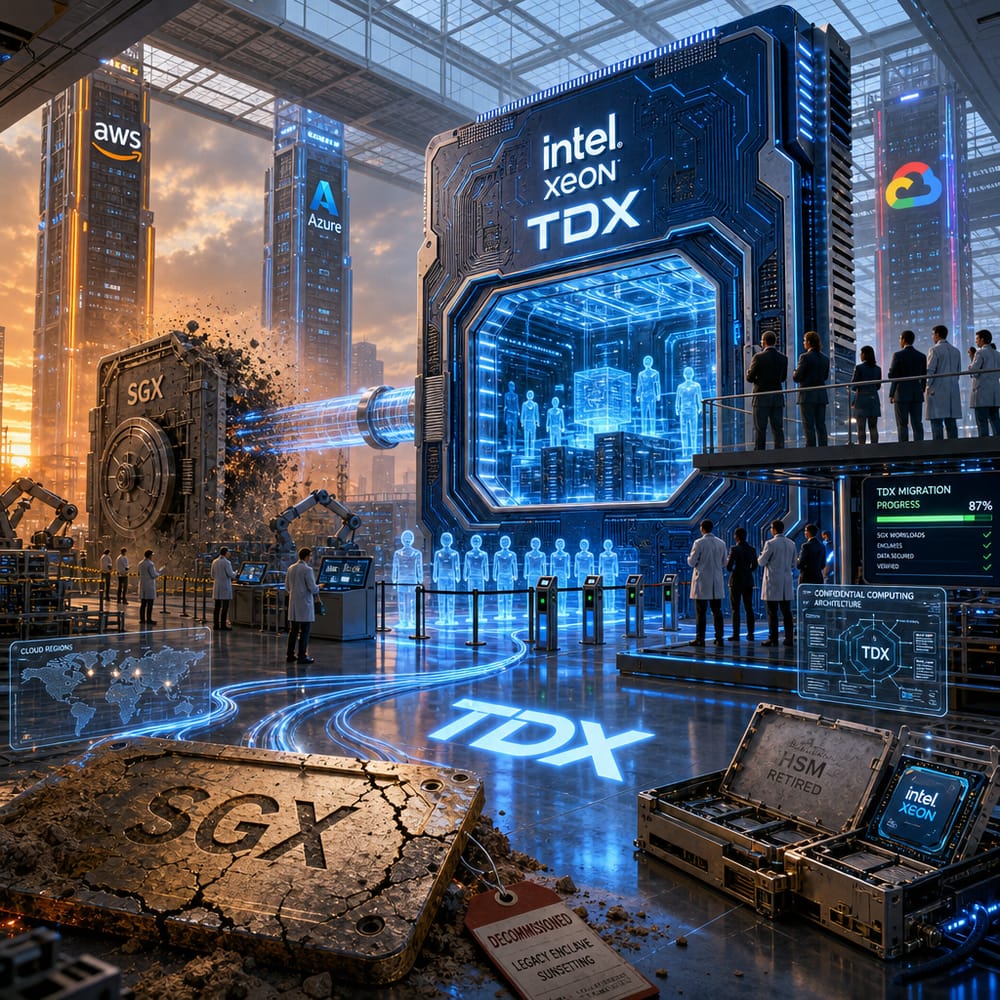
Intel is pulling the plug on its Software Guard Extensions (SGX) after its upcoming Xeon platform, and it's not a subtle goodbye. This is a full-blown graduation, with Intel tossing up its cap and embracing a new future. Cue the Trust Domain Extensions (TDX) as the new kid on the block, set to revolutionize the way we think about secure computing in the cloud and AI.
FORGET THE PAST, THE FUTURE IS HERE
SGX has been Intel’s pride and joy, the guardian angel sitting on the shoulder of many cloud providers, ensuring that sensitive data stayed under wraps. But like every superhero, SGX has had its kryptonite moments—security vulnerabilities that made it not quite the bulletproof vest it was supposed to be. Enter TDX, Intel’s shiny new security framework that promises to be both a shield and a sword in the battle against cyber threats.
TDX is Intel’s answer to the growing demand for confidential computing, which is the tech world's equivalent of having your cake and eating it too. It allows data to be processed in an encrypted form, keeping prying eyes away even if they manage to sneak into the server room. With AI workloads becoming more sensitive and complex, the need for such fortification is more pressing than ever.
CLOUD PROVIDERS: FLIP THE SCRIPT
So, what does this shift mean for the big cloud names—AWS, Azure, and Google Cloud? Think of them as our friendly neighborhood storage units, but instead of old furniture, they're storing massive amounts of data for thousands of companies. The switch to TDX is a potential game-changer for these providers. It offers them a chance to market themselves as the Fort Knox of data storage, appealing to enterprises that are getting increasingly nervous about data security.
For AWS and its competitors, the ability to offer enhanced security with TDX could be a golden ticket to attract businesses that are dipping their toes into AI but are hesitant due to security concerns. Imagine the pitch: "Your data, now safer than ever!" It’s a compelling narrative for companies who have their hands full with innovation but can't afford to be reckless with security.
AI AND THE QUANTUM CONUNDRUM
Then there’s the AI angle. AI models are like data guzzlers on steroids—they consume vast amounts of data to learn and adapt. With TDX, AI developers can finally breathe a sigh of relief. Their beloved models can now operate under a protective cloak, safeguarding against both external threats and internal mishaps. This level of security is not just beneficial; it's almost a requirement in the current age of data breaches and cyber espionage.
Moreover, TDX sets the stage for post-quantum readiness. Quantum computers, once just a gleam in a scientist's eye, are slowly becoming a reality, and they're set to crack traditional encryption methods like eggs in a frying pan. TDX is built with this future in mind, aiming to be resilient against the kind of computational firepower that could render current security techniques obsolete.
ENTERPRISES: STRATEGIZE OR STAGNATE
For enterprises, the message is clear: adapt or risk being left behind. As the landscape shifts, companies need to reassess their security strategies. With TDX, they have the opportunity to bolster their defenses, ensuring that their data, particularly that tied to AI applications, remains secure.
But with new tech comes the challenge of integration. Enterprises will need to navigate the transition smoothly to avoid disruptions. This might involve retraining IT staff, updating systems, and possibly reconsidering partnerships with cloud providers that can't promise top-notch security solutions.
THE MARKET WATCH
In the stock market, Intel’s strategic pivot could spell exciting times. As the company repositions itself, there's potential for a bounce in Intel’s stock, especially if TDX performs as promised and gains significant traction. Cloud providers leveraging TDX could also see positive shifts, provided they effectively incorporate and market these new capabilities.
Investors will be keenly watching how these changes ripple across the tech sector. The pivot to TDX might just be the catalyst needed to reignite confidence in companies feeling the heat from AI security risks and quantum computing threats.
So, there we have it. It's out with the old and in with the new for Intel. As TDX steps into the limelight, it's about to shake up the cloud and AI world in ways we can only begin to imagine. For now, all eyes on Intel as it charts this new course, and let’s see who wins this game of digital chess.
This article is for informational purposes only and is not investment advice. Always do your own research or consult a licensed financial professional before making investment decisions.
© Copyright 2024. All Rights Reserved.
© Copyright 2024. All Rights Reserved.