

Intel’s $20 Billion Equity Raise Reshapes Capital Dynamics in Semiconductors
Friday, August 14, 2026
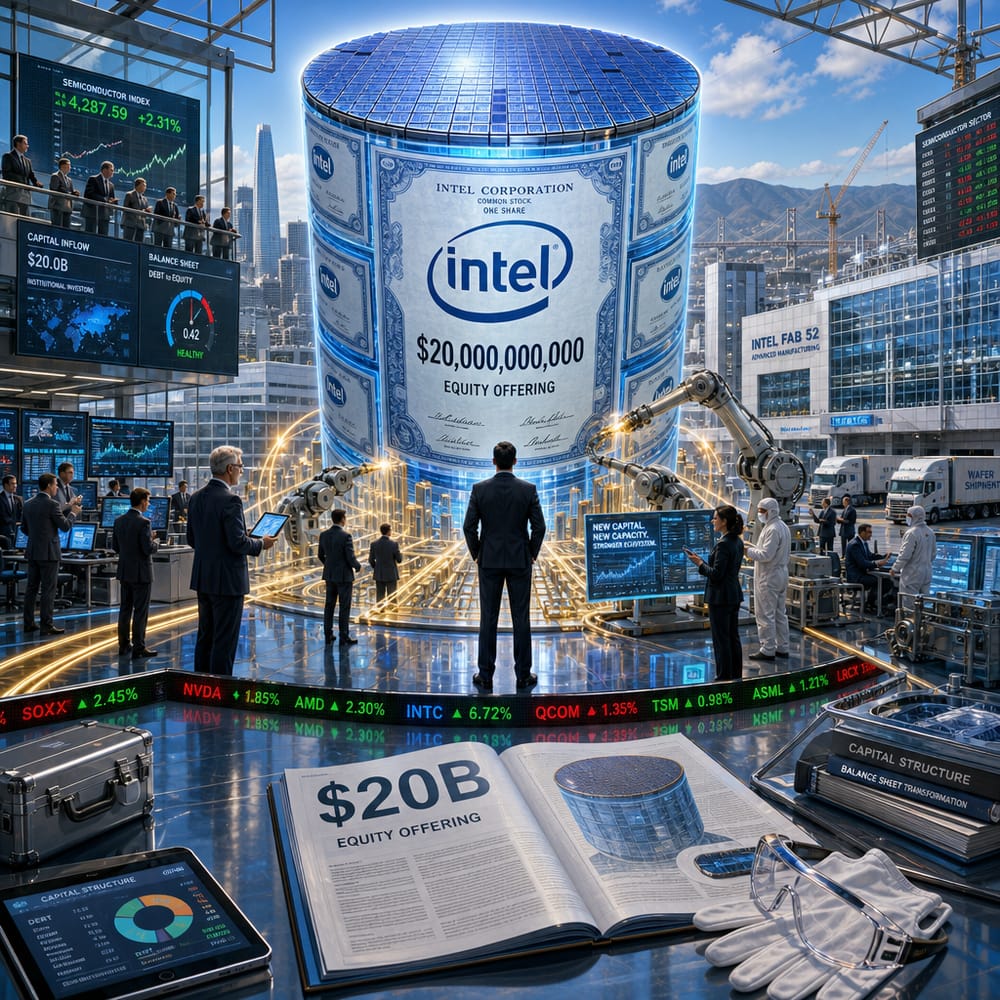
INTEL’S $20 BILLION EQUITY RAISE RESHAPES CAPITAL DYNAMICS IN SEMICONDUCTORS
Intel just dropped a $20 billion bombshell, and it’s shaking up the semiconductor industry like a snow globe in a toddler's hands. That’s right, the chip-making behemoth announced a massive equity offering, and it’s got investors and competitors alike buzzing with excitement, speculation, and maybe a tad bit of existential dread. But what does it all mean for you, the everyday investor? Let’s dive into the silicon-rich waters and find out.
First, let’s break down this colossal equity offering. In plain English, Intel is essentially selling a big chunk of its own stock to raise money. The hefty $20 billion target isn’t chump change — it’s one of the largest equity offerings the tech sector has seen in recent years. Think of it as Intel's way of saying, “We’re not just keeping up with the Joneses; we’re buying the whole block.”
So, what’s Intel doing with this mountain of cash? In the semiconductor world, which is constantly evolving and notoriously capital-intensive, having extra funds is like having a supercharged engine — it can mean the difference between leading the pack and eating dust. Intel plans to use this capital boost to revamp its manufacturing capabilities, invest in cutting-edge technologies, and likely elbow its way into new markets. In an industry that’s all about who can make the smallest, fastest, and most efficient chips, being cash-rich is a serious advantage.
Now, how does this tectonic shift affect the capital dynamics in the semiconductor sector? For starters, Intel's move signals a bigger trend of increasing capital needs across the industry. As companies sprint to outpace each other, they need serious cash to fuel research and development, expand production, and fend off competitors. Intel’s aggressive capital raise might spur other tech titans to consider similar maneuvers, potentially reshaping investment strategies and capital allocation throughout the sector.
But let’s cut to the chase: How are investors reacting to Intel’s bold move? Well, it's a mixed bag. On one hand, shareholders might fret about dilution — when a company issues new shares, existing shares can lose some of their value. It’s like adding more water to your favorite soup recipe; it might feed more people, but the flavor could get a little watered down. On the other hand, investors could see this as a bullish signal that Intel is gearing up for something big, potentially offering long-term gains that outweigh short-term dilution.
Competitors, on the other hand, are likely watching Intel’s maneuvers with hawk-like intensity. In an industry where tech giants like AMD and Nvidia also play, Intel's equity raise might just be the shot across the bow that shakes up market strategies. Will competitors increase their own capital expenditures to keep pace? Or could we see a new wave of mergers and partnerships as companies strategize to strengthen their positions in an increasingly competitive market? Only time will tell, but you can bet the boardrooms are buzzing with contingency plans.
For everyday investors, this development opens up both opportunities and warnings. With the semiconductor industry poised for significant evolution, there’s potential to ride the wave of innovation and growth. But it’s also a reminder of the volatility and unpredictability of the tech sector. As always, keeping a diversified portfolio and staying informed on industry moves is key.
In the end, Intel’s $20 billion equity offering isn’t just a headline — it’s a harbinger of shifts in the semiconductor industry’s capital landscape. Whether you’re a seasoned investor or just dipping your toes in the market, understanding these dynamics can help you navigate the choppy waters of tech investing with a little more savvy. And remember, in the world of investing, it’s not just about keeping up with the Joneses; sometimes, it’s about anticipating the next move before they even know what it is.
This article is for informational purposes only and is not investment advice. Always do your own research or consult a licensed financial professional before making investment decisions.
© Copyright 2024. All Rights Reserved.
© Copyright 2024. All Rights Reserved.