

Intel’s $15B Stock Offering: Why the AI Capital Raise Hit Shares Hard
Monday, August 10, 2026
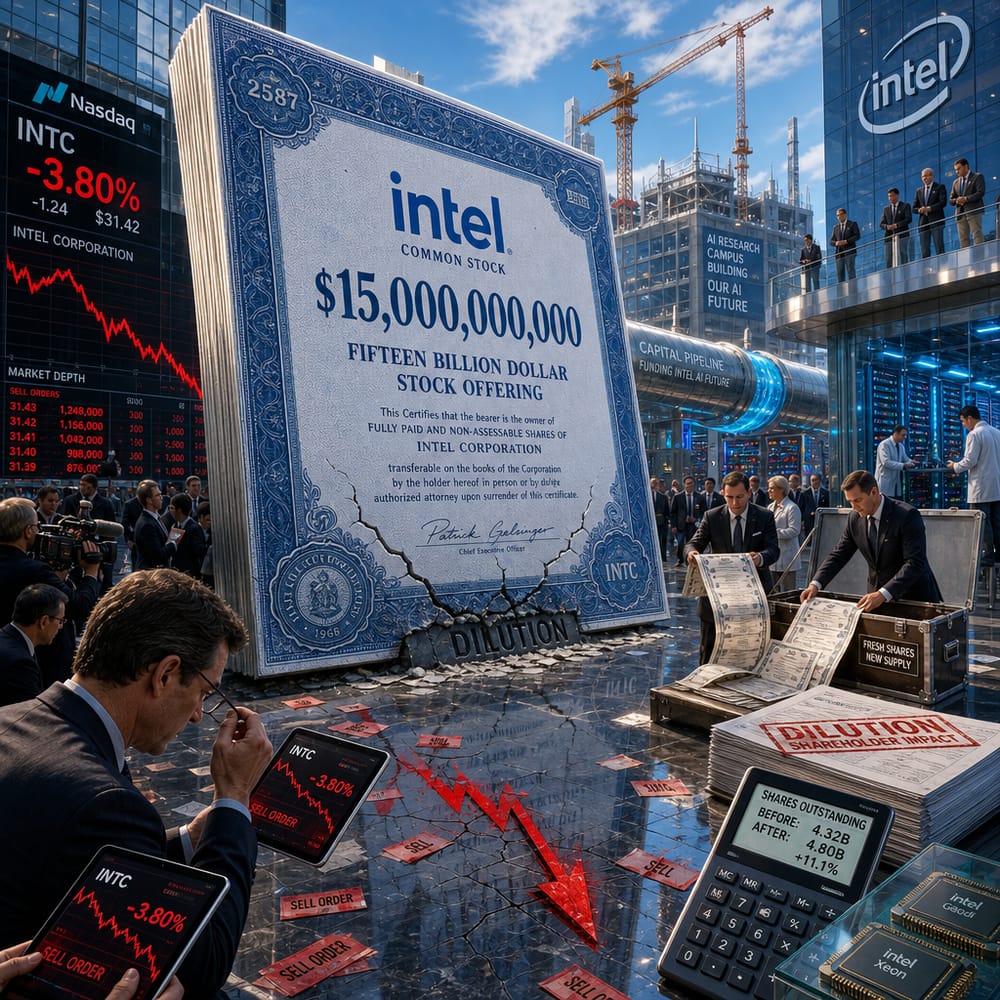
INTEL’S $15B STOCK OFFERING: WHY THE AI CAPITAL RAISE HIT SHARES HARD
Alright folks, grab your popcorn because the rollercoaster ride of tech finance just got another twist. This time, Intel is the one buckling the safety bar, announcing a cool $15 billion stock offering. The reason? To fuel the ever-hungry AI beast that demands more computing power than most of us use in a lifetime. But while the tech giant dreams of AI domination, investors are clutching their pearls, cringing at the idea of share dilution. So, let's dive into what’s really going on behind Intel’s move and why it sent shareholders into a bit of a tizzy.
Intel’s big announcement has left its stock price feeling the heat, dropping a neat 3-4% in just a day. This knee-jerk reaction from investors isn’t about AI being a bad bet (trust me, it’s not), but more about the cold, hard math of stock dilution. Imagine you’ve got a delicious pie, and suddenly someone’s adding more slices—all of a sudden, your piece starts looking a lot smaller. That’s dilution for you. When a company issues more shares, each existing share's value is spread a bit thinner. Not the news shareholders want to hear over their morning coffee.
So why is Intel doing this now? Simple: AI is the golden goose of the tech world, and everyone’s racing to see who gets to feed it first. Demand for AI infrastructure is exploding at a rate not seen since the dawn of the internet. Intel sees this as an opportunity—a chance to catch a ride on the AI wave and maybe even hang ten over some of its competitors. They’re aiming to boost their capabilities in physical AI, fancy silicon chips, and advanced packaging, all crucial in the race for tech supremacy.
But let’s talk turkey: How will this affect Intel’s financial health? On the surface, forking out $15 billion might seem like they’re dipping into retirement savings, but this isn’t a reckless splurge. It’s an investment in the future, where AI is not just a buzzword but the backbone of everything from healthcare to autonomous vehicles. By raising this capital, Intel is positioning itself to compete with big dogs like Amazon and Nvidia who’ve been writing blank checks to AI for years. If executed well, this could enhance Intel’s long-term market position and, ultimately, profitability. The bet is that the pie will grow bigger over time, making those shares more valuable in the end.
But what’s in it for investors? Well, that’s the million-dollar question—or in this case, the $15 billion question. Investors are certainly jittery about the immediate dip, but if Intel plays its cards right, there’s the potential for substantial returns. AI investments aren’t just about making things faster or shinier; they’re about creating efficiencies, developing new products, and opening up revenue streams that weren’t possible before. Long-term benefits could outweigh the short-term pain if AI delivers on its promise to revolutionize industries.
Historically, investors’ reactions to large stock offerings like this one have been a mixed bag. The initial response is often negative (see: the latest price drop), fueled by worries about dilution and increased risk. However, if the capital raised is used judiciously, turning into growth and profit, investor sentiment can—and often does—swing back. The market loves a comeback story, and tech giants have a penchant for rising from the ashes of skepticism.
In the grand scheme of things, Intel’s move is a classic tale of balancing immediate shareholder value against long-term growth potential. It’s a reminder that in the tech world, standing still is akin to moving backward. As Intel gears up to tackle AI head-on with a wallet full of fresh cash, only time will tell if their gamble pays off. For now, investors will have to weather the storm with the hope that the sun will shine brighter on the other side of this AI-driven tech boom.
So there you have it, folks—a spicy and suspenseful chapter in the saga of tech finance. Will Intel’s big bet pay off? Stay tuned. The tech world never disappoints in keeping us on the edge of our seats.
This article is for informational purposes only and is not investment advice. Always do your own research or consult a licensed financial professional before making investment decisions.
© Copyright 2024. All Rights Reserved.
© Copyright 2024. All Rights Reserved.