

Intel's $15 Billion Stock Offering: A Double-Edged Sword
Monday, August 10, 2026
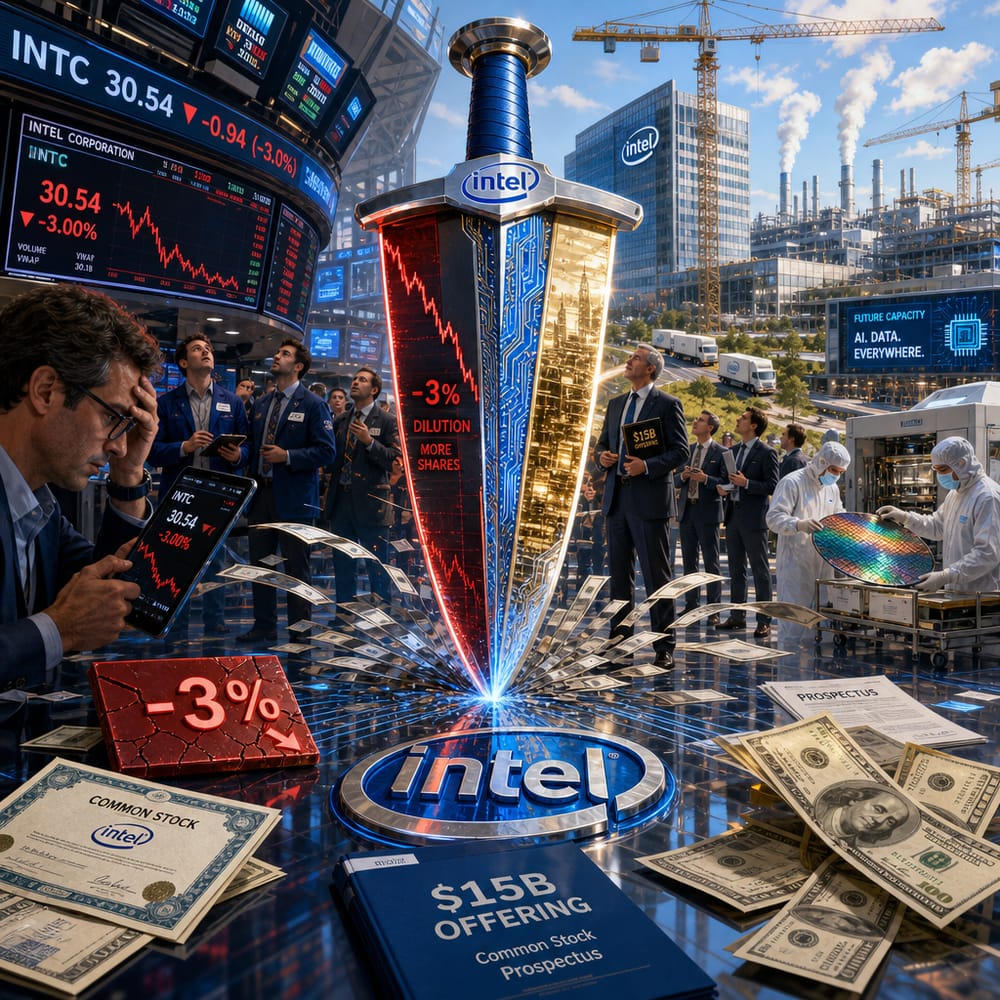
INTEL'S $15 BILLION STOCK OFFERING: A DOUBLE-EDGED SWORD
When Intel speaks, Wall Street sits up and listens—or, in this case, squirms. News of a $15 billion common stock offering from the tech titan has sent Intel shares skidding 3% downhill. If you felt a sense of déjà vu, you're not alone. This isn't the first time a big player has shaken up the market by pulling out the old stock-offering playbook. But Intel’s move raises a critical question: should investors be shaking in their boots, or is this a stealthy move toward future growth?
Let’s break it down in simple terms. By offering more shares, Intel is essentially creating more slices of the same pie. The downside? Each slice, or share, could shrink in value for existing investors—a term known as dilution. But what Intel loses in dilution, it might more than make up for with strategic maneuvers. Think of it as robbing Peter to pay Paul, but Peter's got a plan to grow the bakery to quadruple its size.
First things first: the impact on earnings per share, or EPS. When a company adds more shares to the pot, those earnings need to stretch a little thinner. Short term, this can send EPS figures south, making the stock less attractive to those who cling to financial metrics like a life raft in shark-infested waters. So if you notice Intel’s EPS taking a bit of a nosedive, don’t panic—just know it’s part of the dilution dance.
Now, let's shift our gaze to the horizon. What’s Intel cooking up with all that extra dough? The company has whispered sweet nothings about boosting its semiconductor prowess and maybe even dabbling in new ventures. More chips, more dips—the kind of forward-thinking that could drive long-term growth. When you’re a giant in a rapidly evolving industry, standing still isn't an option. And Intel seems keen to wear a jetpack rather than cement shoes.
But it’s not all unicorns and rainbows. Investors and analysts alike are chewing over this big move, adjusting their rose-colored glasses and digging through the tea leaves to predict Intel’s future. Some analysts have adjusted their ratings, showing a mix of skepticism and cautious optimism. For them, it’s all about whether this gamble will pay off and how it stacks up against the competition—which, let’s be honest, is like an episode of "Game of Thrones" with less dragon and more silicon.
The skeptics raise an eyebrow at Intel’s ability to deploy this new capital efficiently. After all, you can lead a horse to water, but you can't make it invent the next cutting-edge semiconductor. And while Intel is no stranger to the tech rodeo, it’s also facing hungry competitors ready to pounce on any misstep. If Intel stumbles, it might not be the only one picking up the pieces.
But for believers in Intel’s roadmap, this capital infusion is like a muscle-bound bodybuilder downing a protein shake: it’s a move designed to enhance performance and stamina in a competitive arena. There's a good chance this offering could fuel not just growth but resilience against market headwinds.
So what does this mean for you, the everyday investor with an eye on your portfolio and a finger on the pulse of the market? If you’re a current shareholder, it might be time for some soul-searching. Are you willing to ride the short-term turbulence for potentially juicy long-term gains? And if you’re on the sidelines, ask yourself if you believe in Intel’s vision enough to buy into this new chapter.
Intel’s $15 billion stock offering isn’t just a financial maneuver—it’s a bet on the future. In a game where chips can fall in any direction, the difference between a strategic mastermind and a reckless gambler can be as thin as a silicon wafer. Whether you’re in it for the long haul or playing the field, keep your eyes on Intel. This story is just getting started.
This article is for informational purposes only and is not investment advice. Always do your own research or consult a licensed financial professional before making investment decisions.
© Copyright 2024. All Rights Reserved.
© Copyright 2024. All Rights Reserved.