

Intel's $15 Billion Rights Offering for AI-Chip Investment
Wednesday, August 12, 2026
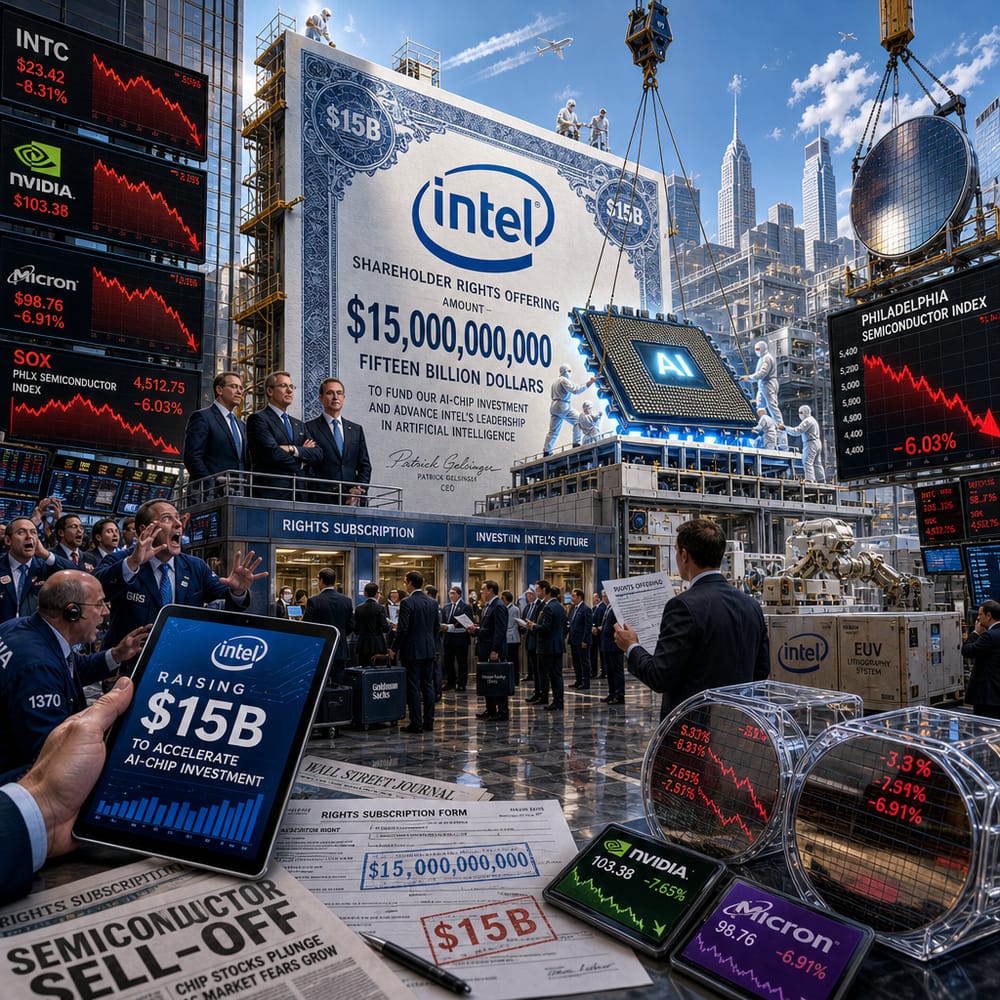
INTEL GOES ALL-IN ON AI CHIPS WITH A $15 BILLION GAMBLE
Hold on to your hats, folks! Intel just announced it's raising a whopping $15 billion through a rights offering to turbocharge its AI-chip development. That’s right—big bucks for big brains and even bigger risks. So, what's the impact on the semiconductor landscape, and how should you, the savvy retail investor, navigate these stormy tech seas?
First up, let’s talk about what a rights offering is. Picture this: Intel’s giving existing shareholders the exclusive chance to buy additional shares at a discount. It’s like a Black Friday deal, but for stocks. But why now, and why does it matter? Well, Intel’s making a strategic play to bolster its presence in the AI-chip arena—a sector hotter than an overheated gaming laptop.
By making this move, Intel is effectively declaring a no-holds-barred cage match with the reigning AI-chip royalty, Nvidia. Intel knows that whoever rules the AI-chip world will have a master key to the future of tech. So, the big question is, will this financing strategy give Intel the muscles it needs to knock out its competition?
Intel’s bet on AI comes as the demand for smarter, faster, more efficient chips skyrockets. Imagine AI as a ravenous beast constantly demanding more data and computing power. Feeding this beast means developing new technologies, which doesn’t come cheap. Hence, the $15 billion rights offering—a hefty investment to keep pace with the tech titans.
Now, let’s break down the potential risks and rewards for investors. On the upside, if Intel’s gambit pays off, shareholders might find themselves holding golden tickets to the AI future. More market share means more revenue, innovation, and, ultimately, influence in the tech world. But, as with any high-stakes game, there’s a downside.
The risk here is that Intel might overpromise and underdeliver. If its AI-chip ventures fall flat, this could leave investors with a bunch of pricey shares and a bad taste in their mouths. Plus, the sheer scale of this investment could strain Intel's resources if results don’t match expectations. As an investor, you’ve got to be like a poker player reading the table—watchful, strategic, and ready to fold if things go south.
And what about the broader semiconductor landscape? Intel’s bold move might send shockwaves through the industry. Let’s look at Nvidia, the current heavyweight champ in AI-chips. Intel’s aggressive push into the space could mean increased competition, pricing battles, and potentially slimmer margins. It'll be like a tech version of the Wild West—or the Hunger Games, take your pick.
However, this could also spur innovation across the sector. Other semiconductor companies like Micron might feel the heat and ramp up their game to remain relevant. This could potentially lead to new partnerships, cutting-edge technologies, and perhaps even some M&A action as companies fight to stay in the race.
In the meantime, the Philadelphia Semiconductor Index, a barometer for the sector's health, could experience a rollercoaster of volatility as investors digest Intel’s ambitious plans. The excitement and uncertainty might turn some investors into cautious cats, while others might dive in hoping to ride out the turbulence on the way to a jackpot.
Here’s the bottom line for you, dear retail investor: Intel’s $15 billion rights offering is a bold move that could redefine its future and the semiconductor landscape. But with high potential rewards come significant risks. Whether you're holding Intel stock or eyeing other semiconductor darlings, keep your eyes peeled, weigh your options, and as always, invest with your head—because your investments are worth more than a gamble.
In the fast-paced world of tech stocks, fortune favors the informed, the prepared, and those willing to roll the dice—wisely. Intel’s move could either be a masterstroke in tech innovation or a cautionary tale of ambition gone awry. Only time will tell, and you heard it here first.
This article is for informational purposes only and is not investment advice. Always do your own research or consult a licensed financial professional before making investment decisions.
© Copyright 2024. All Rights Reserved.
© Copyright 2024. All Rights Reserved.