

Institutions Anchor Markets Amid Yield Surge
Sunday, September 27, 2026
INSTITUTIONS ANCHOR MARKETS AMID YIELD SURGE
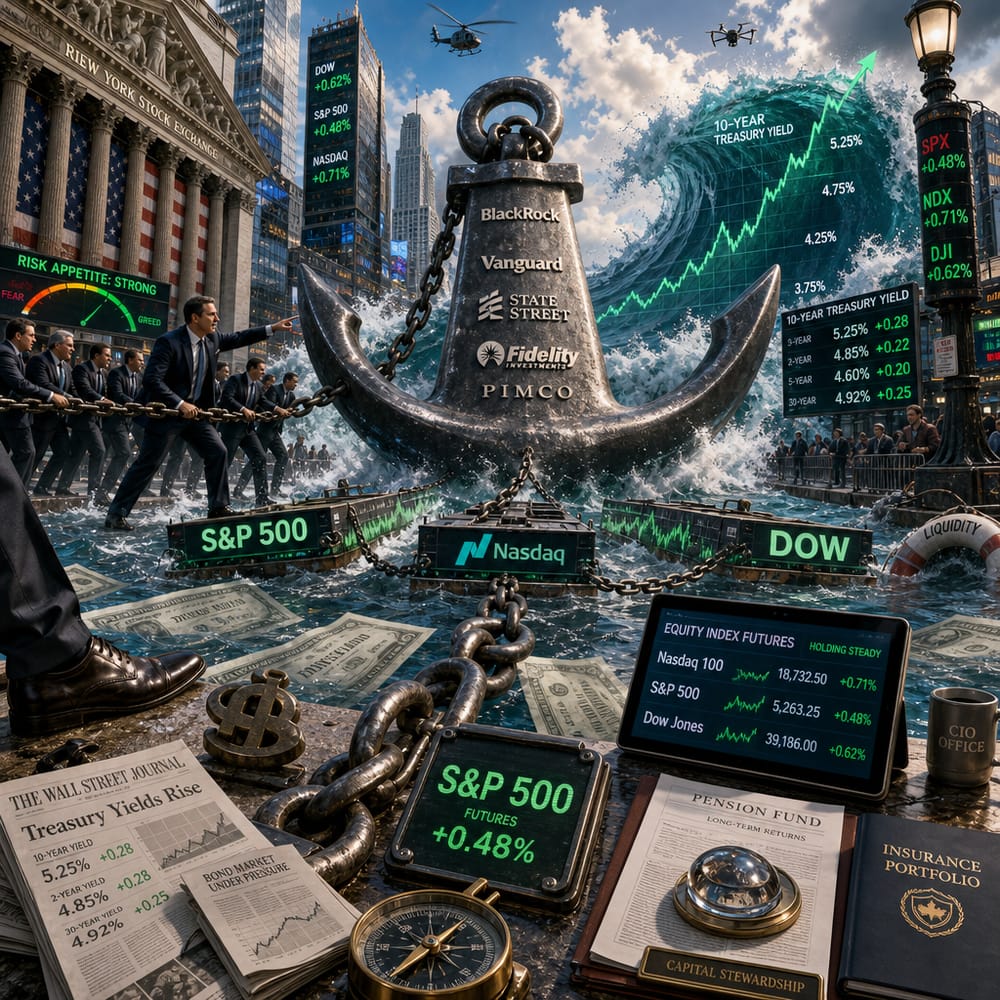
If you're the kind of person who checks their 401(k) balance with your morning coffee, you might have noticed something lately: the stock market's been acting like it's had one too many energy drinks. Treasury yields are climbing like a mountain goat on caffeine, but instead of panic selling, big institutional investors are hanging tight. They're keeping faith in the U.S. stock market, and this might just be the kind of steadiness the market needs to avoid a meltdown.
You see, when Treasury yields rise, it typically spells trouble for stocks. Higher yields make bonds more attractive, which can lure money away from stocks. But this time around, it's like the big dogs on Wall Street didn’t get the memo. Instead of rushing for the exits, they're buying in, and their confidence is contagious.
So, what’s their play? It's not just a matter of throwing darts at a board of tech stocks. Institutional investors are like chess grandmasters thinking several moves ahead. They're favoring sectors that can hold their ground amid rising yields and potential economic hiccups. Think tech giants—who are busy weaving artificial intelligence into their portfolios like a tailor with a new bolt of cloth—and dividend-paying stalwarts that offer a juicy income cushion when the going gets tough.
In a world where everything from interest rates to international politics seems more volatile than a soap opera, institutions are the calm in the storm. They're not just random players in a chaotic market—they're the anchors. By holding steady, they're lending a level of stability that's keeping the S&P 500 and Nasdaq from doing the financial equivalent of a bungee jump without a cord.
For retail investors, aka the folks like you and me, this institutional stability is a signal. When the pros aren't hitting the panic button, it might be worth considering why. There's a distinct possibility that their long-term vision sees past the current upheaval to a horizon where investments still pay off. Could it be time to follow suit? Maybe not copycat their every move, but at least take a page out of their playbook on managing risk and rewards.
But hang on—before you start throwing your cash into the same pot as the big boys, remember the golden rule: diversify. While institutions might pile into tech or safe-haven sectors, retail investors should always balance that with a mix of assets. Consider a dash of dividend stocks for stability—especially those that have weathered past storms and come out stronger.
Let’s talk sectors for a moment. Tech is clearly the bright, shiny object—but it’s not just any tech. The AI revolution is drawing major attention, and institutional investors are betting big on companies with a foot in that futuristic door. But don’t overlook solid dividend payers in more traditional industries, like utilities or consumer staples, which can provide income even when growth is harder to come by.
Back to the big picture: What does all this institutional confidence mean to the average Joe or Jane investor? It's a cue that while individual stocks will rise and fall, the broader market might just have the resilience to withstand the current yield storm. So, while you carefully consider your next portfolio move, maybe it’s time to take a cue from the institutions: steady your hand, keep your eyes on the horizon, and remember that markets, like life, are full of cycles.
In the end, whether you're a Wall Street mogul or just trying to bolster your retirement savings, the message is clear. The big investors still see value in playing the stock market, even amidst rising yields. It’s like they’re saying: “We’ve been here before, and we know how to navigate these waters.” For the rest of us, that means maybe it's time to dust off our own compass and plot a course that's informed, balanced, and just a little bit bold.
This article is for informational purposes only and is not investment advice. Always do your own research or consult a licensed financial professional before making investment decisions.
© Copyright 2024. All Rights Reserved.
© Copyright 2024. All Rights Reserved.