

Initial Signs of Labor Cooling: Weekly Jobless Claims Fall, but Underlying Weakness Persists
Thursday, August 20, 2026
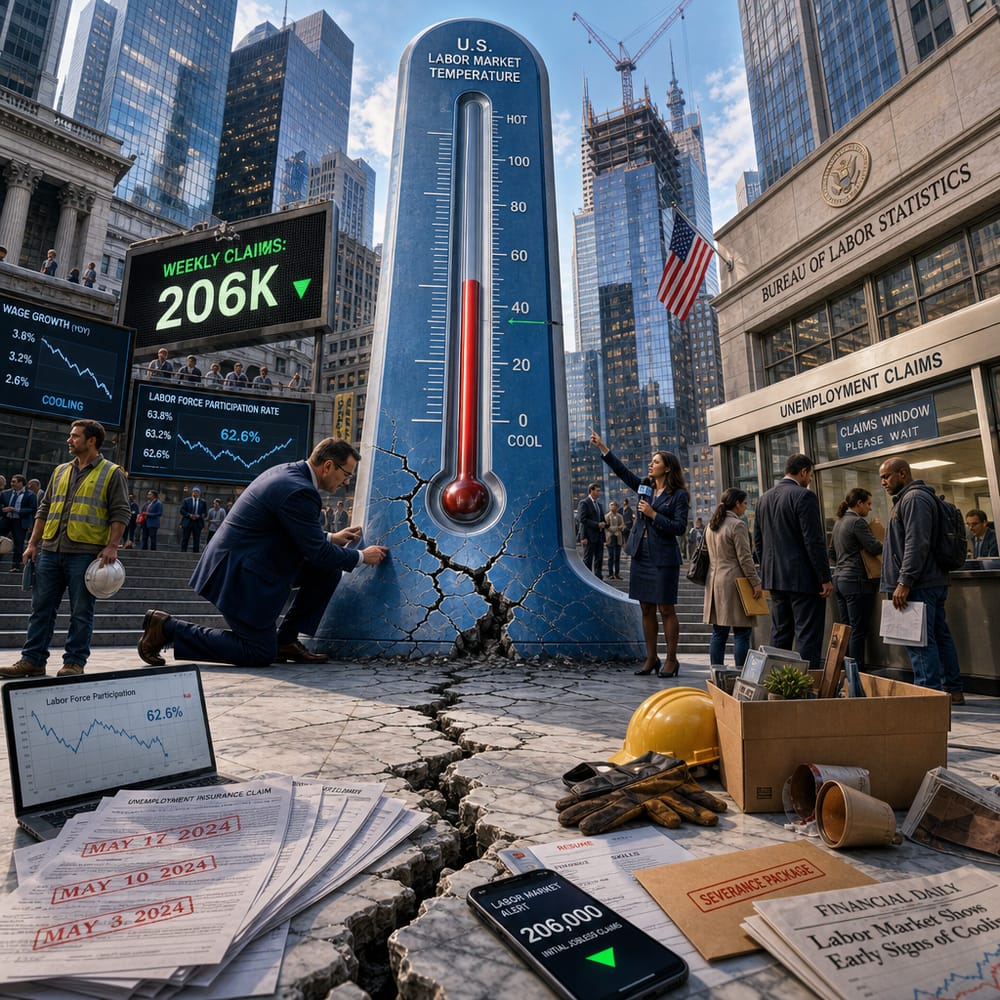
Welcome to the rollercoaster ride that is the U.S. labor market. Hold onto your smartphones, folks, because this isn’t just another report about numbers that make your eyes glaze over. We’re diving headfirst into some juicy economic drama.
This week, the Labor Department threw us a curveball: weekly jobless claims dipped to 206,000. That's like finding a twenty-dollar bill in your winter coat from last year—unexpected but sweet. On paper, it looks like the labor market's got some serious hustle, staying as resilient as a motivational poster kitten. But don't let those shiny numbers fool you. Peel back a layer and you’ll see some underlying shifts that are sketching a very different picture of work in America.
Let’s break it down. The fact that fewer folks are filing for unemployment could suggest a stable job market, but here's the twist: it might also mean people are just not bothering to claim because they’ve dropped out of the race altogether. That’s right, part of this resilience is courtesy of people just walking away, stage left, from the job market. Call it a labor force exit strategy, if you will.
So, what’s causing this exodus? It’s a cocktail of structural changes that have been brewing for a while. One big factor? The gig economy. More folks are hitching a ride on the gig train, freelancing, or piecing together multiple income streams. It's like the entire job market has developed commitment issues with traditional full-time work.
Now, throw in technological advancements that are making some old-school jobs go poof, and you've got yourself a labor landscape that's as unpredictable as a soap opera plotline. Add an aging population not being replaced fast enough by younger workers, and it’s clear: the labor supply is tightening, whether we like it or not.
Here’s where things get really spicy: these shifts might be keeping a lid on wage growth. With less pressure to raise wages across the board due to a smaller pool of workers actively seeking traditional employment, we might not see the kind of wage hikes that lead to inflation—the kind that sends the Federal Reserve scrambling to cool things down with their interest rate lever. You know, that giant economic thermostat they fiddle with to keep the economy from overheating.
Speaking of the Fed, these labor market dynamics are bound to catch their attention like a cat spotting a laser pointer. The Fed's been tiptoeing around inflation like it's a delicate soufflé that might collapse any second. They are likely to keep their eyes peeled for signs that wage-driven inflation is picking up before deciding whether to adjust interest rates. So, the jobless claim drop might buy the central bank some time before they decide to tweak their economic recipe.
On the flip side, if the underlying weakness continues to disguise itself as strength, we might see policymakers being a bit more conservative with interest rate hikes to avoid choking any growth prospects. It's a tightrope walk without a net, and the stakes are high.
In the meantime, for you, the everyday investor scrolling through this on your lunch break, what does all this mean? Keep your antennas up, especially if you’re dabbling in sectors closely tied to consumer spending, like retail or leisure. If wage growth is slower than expected, consumers might tighten their belts, leaving businesses like Walmart—a giant barometer of Middle America spending—scrambling to keep those registers ringing.
So, as we ride out this labor market drama, remember: beneath that headline figure of falling jobless claims is a story of transition, one that’s testing the mettle of businesses, policymakers, and investors alike. Keep watching those trends and stay nimble, because as with any good soap opera, the only thing you should expect is the unexpected.
This article is for informational purposes only and is not investment advice. Always do your own research or consult a licensed financial professional before making investment decisions.
© Copyright 2024. All Rights Reserved.
© Copyright 2024. All Rights Reserved.