

Initial Jobless Claims Fall to 206,000, Labor Market Showing Resilience
Tuesday, August 25, 2026
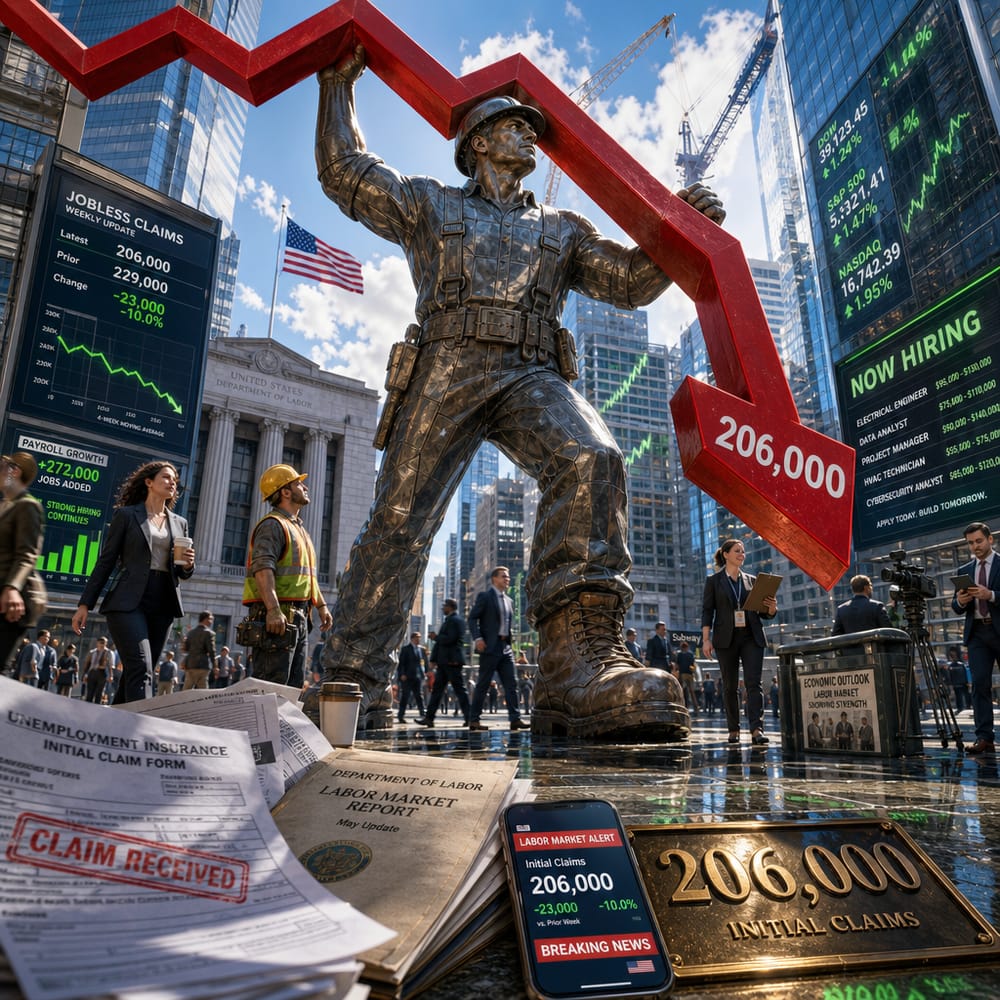
Is it just me, or is the U.S. labor market playing a game of “Can’t Touch This”? Just when economists think they’ve cornered it with rising interest rates and external pressures, it pulls a U-turn and delivers a surprise. The latest jaw-dropper? Initial jobless claims have dropped to a lean and mean 206,000. That's a number so tight it should be wearing skinny jeans.
But what’s behind this resilience? How is the job market holding its ground while everything else is doing the financial equivalent of the cha-cha? Pour yourself a cup of coffee and let’s dive into this economic wonderland.
THE LITTLE ENGINE THAT COULD
First up, let’s talk about what’s keeping this engine purring. A key player here is the ongoing demand for skilled workers, which, despite economic headwinds, shows no signs of letting up. The tech industry, still riding high on AI and chip innovations, is on a hiring spree. It’s a bit like a kid in a candy store—if the candy were data engineers and cybersecurity experts.
Meanwhile, healthcare continues to bolster its ranks, a trend that seems set to continue regardless of economic cycles. As long as people need medical care (and last I checked, that was everyone), jobs in this sector are as close to recession-proof as you can get.
And let’s not forget about the hospitality and leisure industries, which have been clawing their way back post-pandemic. They're not quite back to their pre-2020 glory, but any uptick is a sign they're getting their groove back.
CONSUMER SPENDING: THE WILD CARD
What does this mean for you, the everyday investor scrolling through your daily dose of market headlines? Well, a robust labor market could be the secret sauce that keeps consumer spending buoyant. More people with steady paychecks means more money flowing into the economy, from your local diner to big-ticket items like cars and houses.
But here’s the rub. While more jobs mean more income, inflation is still the uninvited guest at the party, eating up those hard-earned dollars. So while the quantity of consumer spending might rise, its quality—meaning what those dollars can actually buy—remains a concern.
THE FED’S DILEMMA: TO HIKE OR NOT TO HIKE
Now, let’s talk about our friends over at the Federal Reserve. They’ve been playing a delicate game of rate hike hopscotch, trying to balance controlling inflation without stifling growth. A resilient labor market cues the possibility of further rate hikes because, in Fed speak, tight job markets can fan the flames of inflation.
So, if the job market keeps flexing its muscles, we might see the Fed continue on its current rate hike path. This prospect makes investors jittery, as higher rates typically mean borrowing costs go up, potentially putting a damper on economic growth.
But remember, the Fed isn’t just focused on today’s numbers. They’re looking down the road, and with consumer spending showing some signs of wavering, their next moves are still anyone’s guess.
MARKET MOVERS AND SHAKERS
As we digest these numbers, the impact ripples across various sectors. The tech-heavy Nasdaq has seen a boost, thanks in part to semiconductor stocks making gains. Investors seem to be banking on the sector’s future growth, spurred by demand for AI technologies and infrastructure.
Meanwhile, consumer-facing industries are a bit more of a mixed bag. Some companies are wrestling with lower margins as they try to keep prices competitive amid inflationary pressures. Dick’s Sporting Goods, for instance, recently took a nosedive following disappointing results, reminding us that not all is rosy in retail.
SO, WHAT’S NEXT?
For you, the discerning retail investor, it’s a time to watch and wait. Keep an eye on job reports and any hints about the Fed’s next moves. The labor market’s resilience gives a glimmer of hope in an otherwise uncertain economic landscape. But remember, markets have a mind of their own—they’re as unpredictable as a cat at a dog show.
In the meantime, it’s wise to diversify your portfolio and hedge your bets. Whether the Fed decides to hike rates or take a breather, positioning yourself across various sectors can help cushion against whatever surprises the market has in store.
So, there you have it. The labor market’s resilience is more than just a statistic; it's the thread that's holding together the broader economic tapestry. And as long as it keeps doing its thing, there’s reason to be cautiously optimistic, even in these turbulent times.
This article is for informational purposes only and is not investment advice. Always do your own research or consult a licensed financial professional before making investment decisions.
© Copyright 2024. All Rights Reserved.
© Copyright 2024. All Rights Reserved.