

Initial Jobless Claims Dip to 206,000 Amid Energy Shock
Friday, August 21, 2026
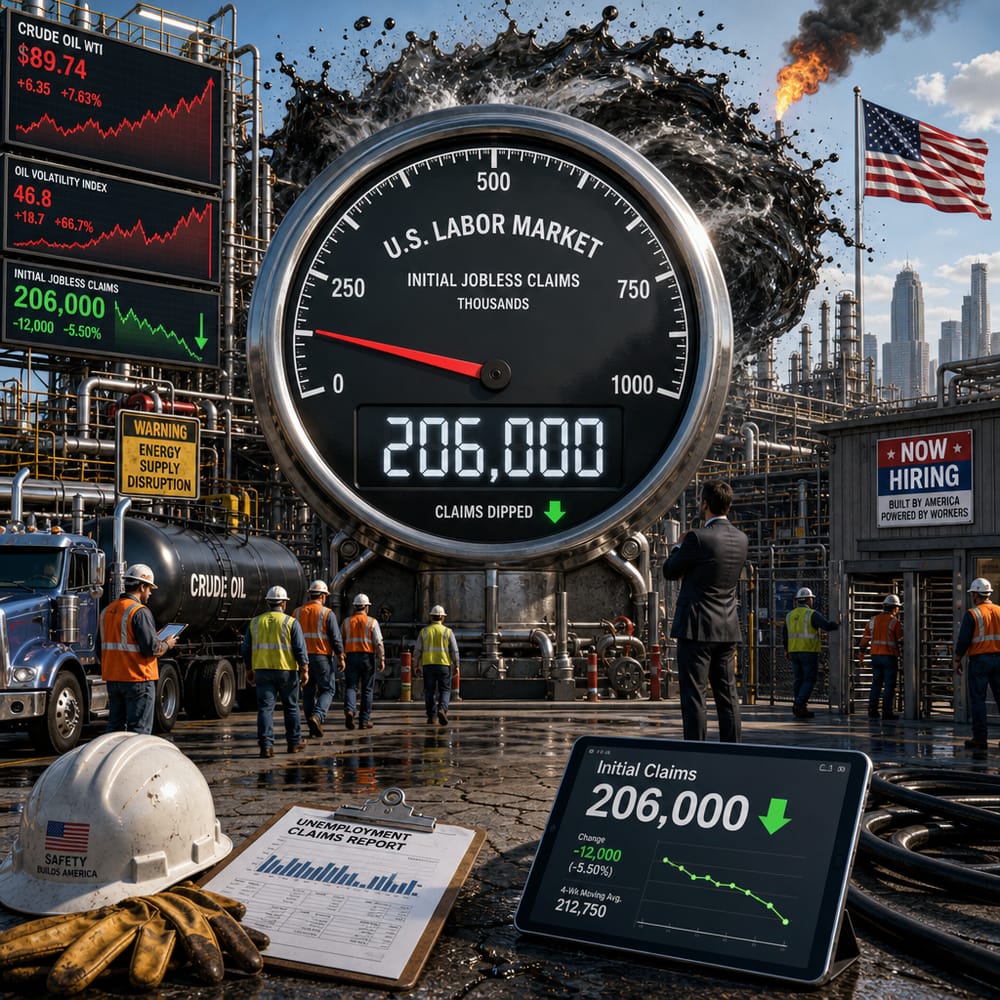
HEADLINE: Initial Jobless Claims Dip to 206,000 Amid Energy Shock
The U.S. job market is flexing its muscles like a bodybuilder on show day. In the latest reveal, initial jobless claims drop to a sleek 206,000, signaling a powerhouse of a labor market that seems unfazed by the chaos in global energy supply. So, what's keeping the American labor force as solid as a rock while the world wobbles under the weight of energy challenges?
Beneath this robust headline number lies a cocktail of factors fueling this employment fortress. First, there's the seemingly unstoppable service sector juggernaut. Despite whispers of an economic slowdown, services from healthcare to hospitality are refusing to hit the brakes. People are still splurging on dining experiences and travel, pumping life into these industries and keeping employment levels high.
Then, there's the tech sector, which, despite recent stumbles in share price, is still holding the line on hiring. Companies are taking a bet on a future where technology drives every aspect of life, and they're not about to let go of their most valuable asset: skilled labor. The software engineers and data wizards aren't going out of style anytime soon.
But let's not kid ourselves—the energy conundrum is the elephant in the room. U.S. tankers playing bodyguard to oil shipments through the Strait of Hormuz paints a vivid picture of tensions teetering on thin ice. While the military ensures crude continues to flow, the specter of rising oil prices looms large. Higher energy costs can act like an invisible tax on consumers, leading to tighter spending and potentially throwing a wrench in the economy's cogs.
So, what gives the labor market its staying power? For one, employers are hiking wages to attract and keep talent in this competitive landscape. Workers aren't shy about job-hopping for better pay, pushing businesses to loosen purse strings. Moreover, the ripple effect of consumer spending can't be overlooked. When people have money and the inclination to spend, industries stay buoyant, keeping layoffs minimal and hiring robust.
That said, it's not all sunshine and rainbows on the employment horizon. If energy prices get any higher, watch out. Companies facing ballooning operational costs may have to trim the workforce fat to keep the bottom line healthy. And let's not forget the Federal Reserve, lurking in the background, ready to jack up interest rates if inflation gets too cozy. Higher borrowing costs could slow down business expansions and, by extension, hiring plans.
Looking ahead, the labor market is caught in a delicate balance, like a tightrope walker with the world watching. If energy issues escalate—say, due to further geopolitical jousting—the odds of companies tightening their belts increase. But as it stands, the employment landscape exudes resilience, bolstered by industries that are more adaptable than a chameleon on a color wheel.
In the end, while whispers of economic downturns echo in market halls, the U.S. labor market stands as a beacon of hope. Jobs are aplenty, and workers are reaping the rewards. As we navigate the choppy waters of global challenges, let's hope this job market sauna stays hot enough to keep everyone warm through whatever cold fronts lie ahead.
This article is for informational purposes only and is not investment advice. Always do your own research or consult a licensed financial professional before making investment decisions.
© Copyright 2024. All Rights Reserved.
© Copyright 2024. All Rights Reserved.