

Inflection or Illusion? CPI Eases to 3.4% in July – What It Means for Fed Policy
Monday, August 17, 2026
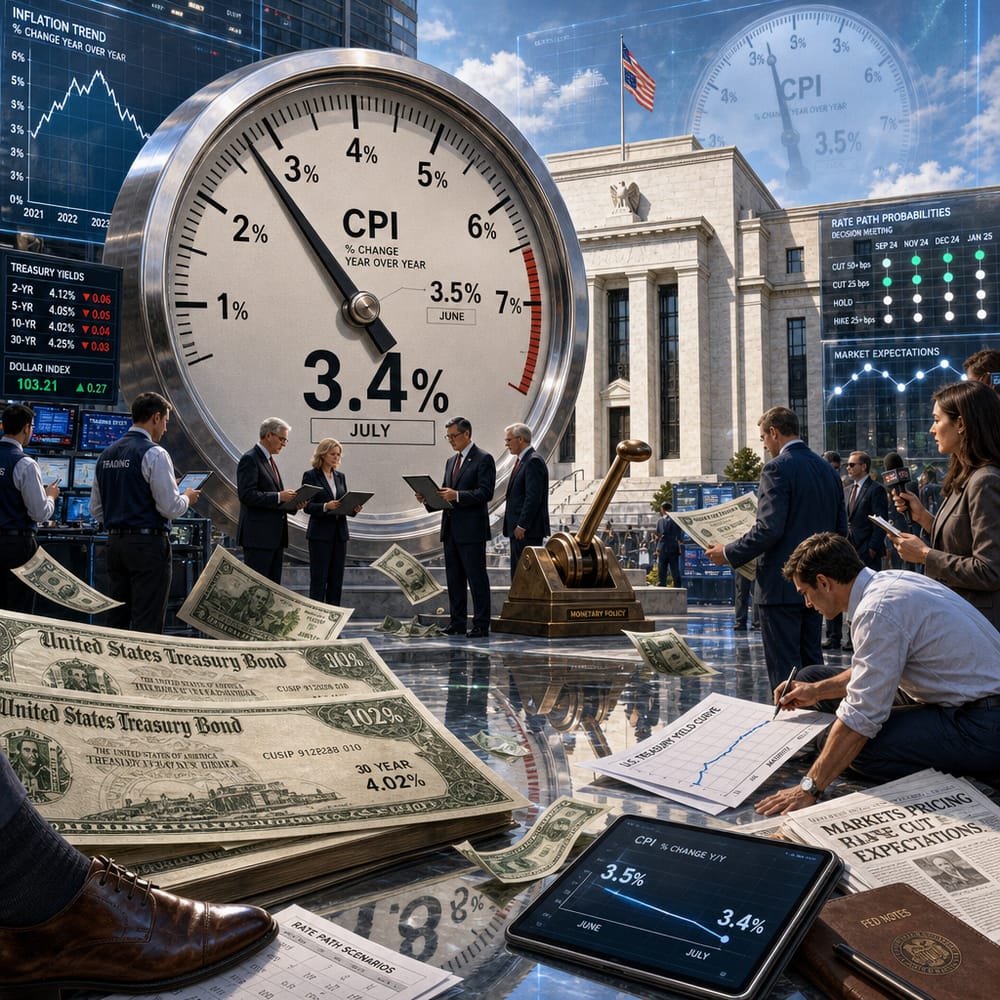
INFLATION COOL DOWN: FED'S NEXT MOVE IN THE SPOTLIGHT
So, the Consumer Price Index (CPI) just told us it's cooling its jets, clocking in at 3.4% year-over-year in July, slightly down from 3.5% in June. That's like asking the weather app for sunshine and getting a cloudy-but-no-rain forecast—better, but not time to ditch the umbrella. This little shift has everyone from Wall Street bigwigs to your dad’s fantasy football league wondering: what's Jerome Powell and his merry band of Fed policymakers going to do next?
Is this the inflation turning point we’ve been waiting for, or just a sneaky pause before prices rev up again? Spoiler alert: the outlook is as clear as a foggy morning in San Francisco, but let’s unravel it anyway.
First things first: 3.4% is a far cry from the Fed's 2% inflation sweet spot. It's like getting an A-minus when you’ve been gunning for an A-plus. Sure, it's good, but not good enough to hit cruise control on monetary policy. The Fed's been in rate-hike mode for a while now, hoping to tame inflation like a cowboy trying to reel in a wild mustang, but this new data might just be the carrot they're looking for to loosen the reins a bit.
HOW MIGHT THE FED RESPOND?
The Fed's got a couple of plays here. Stick with rate hikes, or maybe chill out and take a pause. Slowing inflation gives them breathing room, but we're not exactly in easy street yet. The bond market’s already reacting with Treasury yields not budging much, as if they’re holding their collective breath waiting for the next Fed meeting minutes to drop like the hottest mixtape of the summer.
Now, if the Fed decides to pump the brakes on more rate hikes, it could mean a whole new world for interest rates on everything from mortgages to credit cards. That's right, folks—your dream of a slightly less awful interest rate on that new car loan might not be too far-fetched. But, and there's always a but, if inflation decides to throw a curveball and pick up pace again, we could be back to rate hikes faster than you can say "economic recovery."
IS THIS REALLY A TURNING POINT?
Here's where things get tricky. Inflation easing off could be the start of something beautiful—a turning point where we all collectively sigh in relief and cut up our credit-card bills with reckless abandon. Or, it could just be a temporary blip, like when you eat a salad and convince yourself you’ve turned over a new health leaf, only to be elbow-deep in fries the next day.
Factors like global supply chain issues, geopolitical tensions (looking at you, Middle East), and consumer spending habits are still lurking around, capable of stirring the inflation pot at any moment. Remember, those chip stocks and tech sector wonder seeds everyone loves are still heavily reliant on a smooth-functioning global trade system.
REACCELERATING INFLATION: THE RISK FACTOR
Let’s face it: the inflation beast might not be fully tamed. The risks of reacceleration are like the plot twist in a thriller—just when you think you’ve figured it out, bam! Another twist. Perhaps oil prices, which are as unpredictable as ever with the latest rumblings out of Iran, could rise and drag inflation with them. Or maybe consumer demand surges unexpectedly because, well, everyone decides they need a new iPhone this year.
This inflation dance is a delicate one, with the Fed leading and the economy just trying not to step on any toes. The challenge is balancing economic growth with price stability, and the stakes are nothing short of the U.S. dollar's purchasing power and your grocery budget.
WHAT DOES THIS MEAN FOR INVESTORS?
For those of you playing the market, keep your eye on the Fed like it's the last season of your favorite TV show. Treasury bonds and the U.S. dollar are closely tied to interest rate decisions. If the Fed decides to chill on rate hikes, bond prices could rise, and the dollar might lose some of its recent strength, making U.S. exports more attractive on the global stage.
In the meantime, sectors like tech and semiconductors, buoyed by big-name investors like Stanley Druckenmiller, are still attracting attention, possibly setting the stage for an exciting but unpredictable market landscape.
So, as we wait for the Fed's next move, remember: the only constant in markets is change. Keep your wits about you, and maybe don’t put off that vacation just yet—you never know when those rates might dip just enough to make that dream trip a reality.
This article is for informational purposes only and is not investment advice. Always do your own research or consult a licensed financial professional before making investment decisions.
© Copyright 2024. All Rights Reserved.
© Copyright 2024. All Rights Reserved.