

Inflation Fears Split Consumer Behavior: Spend Now or Save Harder
Monday, April 28, 2025
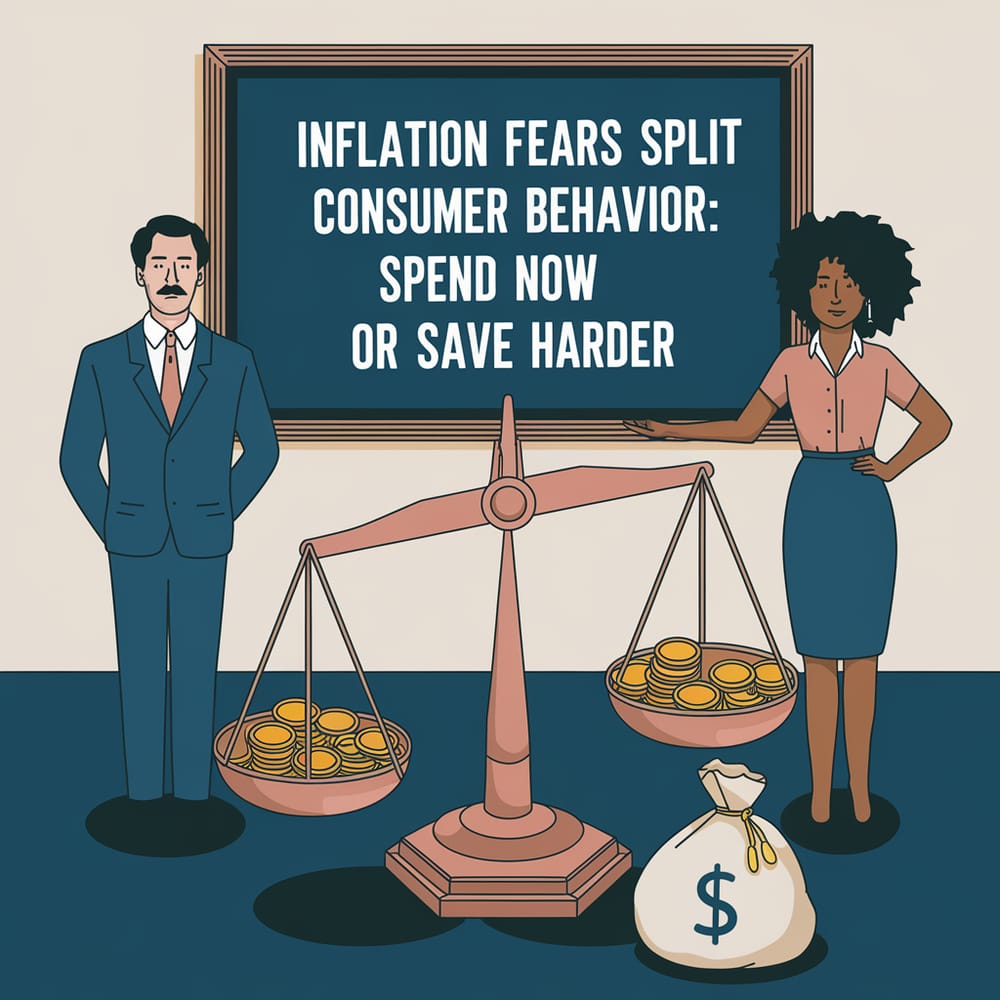
Inflation isn’t just squeezing wallets—it’s dividing consumer behavior into two distinct camps.
According to new data from the Bank of America Institute and reports from major credit-card lenders, many Americans are responding to rising price fears in opposite ways. Some are spending more now to dodge future price hikes, while others, especially lower-income households, are tightening their belts out of fear of job losses.
Spending on durable goods—things like appliances, electronics, and cars—jumped sharply in March, as buyers rushed to lock in prices before tariffs and inflation make big-ticket items even costlier. Auto-loan applications, for example, spiked at month’s end.
Meanwhile, travel, leisure, and dining are taking a hit. Airline executives and credit-card lenders like American Express and Capital One have noted weaker travel demand, while “nice-to-have” spending like restaurants and entertainment has slowed.
Interestingly, lower-income consumers—who normally would be expected to cut back first—actually led some early spending surges, trying to preempt inflation. But that trend is reversing fast. Synchrony Financial reports that spending among lower-income consumers began tapering off months ago, and recent data shows after-tax wages are slowing for these households.
Research from the Dallas Fed confirms it: when consumers fear inflation, they may spend faster, but if they sense a rising risk of job loss, they pull back altogether—even if they expect prices to keep climbing.
Banks like Synchrony say a spending moderation isn’t all bad news. It’s seen as positive for credit quality, since it suggests households are avoiding debt overextension.
Bottom line: Inflation fear is a double-edged sword. For now, it’s pushing some Americans to spend—and forcing others to hunker down. Which side wins could shape the economy’s next move.
© Copyright 2024. All Rights Reserved.
© Copyright 2024. All Rights Reserved.